Frame "Model Builder-Buyer Agreement": Supreme Court To Centre
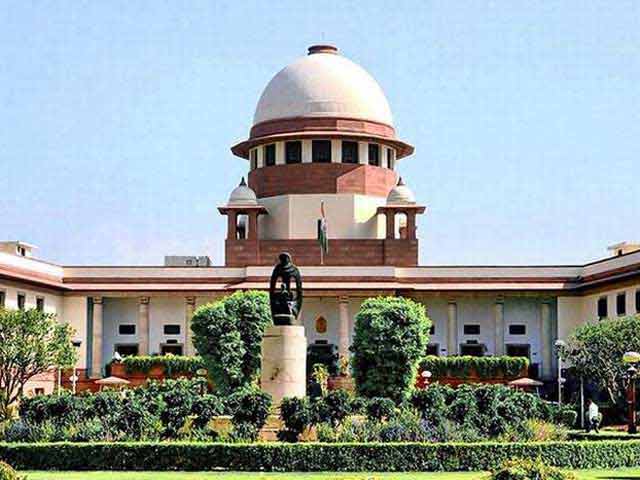
The Supreme Court on Monday once again emphasized the need for a model builder-buyer agreement to safeguard the interest of middle-class home buyers and asked the Centre to consider framing uniform rules under the provisions of RERA.
The top court said that it wants that instead of leaving it to the States, the Centre makes the model builder-buyer agreement and model agent-buyer agreement which shall be applicable for the whole of the country.
A bench of Justices DY Chandrachud and Surya Kant said, "We are concerned about the broader public interest of the middle-class home buyers" and asked Solicitor General Tushar Mehta, appearing for Centre, to seek a considered view on the issue.
Justice Chandrachud said, "The whole purpose of the present PIL is that there should be a model builder-buyer agreement which will be formulated by the central advisory council so that there is some uniformity in the basic terms and conditions and the flat buyers are not exploited".
The bench said that it is an important matter and in October, last year, the court indicated that there was a need for a model builder-buyer agreement.
Justice Chandrachud said, "We are very keen on this. Instead of leaving it to all the individual states, we want the Centre to formulate a uniform builder-buyer agreement, which shall be applicable in all the States."
Justice Chandrachud recalled a matter of West Bengal in which a state law regulating the real estate sector was similar and word to word to RERA and was struck down by the court, last year.
The bench said, "The Centre can consider that the Central advisory committee use its powers to formulate a model builder-buyer agreement...Whatever has been said in the affidavit can just be reconsidered".
The bench said that at present what is happening is that builders are putting up in the agreement whatever conditions they want and the model builder-buyer agreement must have some existential terms, which cannot be deviated.
Mehta agreed with the bench and said that the agreement cannot be one-sided and assured the court that he will seek a considered view on the issue.
The bench also asked Mehta to reconsider the affidavit which has been filed on the issue in which the Centre has said that there is a robust regulatory mechanism and draft 'agreement for sale' has already been prescribed under the provisions of RERA, which seeks to balance the rights and interest of home buyers and promoters in an accountable and transparent manner.
At the outset, senior advocate Menaka Guruswamy, appearing for petitioner Ashwini Upadhyay, said that the Centre has filed an affidavit in which it has said that the central government has no role in this as per the statute.
"The Union of India says that it is the responsibility of state governments. They ignore sections 41 and 42 of RERA which have been reproduced in the October 4, last year order of the court", she said.
The bench posted the matter after two weeks and asked Mehta to seek instructions on the issue.
The Centre in its affidavit said, "There is a robust regulatory mechanism and a draft 'agreement for sale' has already been prescribed under the provisions of RERA (Real Estate Regulatory Authority), which seeks to balance the rights and interest of home buyers and promoters in an accountable and transparent manner".
It said that according to section 84 of RERA, the appropriate government that is the state government save in the instances involving its application in the territory of union territories has to notify rules for carrying out the provisions of this Act.
The affidavit said that RERA mandates for registration of projects before advertising, marketing, booking, selling and the law ensures the timely delivery of real estate projects and the entire fund flow is also subject to strict monitoring by the regulator to avoid diversion of funds, which will also secure the interest of home buyers.
"The RERA seeks to address vital issues of fair transactions, timely delivery, and quality construction through speedy adjudication of disputes, thus empowering the home buyers," it said.
The Centre said that under the provision of RERA if the developer fails to complete the project as per terms of agreement for sale, a home buyer can either seek a refund of paid amount along with interest or ask for interest for On November 8, last year the top court had said that a model builder-buyer agreement is needed in the real estate sector and the Centre should file its reply on the issue as it is an "important matter in the public interest".
On October 4, last year the top court had said it is important for the country to have a model builder-buyer agreement in the real estate sector for consumer protection because developers try to put numerous clauses in it, which common people may not be aware of.
Upadhyay had said that there should be a model agreement prepared by the Centre as some states have it and some don't, and there is no uniformity in those agreements.
The PIL has sought direction to the Centre to frame model pacts for builders and agent buyers to protect customers and bring transparency in the realty sector in line with the Real Estate Regulatory Authority (RERA) Act, 2016.

-
High US Salaries, No Green Card Certainty: The Financial Calculation Facing Indian H-1B Families

The suspension of PERM processing at eight technology employers does not cancel existing H-1B visas. What it does is force a question many Indian families have been avoiding: is the US salary worth tying your career and family plans to one employer?
-
Swiggy vs Eternal: Food Delivery's Two Rivals Are No Longer In The Same Race
Eternal is building a private AI assistant, dark.ai. Swiggy is still working out how to make Instamart pay, with an operating loss of Rs 895 crore in the July-September quarter while Blinkit stayed profitable.
-
Where You Live Shapes How You Get To Work | The Reason Why
Two-wheelers are the most popular way to get to work in India, accounting for nearly 43% of workplace commutes.
-
Unhedged Position: Can India See An Indonesia-Style Time Correction?
The Nifty is trading below levels it first clocked in 2024. Is there, then, as I have suggested in the headline, potential that the current time correction drags on painfully for the next three-five, even ten years?
-
Navigating Friction And Energy Realities: An Analysis Of Marco Rubio's October Visit To India
Occurring at a critical juncture marked by stalled trade negotiations and escalating geopolitical pressures over global energy supplies, the visit offers a profound window into modern US-India relations.
-
India Exports Capital. Why Not Export Trusteeship?
The big question, then, is whether India can build an institution that global borrowers, investors, banks, and lawyers can trust, even without an Indian connection.
-
France's Economy & Politics Are In Crisis | The Reason Why
Let's look at how the French economy and politics evolved under Nicolas Sarkozy, Franois Hollande and Emmanuel Macron.
-
You May Inherit The Business. You Must Earn Its Credibility.
Succession tests the founder's ability to share authority as much as it tests the next generation's readiness to assume it.
-
Signing Deals Is One Thing; Making Them Work Is Another | The Week In Whys
Sometimes, things don't turn out as planned. Indian companies have lost some bids to rivals, some projects won't produce until 2030.
-
FOMC Wall, PERM Suspension, Hospital Stocks | Talking Points This Week
A PERM suspension would directly affect green-card sponsorship rather than H-1B visas, so the near-term earnings impact could remain relatively limited. The key question is whether this marks a new phase in US scrutiny of Indian IT.









