Competition Commission To Probe Zomato, Swiggy
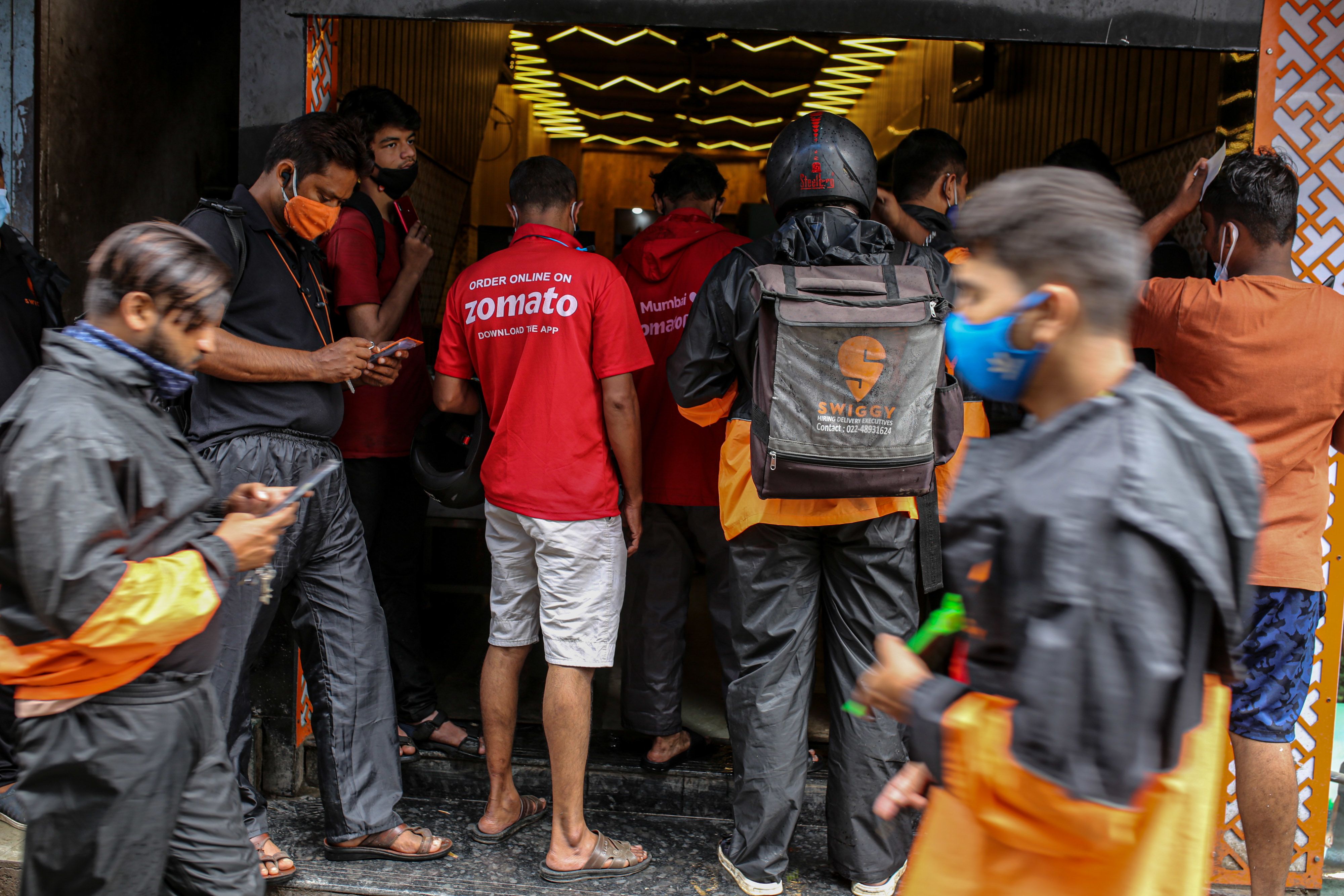
The Competition Commission of India on Monday directed an investigation against online food aggregators Zomato Ltd. and Swiggy.
The court ordered probe on a complaint by the National Restaurant Association of India, which alleged anti-competitive practices by Zomato and Bundl Technologies Pvt.'s Swiggy.
The competition watchdog found prima facie merit in examining Zomato and Swiggy's conduct, price parity and exclusivity clauses in agreements with its restaurant partners.
NRAI's Complaint
In terms of gross order volume, Zomato's market share is close to 52%, while Swiggy's is 43%, the association claimed. Both platforms have a strong market power, enabling them to cause an appreciable adverse effect on competition, it added.
NRAI's main allegations against the food aggregators include:
Bundling of food delivery services with the food ordering services: Delivery services are not optional for the restaurant partners that wish to list on Zomato and Swiggy. So they are forced to take the delivery service of the platform. Such bundling of services is an unfair imposition under the Competition Act.
Dual role on their platforms: Both the food platforms list their own cloud kitchen brands exclusively on their platform, akin to private labels. This creates an inherent conflict of interest in the platform's role as an intermediary as well as a participant. Also, both Zomato and Swiggy enter into unfair and one-sided contracts with their partners owing to their superior bargaining power.
Exclusive listing: Zomato and Swiggy often compel the restaurant partners to commit exclusively to be listed on their respective platforms through incentives, lower commissions, etc. to maintain their competitive edge in the market. This creates/strengthens barriers for a new entrant into the market.
Price parity: Restaurant partners are required to maintain parity with its other outlets/kitchens/restaurants, operating in the same city. In essence, any discount offered by the partners through any other channel or partner's own channel should be on a par or less than the discounts offered on Zomato.
High commissions: Zomato charges almost 28% of the order value from its partners, and Swiggy charges rates as high as 24%. They also engage in the practice of deep discounting through schemes and incentives offered by them to customers.
Bundling Services Not Anti-Competitive: Zomato, Swiggy Say
Zomato and Swiggy accepted that they don't allow restaurant partners to self-deliver the orders placed through their platforms. But such bundling is not anti-competitive, according to them. Bundling is done to control the end-to-end service of the order placed through their respective apps with the objective of enhancing consumer welfare, the platforms said.
Zomato said the restaurants are not constrained to list on its ordering and delivery platform. They can simply choose to list in its restaurant search and discovery catalogue. The restaurants that choose to list themselves on Zomato's food ordering platform can also avail of alternate delivery methods, if they are able to demonstrate the requisite broad capacities to do so, it said.
Swiggy argued that allegations of the anti-competitive effect of bundling of services are without any evidence and meritless. According to the platform, bundling of services improves the production/distribution of goods and services. If the delivery service is unbundled, then Swiggy would not be able to oversee last-mile delivery and would not be able to resolve consumer complaints, it said.
With respect to collaboration with big restaurant partners for cloud kitchens, Swiggy said these are commercial decisions.
"The establishment of a cloud kitchen is similar to building a shopping mall and involves significant upfront investments in the form of cost of acquiring real estate, construction, equipment/facilities, etc." - Swiggy's argument
But no added benefits are given to such cloud kitchens or to the partners with whom Swiggy collaborates, it clarified.
CCI's View
On the dual role played by the platforms, the commission said there's a conflict of interest. The platforms are vertically related to the restaurant partners, including their private brands. So giving them preferential treatment is against the Competition Act, the regulator noted in its order.
...the commission is of the view that prima facie a conflict of interest situation has arisen in the present case, both with regard to Swiggy as well as Zomato, because of the presence of commercial interest in the downstream market, which may come in the way of them acting as neutral platforms. This requires a detailed examination.Competition Commission of India
The CCI said the platforms often induce restaurant partners to commit to the exclusive listing.
Zomato offers exclusivity on the basis of commission as low as 0%, and also offers a minimum guarantee in the form of order volume and value. Swiggy also resorts to similar methods, the regulator pointed out.
"... the aforesaid conducts require a holistic examination to ascertain whether these intermediaries prevent competition on merits, creating an ecosystem causing or likely to cause an appreciable adverse effect on competition." - CCI
Finally, on price parity, the CCI observed that Zomato and Swiggy's agreements placed wide restrictions on the restaurant partners. They are not allowed to maintain lower prices or higher discounts on any of their own supply channels or on any other aggregator, the commission said.
Agreements of this nature are likely to have an adverse effect on the market by way of creating entry barriers for new platforms, without accruing any benefits to the consumers. Therefore, this too requires an inquiry, it said.

-
Talking Points This Week: Tech Nerves, FII Buying, And A Faraway Banking Shock

The global markets are not shining this Diwali. The exception in the large markets is, India.
-
Midterm Rally Lasted A Day. The Hard Reality Of A Divided US May Last Two Years | Opinion
Between a contested AI boom, a debt ceiling that arrives in 2027 and a president with every incentive to act alone, the next two years may prove more volatile than the first day's rally suggests.
-
Blue Wave Will Derail the AI Trade but Won't Dismantle the AI Era | Unhedged Position
The Democrats' sweep of the US Congress will see politics collide with economic forces both over the long and short term.
-
It's Time To Take The GST Council's Bet On Trust Global
Payment records can prove India's services exports, and clear, proportionate rules can bring foreign digital sellers into the tax net.
-
Opinion | India at 38: From Innovation Overperformer to Innovation Powerhouse
India now has 453 VC-backed deep science startups, 18 of them late-stage, after 117 percent growth since 2020. Laurus Labs, at USD 9.3 billion, is the most valuable deep science company in any middle-income economy outside China.
-
Navigating Energy Crossroads: S Jaishankar's Call For Diversified Supply Chains At G20 Ministerial Meeting
As geopolitical fault lines continue to test maritime trade routes and commodity flows, Jaishankar's message remains pertinent: true economic resilience requires open markets, protected transit lines, and a genuine commitment to multilateral cooperation rather than coercion.
-
Indians Are Travelling, But Not Every Journey Is A Holiday | The Week In Whys
Pilgrims, patients and working women are the real travellers, and the system hasn't quite caught up with them.
-
Getting To Work Costs Women More | The Reason Why
It is not just about women paying more than men. It is about women paying much more in cities than in villages.
-
AI Bias In Investing Cannot Be Eliminated, But It Can Be Governed
Framing is a particularly important example as identical financial information presented in terms of gains rather than losses can lead an LLM to reach a different assessment.









