Coal India's Plans for 20 Mines Hit by Land, Environment Delays
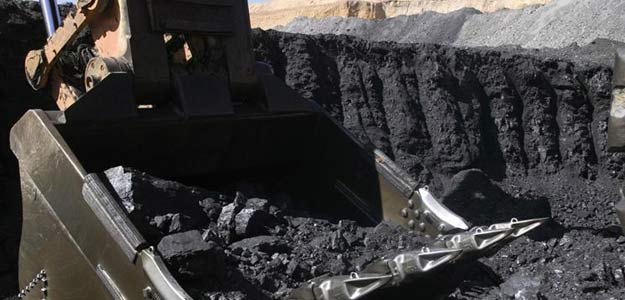
Twenty new coal mine projects by state-run Coal India, planned with annual capacity of 52 million tonnes, have been delayed by difficulties acquiring land and environmental clearances, the coal minister said on Thursday, underlining the uphill task he faces in reforming the sector.
The new government of Prime Minister Narendra Modi is hastening environmental clearances - which slowed to a trickle under the previous administration - to help fire up power plants and fulfill Modi's campaign promise to light up every home.
But land acquisition remains a major problem, as it is largely controlled by India's states, many of which are ruled by parties other than Modi's Bharatiya Janata Party.
Coal and Power Minister Piyush Goyal told parliament the projects, costing more than 200 million rupees ($3 million), "could not be started due to constraints of land acquisition and environmental clearance".
This month, a Coal India unit, Mahanadi Coalfields, had to halt operations at three mines in Odisha following protests over company plans to relocate nearby residents to make way for expansion. Politicians often side with displaced people.
Goyal told lawmakers six of the delayed mines, with estimated annual output of 27 million tonnes, could start this fiscal year, which ends on March 31. Most of the rest are likely to commence operation next year.
That should help boost the output of Coal India, which accounts for more than 80 per cent of the fuel India digs out. The government has set the firm a target of 507 million tonnes for the current fiscal year, although it has failed to hit its target for years.
Coal India and closest rival Singareni Collieries, which together account for more than 90 per cent of India's coal production, plan to produce a total of 561.5 million tonnes this fiscal year.
But demand is expected to rise 6 per cent to 787 million tonnes, which will mean shipments by the world's third-largest coal importer could hit 200 million.
Copyright: Thomson Reuters 2014

-
Where You Live Shapes How You Get To Work | The Reason Why

Two-wheelers are the most popular way to get to work in India, accounting for nearly 43% of workplace commutes.
-
High US Salaries, No Green Card Certainty: The Financial Calculation Facing Indian H-1B Families
The suspension of PERM processing at eight technology employers does not cancel existing H-1B visas. What it does is force a question many Indian families have been avoiding: is the US salary worth tying your career and family plans to one employer?
-
Unhedged Position: Can India See An Indonesia-Style Time Correction?
The Nifty is trading below levels it first clocked in 2024. Is there, then, as I have suggested in the headline, potential that the current time correction drags on painfully for the next three-five, even ten years?
-
Navigating Friction And Energy Realities: An Analysis Of Marco Rubio's October Visit To India
Occurring at a critical juncture marked by stalled trade negotiations and escalating geopolitical pressures over global energy supplies, the visit offers a profound window into modern US-India relations.
-
India Exports Capital. Why Not Export Trusteeship?
The big question, then, is whether India can build an institution that global borrowers, investors, banks, and lawyers can trust, even without an Indian connection.
-
France's Economy & Politics Are In Crisis | The Reason Why
Let's look at how the French economy and politics evolved under Nicolas Sarkozy, Franois Hollande and Emmanuel Macron.
-
You May Inherit The Business. You Must Earn Its Credibility.
Succession tests the founder's ability to share authority as much as it tests the next generation's readiness to assume it.
-
Signing Deals Is One Thing; Making Them Work Is Another | The Week In Whys
Sometimes, things don't turn out as planned. Indian companies have lost some bids to rivals, some projects won't produce until 2030.
-
FOMC Wall, PERM Suspension, Hospital Stocks | Talking Points This Week
A PERM suspension would directly affect green-card sponsorship rather than H-1B visas, so the near-term earnings impact could remain relatively limited. The key question is whether this marks a new phase in US scrutiny of Indian IT.
-
Everything, Everywhere, All At Once: Dalal Street's Week To Forget | Joining The Dots
Visa curbs, a Starlink spat and cancer drug caps: what connects this week's shocks for Indian markets









