Coal India IPO Also Offered Sops To Employees Like LIC. Read What Happened Then
As the initial public offer (IPO) of Life Insurance Corporation of India (LIC) opens tomorrow (May 4) for subscription, one of the most attractive aspects of it is the discount being given to its employees for subscribing to the issue.
The insurance behemoth will offer a discount of Rs 45 per equity share to its employees along with retail investors on subscribing the company's shares.
This is apart from the discount of Rs 60 per share, which is being given to LIC policy holders.
As is known, the LIC IPO is touted as the biggest public offer having been unveiled in the country, as the insurer plans to raise Rs 21,000 crore through the exercise.
Prior to LIC, the Paytm IPO – which had opened in November 2021- was the largest public issue, as it was worth Rs 18,300 crore in size.
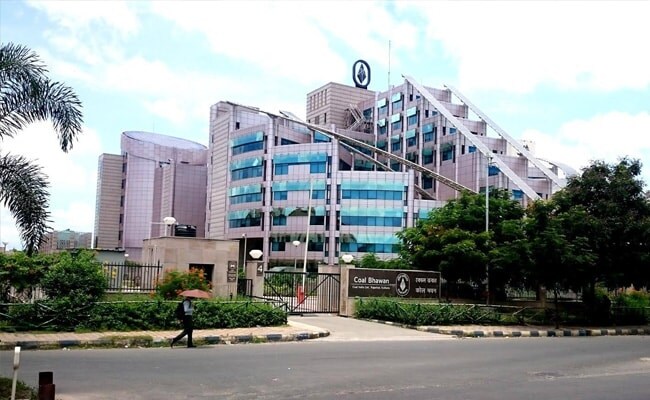
Let's however go 11 and a half years back in time, when in October 2010, Coal India Limited (CIL) had come out with its IPO.
With an issue size of Rs 15,199 crore, the CIL's was the biggest-ever public offer to have been unveiled by any company. It even eclipsed Reliance Power's IPO – which had an issue size of Rs 11,563 crore – that had come out earlier in February 2008.
Coal India's IPO had received an overwhelming response from all investors and was oversubscribed 15.17 times, leading to a total demand of Rs 2.3 lakh crore for the 63.16 crore shares on offer.
The reason why CIL's IPO is being talked about here is that just like LIC, the coal behemoth too had offered discount to its employees.
Discount for Coal India employees in IPO
Government had reserved 10 per cent of the total shares on sale for CIL employees and had offered a discount of 5 per cent to workers on the issue price of Rs 245 per share.
However the country's largest coal producer's employees did not reap the benefit of the discount offered in the IPO, as CIL's trade unions had boycotted the Government's stake divestment in the company.
What had happened?
Coal India's trade unions had asked employees not to participate in the issue.
The majority of the 3.98 lakh workforce did not bid for CIL's shares when the Government offloaded a 10 per cent stake in it, generating a huge Rs 15,200 crore.
Union leaders had called a strike on the first day of the share offer in October 2010, and asked workers to abstain from bidding.
Out of the 63.16 crore shares on offer, 10 per cent of which were reserved for its employees, only 10 per cent of the reserved shares were bid for by employees due to the trade unions' boycott of the IPO.
Interestingly though, lakhs of LIC employees too had taken part in a two-day strike against the public issue on March 28 and 29, 2022.
It would be interesting to see how LIC's employees react tomorrow when the IPO opens for subscription.

-
Talking Points This Week: Tech Nerves, FII Buying, And A Faraway Banking Shock

The global markets are not shining this Diwali. The exception in the large markets is, India.
-
Midterm Rally Lasted A Day. The Hard Reality Of A Divided US May Last Two Years | Opinion
Between a contested AI boom, a debt ceiling that arrives in 2027 and a president with every incentive to act alone, the next two years may prove more volatile than the first day's rally suggests.
-
Blue Wave Will Derail the AI Trade but Won't Dismantle the AI Era | Unhedged Position
The Democrats' sweep of the US Congress will see politics collide with economic forces both over the long and short term.
-
It's Time To Take The GST Council's Bet On Trust Global
Payment records can prove India's services exports, and clear, proportionate rules can bring foreign digital sellers into the tax net.
-
Opinion | India at 38: From Innovation Overperformer to Innovation Powerhouse
India now has 453 VC-backed deep science startups, 18 of them late-stage, after 117 percent growth since 2020. Laurus Labs, at USD 9.3 billion, is the most valuable deep science company in any middle-income economy outside China.
-
Navigating Energy Crossroads: S Jaishankar's Call For Diversified Supply Chains At G20 Ministerial Meeting
As geopolitical fault lines continue to test maritime trade routes and commodity flows, Jaishankar's message remains pertinent: true economic resilience requires open markets, protected transit lines, and a genuine commitment to multilateral cooperation rather than coercion.
-
Indians Are Travelling, But Not Every Journey Is A Holiday | The Week In Whys
Pilgrims, patients and working women are the real travellers, and the system hasn't quite caught up with them.
-
Getting To Work Costs Women More | The Reason Why
It is not just about women paying more than men. It is about women paying much more in cities than in villages.
-
AI Bias In Investing Cannot Be Eliminated, But It Can Be Governed
Framing is a particularly important example as identical financial information presented in terms of gains rather than losses can lead an LLM to reach a different assessment.









