Louis Vuitton May Finally Get a US Challenge
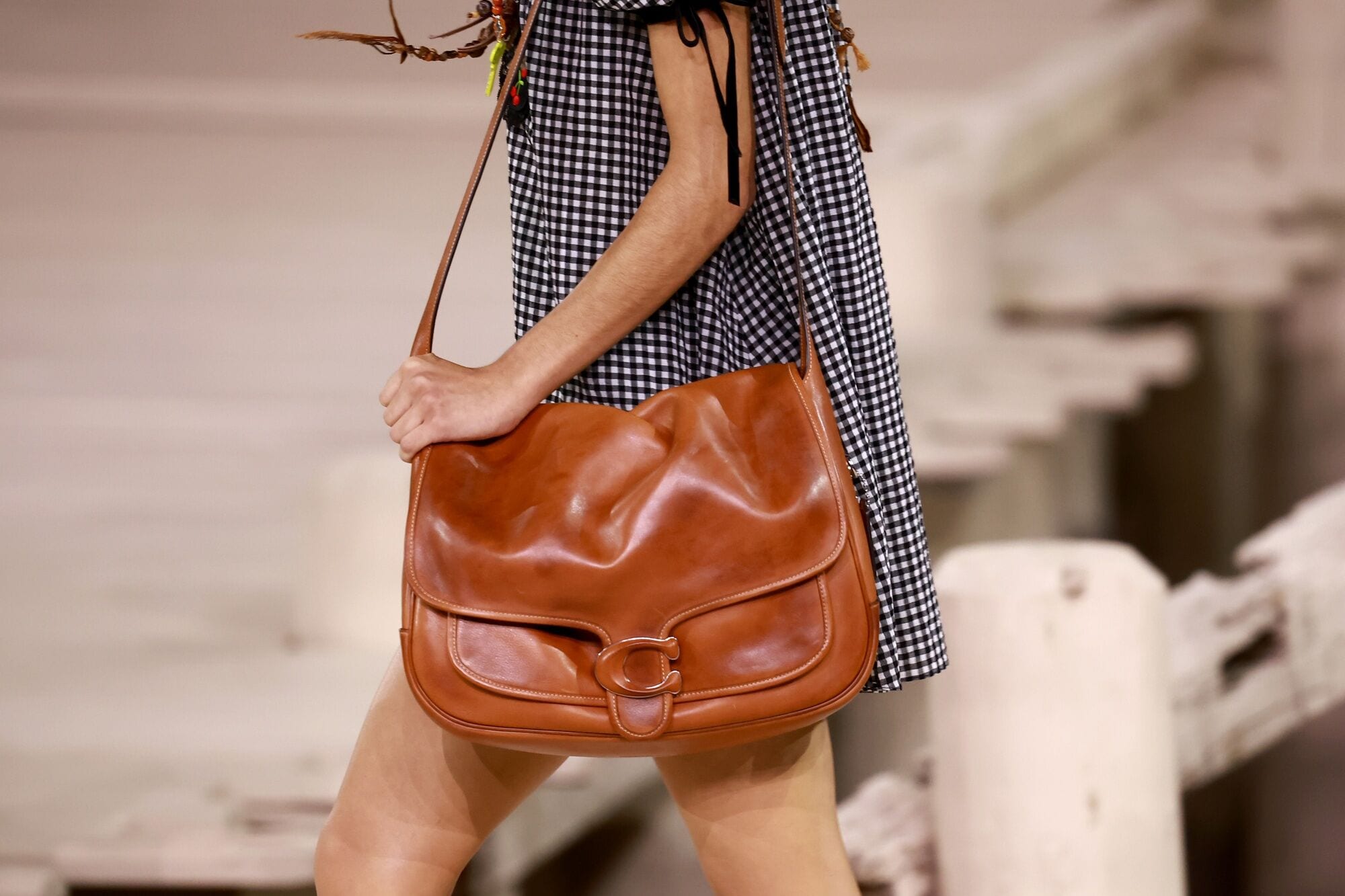
(Bloomberg Opinion) -- When Coach owner Tapestry Inc. and Michael Kors parent Capri Holdings Ltd. began their individual acquisition sprees, each had an opportunity to become the US equivalent of LVMH.
Fast forward six years, and neither on its own has emulated the success of the world's biggest luxury group. But they have another chance to become a bling behemoth: Tapestry said on Thursday that it would acquire Capri for an enterprise value of $8.5 billion.
A combination creates a US luxury powerhouse with more than $12 billion of annual revenue and almost $2 billion of underlying operating profit. As well as namesake brands Coach and Michael Kors, Tapestry owns Kate Spade and shoemaker Stuart Weitzman, while Capri is also home to Versace and Jimmy Choo. The enlarged company will also have a more global reach, with Capri's operations in Europe complementing Tapestry's presence in Asia.
The combined group would still be dwarfed by the European conglomerates — LVMH Moet Hennessy Louis Vuitton SE, Gucci-owner Kering SA and Cartier parent Cie Financiere Richemont SA. But they are be getting closer. And together, Tapestry and Capri would be better able to compete with the European names as well as domestic rivals such as Ralph Lauren Corp.
This is essential, because the last three years have seen a polarization between the biggest players and the rest of the industry. Scale means more funds to make brands stand out. The European giants have been able to invest in the best stores, the most high-profile marketing campaigns and increasingly celebrity designers. Cost savings can be hard to come by in luxury, but Tapestry said it expected to achieve more than $200 million of synergies within three years.
What's more, after several years of blockbuster growth, luxury sales are starting to settle at a more normal level amid a slowdown in the US and signs that China's post-Covid return may not be as spectacular as hoped. Even the mighty LVMH had to invest more in the first half of its fiscal year to keep its labels at the forefront of consumers' minds; it splashed out on Pharrell Williams' inaugural fashion show for Louis Vuitton menswear in Paris.
Tapestry and Capri mostly operate in the riskier premium part of the market, not at the very top echelons of luxury. It's the younger and merely comfortable shoppers rather than super-wealthy who are beginning to pull back. The two companies are exposed to just these types of customers.
A combination is not be without its challenges, of course.
Tapestry is offering $57 per share in cash for Capri, a 65% premium to Wednesday's closing price. Although Capri stock has slumped nearly 50% since February, when the company cut its outlook for the year, that may not be enough to win over investors. The shares were trading as high as about $68 before the warning. Meanwhile, at the proposed valuation, the acquisition multiple is 9 times trailing earnings before interest, tax, depreciation and amortization, well below the about 16 times implied by Kering's recent purchase of a 30% stake in Valentino. Capri shares rose almost 60% to about $55 in pre-market trading.

The weaker outlook was prompted by Capri's Michael Kors brand, which has suffered from years of overexposure, department store woes and appealing to customers who are feeling the pinch. These long-term problems will still need to be addressed. But Kors' issues may be better dealt with as part of a bigger group. Not only will it have more financial firepower, but Tapestry has a strong track record in reviving tired names. It has done a good job revitalizing its flagship brand Coach with more desirable products, effective marketing and high-profile collaborations with Selena Gomez and Jennifer Lopez.
Indeed, the risks of a deal are worth taking. If Tapestry and Capri can get it right, they can be a bigger force in global luxury. There might even be scope to bulk up further, for example, through a deal with Ralph Lauren if its founder ever decides to sell.
The US has always punched below its weight when it comes to luxury. With Tiffany becoming part of LVMH and speculation that Ralph Lauren might eventually follow, the two American names are at least trying to forge a path away from Paris.
More From Bloomberg Opinion:
- L'Occitane Has to Pass a $6.5 Billion Smell Test: Andrea Felsted
- My Personal Oil Price Shock — Olive Oil, That Is: Javier Blas
- Home Heat Pumps Deserve Louder Cheerleaders: Lara Williams
(Updates throughout with details of deal)
This column does not necessarily reflect the opinion of the editorial board or Bloomberg LP and its owners.
Andrea Felsted is a Bloomberg Opinion columnist covering consumer goods and the retail industry. Previously, she was a reporter for the Financial Times.
More stories like this are available on bloomberg.com/opinion
©2023 Bloomberg L.P.

-
Opinion | India at 38: From Innovation Overperformer to Innovation Powerhouse

India now has 453 VC-backed deep science startups, 18 of them late-stage, after 117 percent growth since 2020. Laurus Labs, at USD 9.3 billion, is the most valuable deep science company in any middle-income economy outside China.
-
Navigating Energy Crossroads: S Jaishankar's Call For Diversified Supply Chains At G20 Ministerial Meeting
As geopolitical fault lines continue to test maritime trade routes and commodity flows, Jaishankar's message remains pertinent: true economic resilience requires open markets, protected transit lines, and a genuine commitment to multilateral cooperation rather than coercion.
-
Indians Are Travelling, But Not Every Journey Is A Holiday | The Week In Whys
Pilgrims, patients and working women are the real travellers, and the system hasn't quite caught up with them.
-
Getting To Work Costs Women More | The Reason Why
It is not just about women paying more than men. It is about women paying much more in cities than in villages.
-
AI Bias In Investing Cannot Be Eliminated, But It Can Be Governed
Framing is a particularly important example as identical financial information presented in terms of gains rather than losses can lead an LLM to reach a different assessment.
-
Joining The Dots | Dark Skies, Steady Diya: Why Hope Holds This Diwali
With war, a weak rupee and foreign outflows weighing on sentiment, policymakers at the NDTV World Summit and market veterans at NDTV Profit Ignite: Diwali Edition offered the same advice: stay invested and filter out the noise.
-
The Curious Case of Equitas Small Finance Bank And A CEO Who Quit For Stock
PN Vasudevan believes persistent investor concerns over a perceived conflict of interest had become a governance overhang on Equitas Small Finance Bank's stock, even as the lender improved profitability and asset quality.
-
Talking Points This Week: AI Cash Burn, A Tiger Comeback And An India That Still Finds Its Own Path
India is not immune to higher oil or tighter global liquidity, yet its earnings base is broader, its domestic policy levers are still available.
-
Foreign Investors Own Half Of HDFC Bank and ICICI Bank. An LTCG Cut Could Matter Most Here
Foreign portfolio investors have US$115 billion parked in HDFC Bank, ICICI Bank. If the government cuts long-term capital gains tax, Jefferies says returning foreign money could land here first.










