Sensex Tanks 273 Points, Nifty Settles Below 10,700 On Global Sell-Off
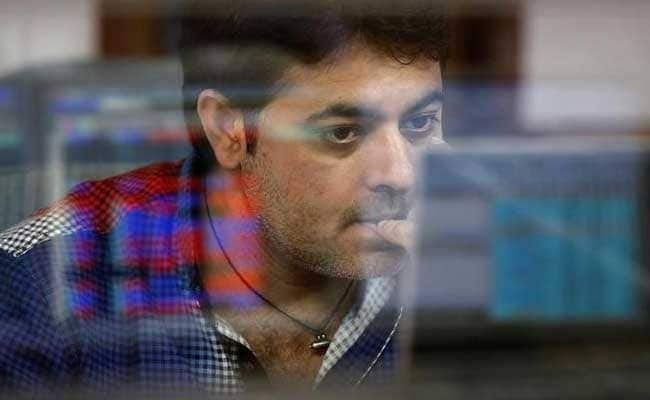
The domestic stock markets closed Wednesday's session on a lower note. The S&P BSE Sensex plummeted 272.93 points, or 0.77 per cent, to close at 35,217.11. The NSE's Nifty50 index slipped 97.75 points or 0.91 per cent and settled at 10,671.40. Domestic equity indices fell today as shares of oil marketing companies skidded on higher crude prices. The Indian rupee weakened to a 19-month low against US dollar, while bond prices declined for the fourth straight session. Investors also turned cautious a day before the expiry of derivatives contracts. Most Asian markets, led by China, ended lower as jitters over trade conflicts between the US and other major economies lingered.
Major gainers in the Sensex pack were HDFC Bank, Coal India, TCS and Sun Pharma, rising only between 0.35 per cent to 0.89 per cent. Top laggards in the 30-share Sensex pack were ICICI Bank, Larsen & Tourbo, Tata Motors, SBI, Adani ports and Power Grid, ending with losses of between 1.75 per cent to 3.16 per cent.
Tech Mahindra, Bharti Infratel, HCL Tech, Cipla and HDFC Bank (rising between 1 per cent to 4.12 per cent) led the pack of Nifty gainers while main losers on the index were BPCL, Hindustan Petroleum, Indian Oil, Gail and United Phosphorus Ltd, ending with losses between 3.41 per cent to 8.33 per cent.
Top oil marketing companies were among the top percentage losers on the NSE index as supply disruptions in Libya and Canada coupled with US attempts to stop Iran imports pushed oil prices higher. Bharat Petroleum Corp Ltd and Hindustan Petroleum Corp Ltd dropped around 8 per cent. Indian Oil Corp Ltd skidded around 7 per cent.
Tech Mahindra Ltd, up more than 4 per cent, was the top percentage gainer on the NSE index. Energy stocks were among the biggest drags, with the Nifty Energy index closed 2.5 per cent lower
State-run lenders fell after the financial stability report from the Reserve Bank of India indicated continuation of stress in the banking sector. Public sector banks came under heavy selling pressure, with Punjab National Bank, Bank of Baroda, State Bank of India, Syndicate Bank, Oriental Bank of Commerce and Union Bank of India falling up to 6.61 per cent.
The Nifty PSU bank index dropped as much as 2.3 per cent to its lowest level in five weeks. Syndicate Bank Ltd fell to its lowest in over nine years while Oriental Bank of Commerce Ltd plunged to its lowest since April 2003.
Meanwhile, Varroc Engineering IPO, which opened on Tuesday received 66 per cent of bids by 3.15 pm on its second day, data from the National Stock Exchange (NSE) showed.
(With Agencies input)

-
Talking Points This Week: Tech Nerves, FII Buying, And A Faraway Banking Shock

The global markets are not shining this Diwali. The exception in the large markets is, India.
-
Midterm Rally Lasted A Day. The Hard Reality Of A Divided US May Last Two Years | Opinion
Between a contested AI boom, a debt ceiling that arrives in 2027 and a president with every incentive to act alone, the next two years may prove more volatile than the first day's rally suggests.
-
Blue Wave Will Derail the AI Trade but Won't Dismantle the AI Era | Unhedged Position
The Democrats' sweep of the US Congress will see politics collide with economic forces both over the long and short term.
-
It's Time To Take The GST Council's Bet On Trust Global
Payment records can prove India's services exports, and clear, proportionate rules can bring foreign digital sellers into the tax net.
-
Opinion | India at 38: From Innovation Overperformer to Innovation Powerhouse
India now has 453 VC-backed deep science startups, 18 of them late-stage, after 117 percent growth since 2020. Laurus Labs, at USD 9.3 billion, is the most valuable deep science company in any middle-income economy outside China.
-
Navigating Energy Crossroads: S Jaishankar's Call For Diversified Supply Chains At G20 Ministerial Meeting
As geopolitical fault lines continue to test maritime trade routes and commodity flows, Jaishankar's message remains pertinent: true economic resilience requires open markets, protected transit lines, and a genuine commitment to multilateral cooperation rather than coercion.
-
Indians Are Travelling, But Not Every Journey Is A Holiday | The Week In Whys
Pilgrims, patients and working women are the real travellers, and the system hasn't quite caught up with them.
-
Getting To Work Costs Women More | The Reason Why
It is not just about women paying more than men. It is about women paying much more in cities than in villages.
-
AI Bias In Investing Cannot Be Eliminated, But It Can Be Governed
Framing is a particularly important example as identical financial information presented in terms of gains rather than losses can lead an LLM to reach a different assessment.









