Get Ready For Carbon Capture’s Second Coming
(Bloomberg Opinion) -- For those who've followed the energy transition over the past few decades, there's one technology that is treated as much as a punchline as a serious industry: Carbon capture and storage.
A decade or so ago, many still thought it the best hope for decarbonizing the world's power systems. CCS was “the Google and Intel of the energy world,” the Atlantic magazine declared in a 2010 cover story that predicted solar and wind would never get above 10% of power supply.
In the following decade, it was renewables that boomed while CCS went bust. Wind and solar accounted for 39% of generation in Germany in the first quarter of 2023 and will hit 50% over the full year in Spain. Meanwhile, only a handful of demonstration CCS plants went into operation — and one of the biggest was switched off in 2021 as oil prices plummeted, since it had only been able to make money from the decidedly dirty business of driving carbon dioxide into depleted oil wells to force out fresh crude.
There are signs that CCS may be about to get the last laugh, though. In the UK, the government has promised as much as £20 billion ($25 billion) in spending to kickstart the sector. A tender to scope out sites that could store as much as 10% of the country's emissions in old North Sea oilfields closed comfortably oversubscribed last month. In the Gulf of Mexico, Exxon Mobil Corp. has spent about $25 million in two recent rounds bidding for nearly 170 blocks of depleted offshore acreage that might be able to store carbon from a planned hub in Houston. The world's first CCS project at a cement plant is slated to start next year at a Heidelberg Materials AG facility in Norway.
What's different now? In essence, a business that was always viable technologically has finally found an economic rationale. The problem with CCS was never that it didn't work: Norway's Sleipner carbon capture project has been quietly pumping about 1 million tons annually under the North Sea for nearly 20 years since it was built to evade a 1991 carbon tax. Elsewhere in the world, however, there was no way to get paid.
That's changed with the US Inflation Reduction Act and the surging value of the European Union's carbon permits. CCS doesn't really become viable anywhere south of $70 a metric ton, and until about 18 months ago the only countries putting a price on carbon at that level were in Scandinavia and the Alps.
Since the start of 2022, however, European carbon has averaged $89 a ton, while the Biden administration's climate bill has introduced an $85/ton tax credit for CCS. Roughly a third of the world economy has suddenly priced CO2 at a level where, in theory, there should be good money in locking it up underground.
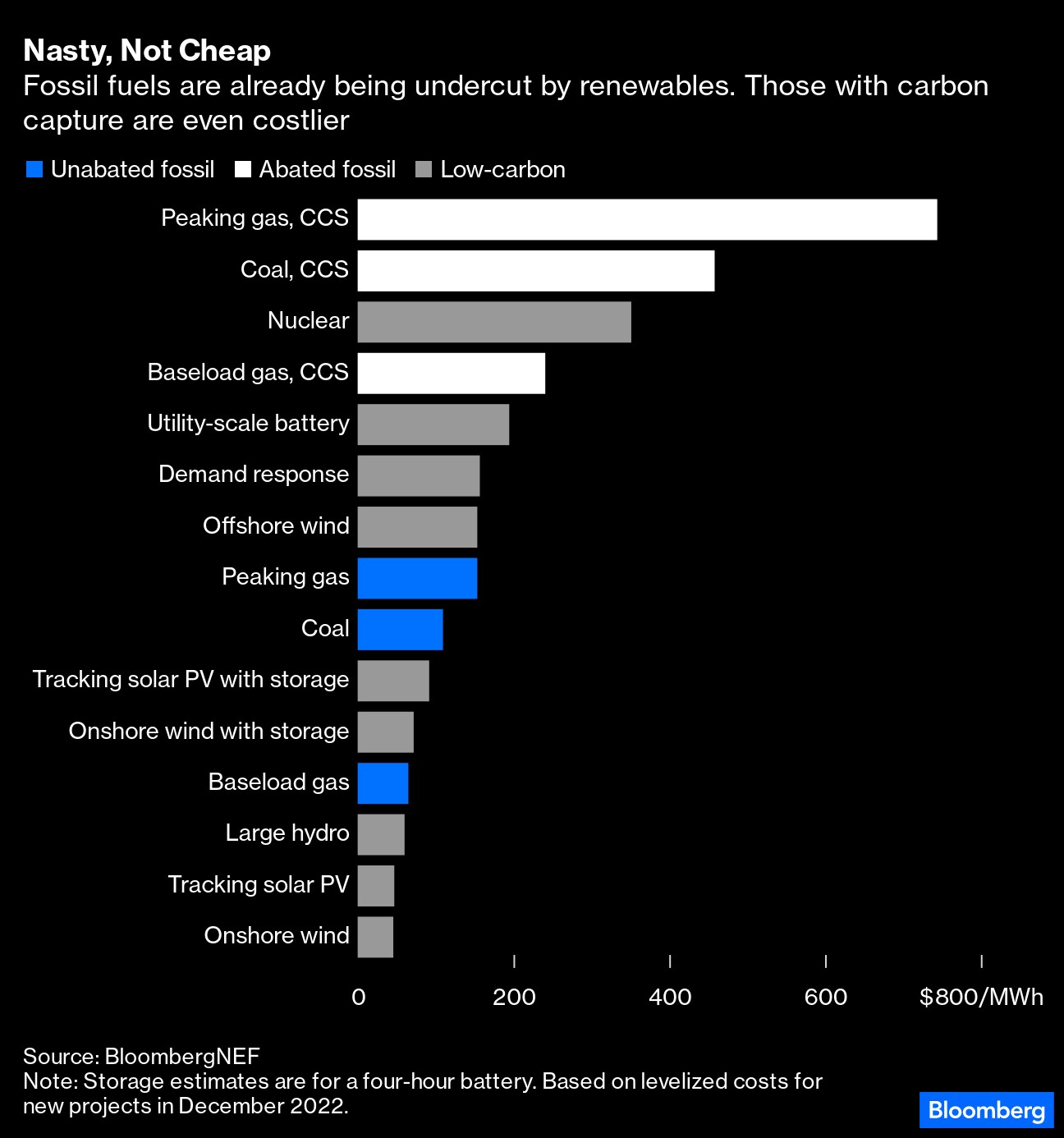
All the hype from the 2000s has cast a long shadow. CCS is still seen by many energy specialists as a pipe dream at best, and at worst a mendacious attempt to rebrand fossil fuels without doing the hard work of decarbonization. The main end-use for which it was pitched a decade ago — power generation — has also been invalidated by the slumping costs of renewable power.
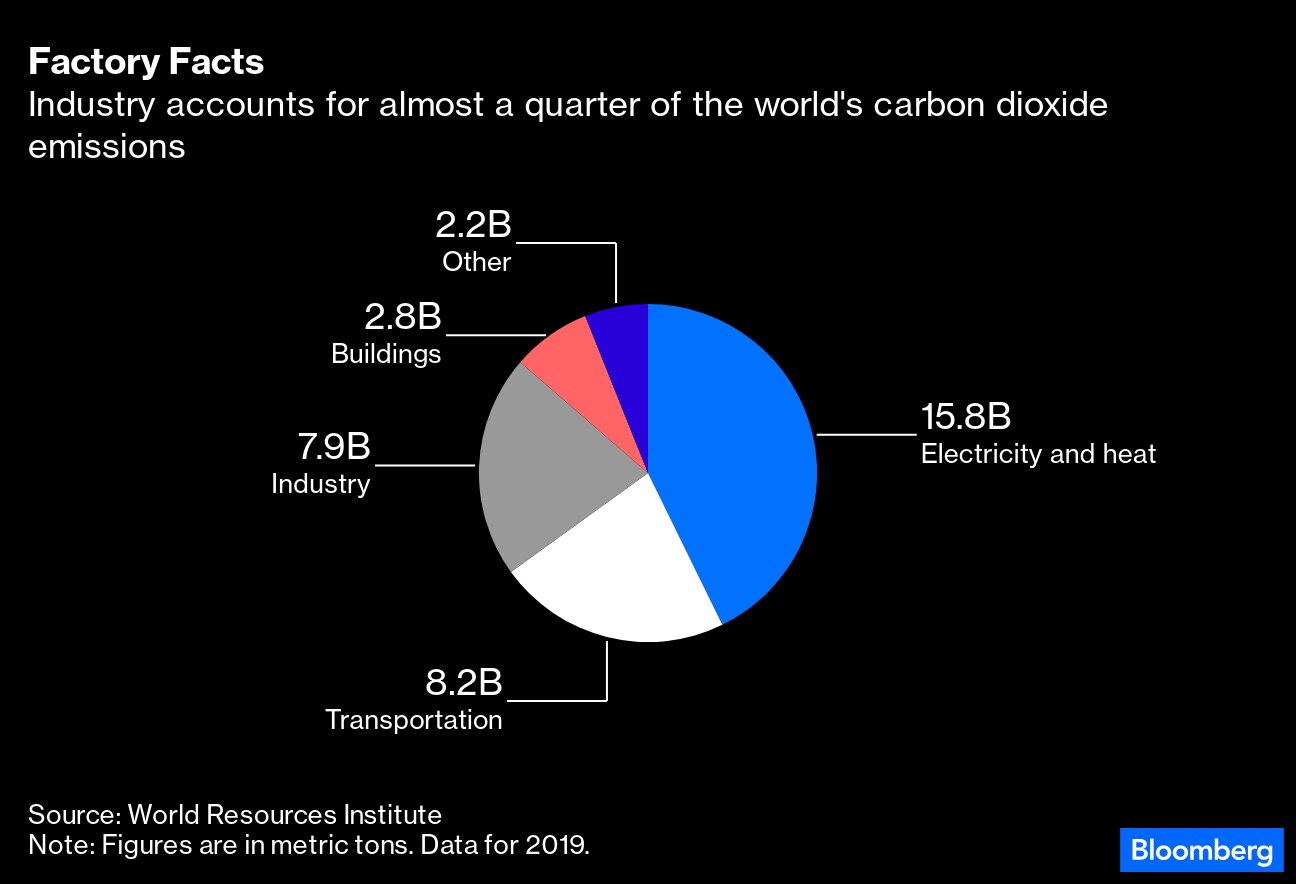
Even if you exclude electricity, however, there's a big slice of industry where CCS could yet be crucial. Power generation accounts for about 40% of the world's CO2 emissions, but another fifth comes from steel, cement and chemicals — and renewables aren't well-suited to abating that pollution. Until technologies such as green steel and green hydrogen get up to speed and someone invents a viable way of making zero-carbon cement, we could use a functioning CCS sector to keep that CO2 out of the atmosphere.
CCS has another benefit, too. The developed world's shift to a more aggressive decarbonization pathway risks leaving many emerging economies stranded. Falling fossil fuel demand will kill off one of their main raw materials export industries while carbon border taxes threaten future manufacturing sectors. A global carbon trade offers a solution to that problem, giving nations with the right geology the ability to make money from sequestering other people's carbon.
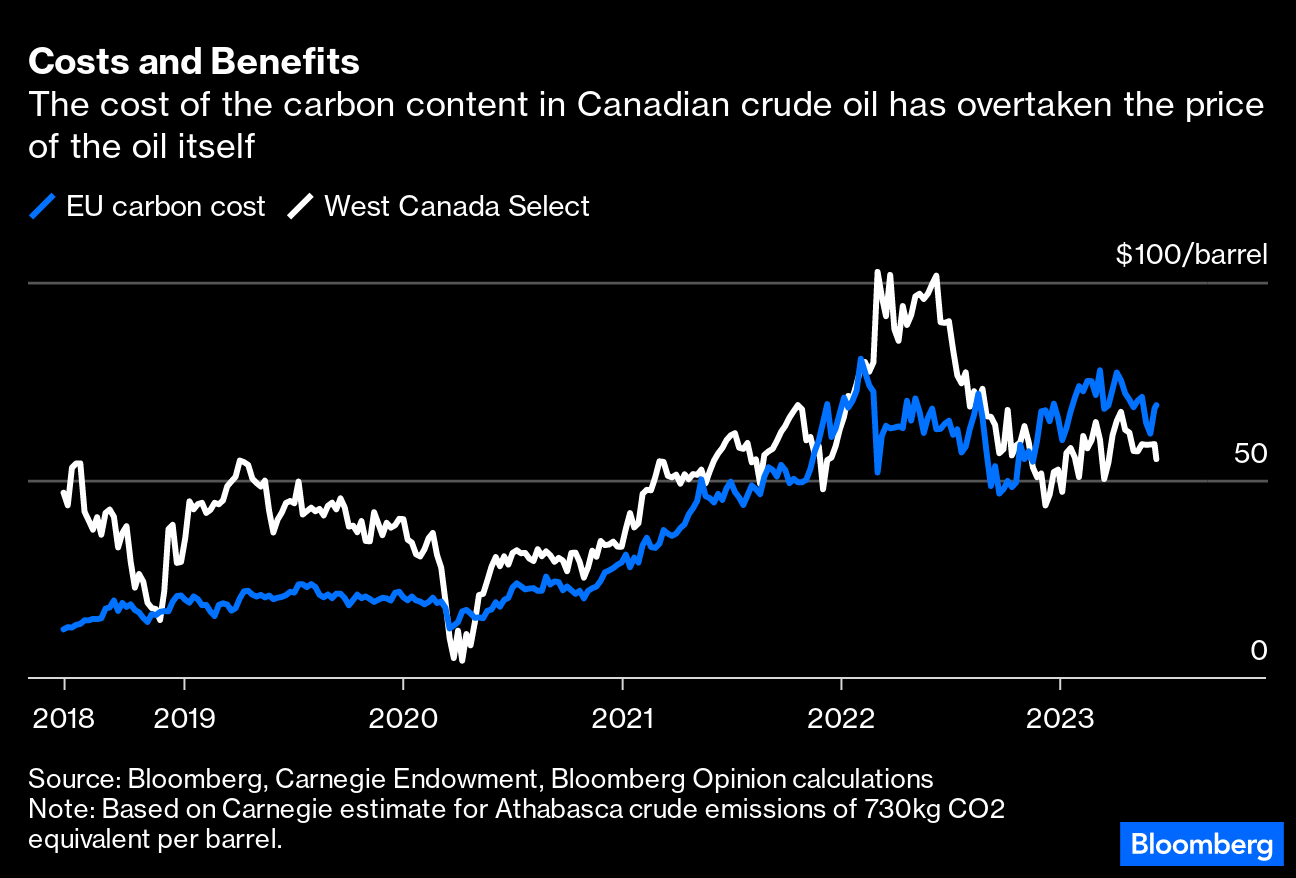
In places, the carbon content of a barrel of oil is already worth more than the fuel. EU pricing for the emissions from heavy Canadian crude is currently about 25% above the cost of the crude itself. That's potentially a revenue stream that oil-dependent nations in Africa and the Middle East could monetize.
Governments should do everything they can to foster this trend — and to encourage China, attempting a crack down on the heavy industries that account for more than half of its pollution, to lift its own anemic $8.24 a ton carbon price to similar paradigm-changing levels.
Swaths of the world made money in the 20th century from selling the carbon currently devastating our natural environment. In the 21st century, the same nations might make money from burying it instead.
More From Bloomberg Opinion:
- This Zombie Climate Tech Has Earned Its Chance to Shamble On: David Fickling
- Exxon Is Capturing Dollars, Not Just Carbon: Liam Denning
- How Africa Could Become a Climate Savior, Not a Victim: Lara Williams
This column does not necessarily reflect the opinion of the editorial board or Bloomberg LP and its owners.
David Fickling is a Bloomberg Opinion columnist covering energy and commodities. Previously, he worked for Bloomberg News, the Wall Street Journal and the Financial Times.
More stories like this are available on bloomberg.com/opinion
©2023 Bloomberg L.P.

-
Where You Live Shapes How You Get To Work | The Reason Why

Two-wheelers are the most popular way to get to work in India, accounting for nearly 43% of workplace commutes.
-
High US Salaries, No Green Card Certainty: The Financial Calculation Facing Indian H-1B Families
The suspension of PERM processing at eight technology employers does not cancel existing H-1B visas. What it does is force a question many Indian families have been avoiding: is the US salary worth tying your career and family plans to one employer?
-
Unhedged Position: Can India See An Indonesia-Style Time Correction?
The Nifty is trading below levels it first clocked in 2024. Is there, then, as I have suggested in the headline, potential that the current time correction drags on painfully for the next three-five, even ten years?
-
Navigating Friction And Energy Realities: An Analysis Of Marco Rubio's October Visit To India
Occurring at a critical juncture marked by stalled trade negotiations and escalating geopolitical pressures over global energy supplies, the visit offers a profound window into modern US-India relations.
-
India Exports Capital. Why Not Export Trusteeship?
The big question, then, is whether India can build an institution that global borrowers, investors, banks, and lawyers can trust, even without an Indian connection.
-
France's Economy & Politics Are In Crisis | The Reason Why
Let's look at how the French economy and politics evolved under Nicolas Sarkozy, Franois Hollande and Emmanuel Macron.
-
You May Inherit The Business. You Must Earn Its Credibility.
Succession tests the founder's ability to share authority as much as it tests the next generation's readiness to assume it.
-
Signing Deals Is One Thing; Making Them Work Is Another | The Week In Whys
Sometimes, things don't turn out as planned. Indian companies have lost some bids to rivals, some projects won't produce until 2030.
-
FOMC Wall, PERM Suspension, Hospital Stocks | Talking Points This Week
A PERM suspension would directly affect green-card sponsorship rather than H-1B visas, so the near-term earnings impact could remain relatively limited. The key question is whether this marks a new phase in US scrutiny of Indian IT.
-
Everything, Everywhere, All At Once: Dalal Street's Week To Forget | Joining The Dots
Visa curbs, a Starlink spat and cancer drug caps: what connects this week's shocks for Indian markets









