Clean Environment Cess To Make Solar Power More Competitive: Report
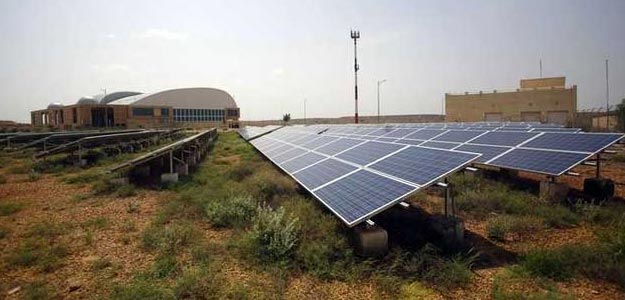
New Delhi: The budgetary proposal to double the coal cess will make solar power more competitive by increasing the cost of the dry fuel, a report by Mercom Capital Group said on Wednesday, adding increased cost may pass on to consumers in the form of higher electricity bills.
"The Clean Environment Cess previously known as the Clean Energy Cess (tax) has been increased from Rs 200 per tonne to Rs 400 per tonne. This increase will make solar (power) more competitive by increasing the cost of coal. But increased costs are expected to be eventually passed on to consumers in the form of higher electricity bills," the report said.
"Furthermore, nearly half of this tax in the past has gone to the Ministry of Water Resources for the Ganga rejuvenation project and we cannot assume that the entire amount collected from the new coal tax will go towards renewable energy."
Renaming the Clean Energy Cess as Clean Environment Cess, Finance Minister Arun Jaitley in his Budget speech for 2016-17 last month had proposed to raise the cess on coal, lignite and peat to Rs 400 per tonne from the current Rs 200.
Stressing that the accelerated depreciation will be reduced from 80 per cent to 40 per cent beginning in 2016-17, the report said this reduction will mostly affect rooftop solar, some large-scale projects and the wind sector.
It further said the World Trade Organisation (WTO) has recently ruled against India's domestic content policy for solar cells and modules which was originally filed in 2013.
In the short term, this will affect manufacturers who are overly dependent on the Domestic Content Requirement (DCR) market.
"In the long term, the effect should be minimal as DCR projects are a small part of the projects auctioned; manufacturers now have clarity and can adjust their strategy accordingly in order to compete. The Indian government is expected to appeal the ruling," it said.
"Restricting the use of cheaper non-domestic components while expecting solar power at the lowest possible price has never made sense," Mercom Capital Group CEO and Co-Founder Raj Prabhu said.
Mercom sees more than 4 gw in total solar installations for 2016, nearly 100 per cent year-over-year (yoy) growth from 2015 total of 2,133 mw.
(This story has not been edited by NDTV staff and is auto-generated from a syndicated feed.)

-
Talking Points This Week: Tech Nerves, FII Buying, And A Faraway Banking Shock

The global markets are not shining this Diwali. The exception in the large markets is, India.
-
Midterm Rally Lasted A Day. The Hard Reality Of A Divided US May Last Two Years | Opinion
Between a contested AI boom, a debt ceiling that arrives in 2027 and a president with every incentive to act alone, the next two years may prove more volatile than the first day's rally suggests.
-
Blue Wave Will Derail the AI Trade but Won't Dismantle the AI Era | Unhedged Position
The Democrats' sweep of the US Congress will see politics collide with economic forces both over the long and short term.
-
It's Time To Take The GST Council's Bet On Trust Global
Payment records can prove India's services exports, and clear, proportionate rules can bring foreign digital sellers into the tax net.
-
Opinion | India at 38: From Innovation Overperformer to Innovation Powerhouse
India now has 453 VC-backed deep science startups, 18 of them late-stage, after 117 percent growth since 2020. Laurus Labs, at USD 9.3 billion, is the most valuable deep science company in any middle-income economy outside China.
-
Navigating Energy Crossroads: S Jaishankar's Call For Diversified Supply Chains At G20 Ministerial Meeting
As geopolitical fault lines continue to test maritime trade routes and commodity flows, Jaishankar's message remains pertinent: true economic resilience requires open markets, protected transit lines, and a genuine commitment to multilateral cooperation rather than coercion.
-
Indians Are Travelling, But Not Every Journey Is A Holiday | The Week In Whys
Pilgrims, patients and working women are the real travellers, and the system hasn't quite caught up with them.
-
Getting To Work Costs Women More | The Reason Why
It is not just about women paying more than men. It is about women paying much more in cities than in villages.
-
AI Bias In Investing Cannot Be Eliminated, But It Can Be Governed
Framing is a particularly important example as identical financial information presented in terms of gains rather than losses can lead an LLM to reach a different assessment.









