Chinese Police Charge Former GSK China Head With Bribery
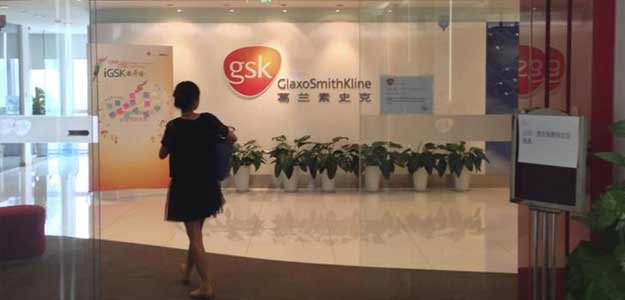
Chinese police on Wednesday said they had charged the British former China head of drugmaker GlaxoSmithKline PLC and other colleagues with corruption, after a 10-month probe found they paid billions of yuan in bribes to doctors and hospitals.
Mark Reilly and two Chinese executives, Zhang Guowei and Zhao Hongyan, were also suspected of bribing officials in the industry and commerce departments of Beijing and Shanghai, the official Xinhua news agency reported, quoting police in Hunan province.
It is the biggest corruption scandal to hit a foreign company in China since the Rio Tinto affair in 2009, which resulted in four executives including an Australian being jailed for between seven and 14 years each.
"(GSK) departments offered bribes to hospitals and doctors as well as personnel to boost their sales. The money involved was in the billions of yuan (hundreds of millions of dollars)," a Ministry of Public Security official told a press conference in Beijing.
A China-based GSK spokesman was not immediately available for comment.
The allegations have damaged GSK's reputation, thrown its China management team into turmoil and forced it to change its China business model, although the firm says head office had no knowledge of alleged wrongdoing.
China is a key growth market for large drugmakers, which are counting on the country's swelling middle class to offset declining sales in Western countries.
But bribery between sales staff and doctors is rife in the world's second-biggest economy, and it remains to be seen whether the GSK case will be a one-off or the first of a broader campaign to clean up the Chinese health sector.
Before the scandal, GSK's China sales had risen 14 per cent year-on-year in the three months to end-June, but revenue in the country plunged 61 per cent in the third quarter and 29 per cent in the final quarter of 2013.
The crackdown reflects a growing determination by Chinese authorities to stamp out corporate bribery and corruption, which can drive up prices for consumers.
($1 = 6.2291 Chinese Yuan)
Copyright: Thomson Reuters 2014

-
Where You Live Shapes How You Get To Work | The Reason Why

Two-wheelers are the most popular way to get to work in India, accounting for nearly 43% of workplace commutes.
-
High US Salaries, No Green Card Certainty: The Financial Calculation Facing Indian H-1B Families
The suspension of PERM processing at eight technology employers does not cancel existing H-1B visas. What it does is force a question many Indian families have been avoiding: is the US salary worth tying your career and family plans to one employer?
-
Unhedged Position: Can India See An Indonesia-Style Time Correction?
The Nifty is trading below levels it first clocked in 2024. Is there, then, as I have suggested in the headline, potential that the current time correction drags on painfully for the next three-five, even ten years?
-
Navigating Friction And Energy Realities: An Analysis Of Marco Rubio's October Visit To India
Occurring at a critical juncture marked by stalled trade negotiations and escalating geopolitical pressures over global energy supplies, the visit offers a profound window into modern US-India relations.
-
India Exports Capital. Why Not Export Trusteeship?
The big question, then, is whether India can build an institution that global borrowers, investors, banks, and lawyers can trust, even without an Indian connection.
-
France's Economy & Politics Are In Crisis | The Reason Why
Let's look at how the French economy and politics evolved under Nicolas Sarkozy, Franois Hollande and Emmanuel Macron.
-
You May Inherit The Business. You Must Earn Its Credibility.
Succession tests the founder's ability to share authority as much as it tests the next generation's readiness to assume it.
-
Signing Deals Is One Thing; Making Them Work Is Another | The Week In Whys
Sometimes, things don't turn out as planned. Indian companies have lost some bids to rivals, some projects won't produce until 2030.
-
FOMC Wall, PERM Suspension, Hospital Stocks | Talking Points This Week
A PERM suspension would directly affect green-card sponsorship rather than H-1B visas, so the near-term earnings impact could remain relatively limited. The key question is whether this marks a new phase in US scrutiny of Indian IT.
-
Everything, Everywhere, All At Once: Dalal Street's Week To Forget | Joining The Dots
Visa curbs, a Starlink spat and cancer drug caps: what connects this week's shocks for Indian markets









