Government's New Foreign Investment Rules Worry Chinese Investors
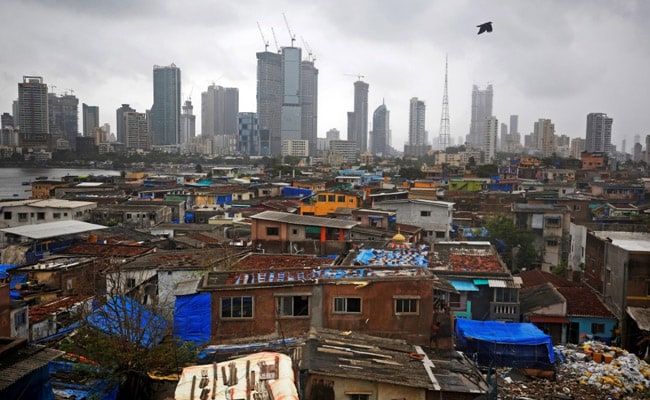
Government's plan to screen foreign direct investments from neighbouring countries has Chinese firms concerned that such scrutiny will affect their projects and delay deals in one of Asia's most lucrative investment markets.
The tougher rules were not a surprise, as other countries are also on guard against fire sales of corporate assets during the coronavirus outbreak, but that they apply to investments from countries that share a land border with India raised eyebrows.
Unlike neighbouring Pakistan, Bangladesh, Myanmar, Nepal and Bhutan, China has major investments in India.
Chinese firms existing and planned investments in India stand at more than $26 billion, research group Brookings said in March, with the world's second-most populous nation emerging as a key market for everything from automobiles to digital tech.
Chinese automakers Great Wall Motor and SAIC unit MG Motor have bet big on India while its tech giants Tencent and Alibaba have fuelled growth of Indian digital payments firms Paytm, grocer BigBasket and ride-hailing giant Ola.
The new rules are to curb "opportunistic" takeovers during the coronavirus outbreak that has hit Indian businesses, but government sources have said they will also apply to greenfield investments. China has called the rules "discriminatory".
Some Chinese investors have already "put things on hold" as they await further clarity on the rules, said Vaibhav Kakkar of law firm L&L Partners.
"Every Chinese investor is worried, any government approval could take months," said Mr Kakkar, who advises several foreign companies and investors.
This will affect India's digital businesses who are in dire need of funds to tide over the coronavirus crisis, he said.
MG Motor and Great Wall are concerned about the policy and its possible implications on future investment plans, according to four sources familiar with the thinking.
While MG started selling cars in India last year, it is yet to fully invest the $650 million it has committed to India. Great Wall is yet to start production in India but said in February it plans to invest $1 billion in the coming years.
"Sentiment wise it's not been taken well but it will not change the investment plans for now," said one of the sources who works closely with Chinese automakers in India.
MG Motor and Great Wall did not respond to a request for comment.
Craft beer maker Bira's roughly $50 million of bridge financing round that involved Chinese investors could be delayed due to the new rules, said an industry source with direct knowledge. Bira did not respond to a request for comment.
Anti-China Sentiment
Industries ministry is reviewing several queries received since the policy was made public over the weekend, but it has not been decided if further clarifications will be issued, a government official told Reuters.
The new rules govern entities located in a country that shares a land border with India. Such foreign direct investments will now require government approval, meaning they can't go through a so-called automatic route, and will also apply on investments from Hong Kong, Reuters has reported.
The policy risks souring relations between the two nations and furthering anti-China sentiment already festering in India before the coronavirus outbreak.
Companies regularly battle consumer perception that Chinese goods are of inferior quality and those views have only worsened as the coronavirus epidemic spread from China around the world.
Welcoming the investment rules, Ashwani Mahajan of the Swadeshi Jagran Manch said domestic startups should not rely on any Chinese funding as there was enough local capital available.
"We have even more reasons to oppose China now there is a general feeling against China, and secondly we have been saying Chinese goods are of bad quality," said Mr Mahajan.
Government think tank Niti Aayog's chief executive Amitabh Kant defended the screening of investments and rejected the notion it was targeting China.
"Nowhere have we said that we are going to constrain China's investment. They have been a big player in India's start-up story," Mr Kant told a television news channel.

-
Midterm Rally Lasted A Day. The Hard Reality Of A Divided US May Last Two Years | Opinion

Between a contested AI boom, a debt ceiling that arrives in 2027 and a president with every incentive to act alone, the next two years may prove more volatile than the first day's rally suggests.
-
Blue Wave Will Derail the AI Trade but Won't Dismantle the AI Era | Unhedged Position
The Democrats' sweep of the US Congress will see politics collide with economic forces both over the long and short term.
-
It's Time To Take The GST Council's Bet On Trust Global
Payment records can prove India's services exports, and clear, proportionate rules can bring foreign digital sellers into the tax net.
-
Opinion | India at 38: From Innovation Overperformer to Innovation Powerhouse
India now has 453 VC-backed deep science startups, 18 of them late-stage, after 117 percent growth since 2020. Laurus Labs, at USD 9.3 billion, is the most valuable deep science company in any middle-income economy outside China.
-
Navigating Energy Crossroads: S Jaishankar's Call For Diversified Supply Chains At G20 Ministerial Meeting
As geopolitical fault lines continue to test maritime trade routes and commodity flows, Jaishankar's message remains pertinent: true economic resilience requires open markets, protected transit lines, and a genuine commitment to multilateral cooperation rather than coercion.
-
Indians Are Travelling, But Not Every Journey Is A Holiday | The Week In Whys
Pilgrims, patients and working women are the real travellers, and the system hasn't quite caught up with them.
-
Getting To Work Costs Women More | The Reason Why
It is not just about women paying more than men. It is about women paying much more in cities than in villages.
-
AI Bias In Investing Cannot Be Eliminated, But It Can Be Governed
Framing is a particularly important example as identical financial information presented in terms of gains rather than losses can lead an LLM to reach a different assessment.
-
Joining The Dots | Dark Skies, Steady Diya: Why Hope Holds This Diwali
With war, a weak rupee and foreign outflows weighing on sentiment, policymakers at the NDTV World Summit and market veterans at NDTV Profit Ignite: Diwali Edition offered the same advice: stay invested and filter out the noise.









