China’s Alibaba Under Fire Over Use Of Customer Data
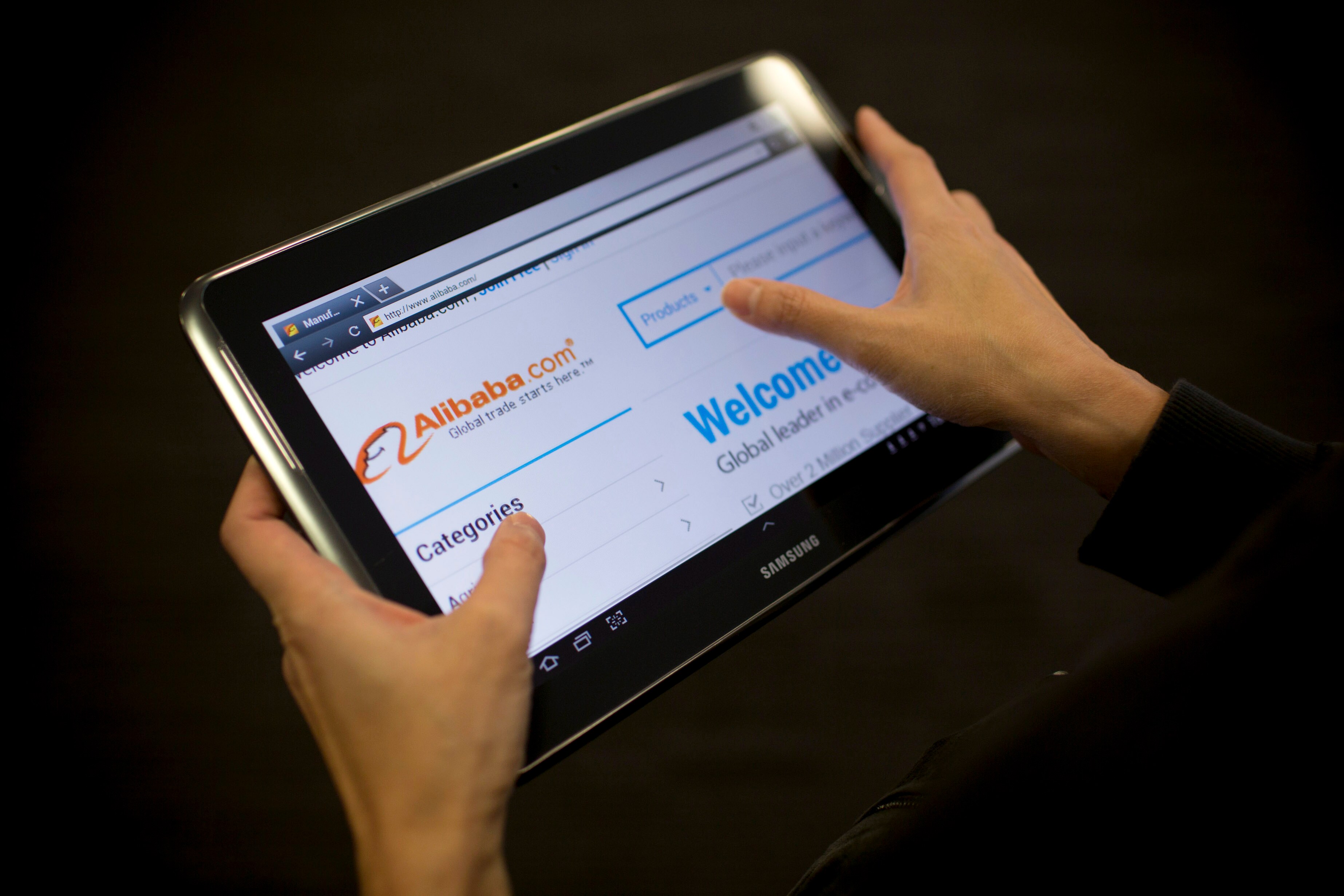
Chinese e-commerce giant Alibaba has come under fire over its handling of user data in an episode that underscores growing concerns for privacy in the hyper-digitised country.
Alibaba affiliate Ant Financial was forced to apologise on Wednesday after users said they felt misled into allowing its Alipay service to share data on their spending habits with Ant's credit-scoring arm and other third-party services.
Controlled by Alibaba co-founder Jack Ma, Ant Financial provides mobile payment, lending, and credit services to millions of Chinese consumers, and the controversy has featured prominently in China's state-controlled media this week.
Consumers have come to expect a lack of privacy in a country where the government collects a file of personal data on each person including financial, education and other information, and where video surveillance is widespread.
But many Chinese internet users reacted with unusual outrage to learn that Alipay, which is used by millions daily to make mobile and online purchases on Alibaba's Taobao platform and elsewhere, had automatically checked a box and hidden language showing they agreed to share their data.
"It's just like Taobao profiting from selling our information, there's no way to refuse!" one user of China's Twitter-like Weibo service complained.
The sale of personal information is common in China, which last year implemented a controversial cybersecurity law that among other things requires services to store user data in China and receive approval from users before sharing their details.
"Because lots of information is already out there, everyone thinks there is no way to protect our personal information," said Yue Shenshan, the lawyer whose online posts helped highlight the Ant Financial issue.
“But if we don't focus on protecting our private information right now, the situation will only worsen.” Ant Financial embedded the new policy in a page Alipay users see when they click through to see their 2017 spending activity.
Screenshots of the activity are frequently freely shared on social media by users who boast either about their purchasing power -- or frugality.
"So angry" wrote one executive at a Beijing internet company who this week posted a screenshot of his 9.6 million yuan ($ 1.48 million) Alipay tab for the year. The data also revealed he ranked 301 on a list of the largest spenders in one district of Beijing.
Ant Financial said in a statement that it has since changed the opt-in policy and showed users how to change their settings.
"We are deeply sorry to everyone for the misunderstanding and panic this incident caused," it said.
Privacy is a particularly high-profile issue now as the Chinese government is in the process of developing a national "social credit" scoring system that may rate people on everything from their credit-worthiness to their loyalty to the Communist Party.
Ant Financial's credit-scoring unit Sesame Credit may someday feed data into that system.
The Alipay controversy arose just as regulators in Washington this week rejected Ant Financial's proposed acquisition of US-based MoneyGram after concerns were raised over the security of American customers' data.
The article was originally published in AFP.

-
Why Amazon And Flipkart Are Struggling To Beat Meesho In India's Smaller Cities

With 274 million users and lowest-cost logistics, Meesho is defending its value commerce crown against giants like Amazon and Flipkart.
-
High US Salaries, No Green Card Certainty: The Financial Calculation Facing Indian H-1B Families
The suspension of PERM processing at eight technology employers does not cancel existing H-1B visas. What it does is force a question many Indian families have been avoiding: is the US salary worth tying your career and family plans to one employer?
-
Swiggy vs Eternal: Food Delivery's Two Rivals Are No Longer In The Same Race
Eternal is building a private AI assistant, dark.ai. Swiggy is still working out how to make Instamart pay, with an operating loss of Rs 895 crore in the July-September quarter while Blinkit stayed profitable.
-
Where You Live Shapes How You Get To Work | The Reason Why
Two-wheelers are the most popular way to get to work in India, accounting for nearly 43% of workplace commutes.
-
Unhedged Position: Can India See An Indonesia-Style Time Correction?
The Nifty is trading below levels it first clocked in 2024. Is there, then, as I have suggested in the headline, potential that the current time correction drags on painfully for the next three-five, even ten years?
-
Navigating Friction And Energy Realities: An Analysis Of Marco Rubio's October Visit To India
Occurring at a critical juncture marked by stalled trade negotiations and escalating geopolitical pressures over global energy supplies, the visit offers a profound window into modern US-India relations.
-
India Exports Capital. Why Not Export Trusteeship?
The big question, then, is whether India can build an institution that global borrowers, investors, banks, and lawyers can trust, even without an Indian connection.
-
France's Economy & Politics Are In Crisis | The Reason Why
Let's look at how the French economy and politics evolved under Nicolas Sarkozy, Franois Hollande and Emmanuel Macron.
-
You May Inherit The Business. You Must Earn Its Credibility.
Succession tests the founder's ability to share authority as much as it tests the next generation's readiness to assume it.
-
Signing Deals Is One Thing; Making Them Work Is Another | The Week In Whys
Sometimes, things don't turn out as planned. Indian companies have lost some bids to rivals, some projects won't produce until 2030.










