China’s Fury Over Fukushima Water Casts Shadow on Asean Forum
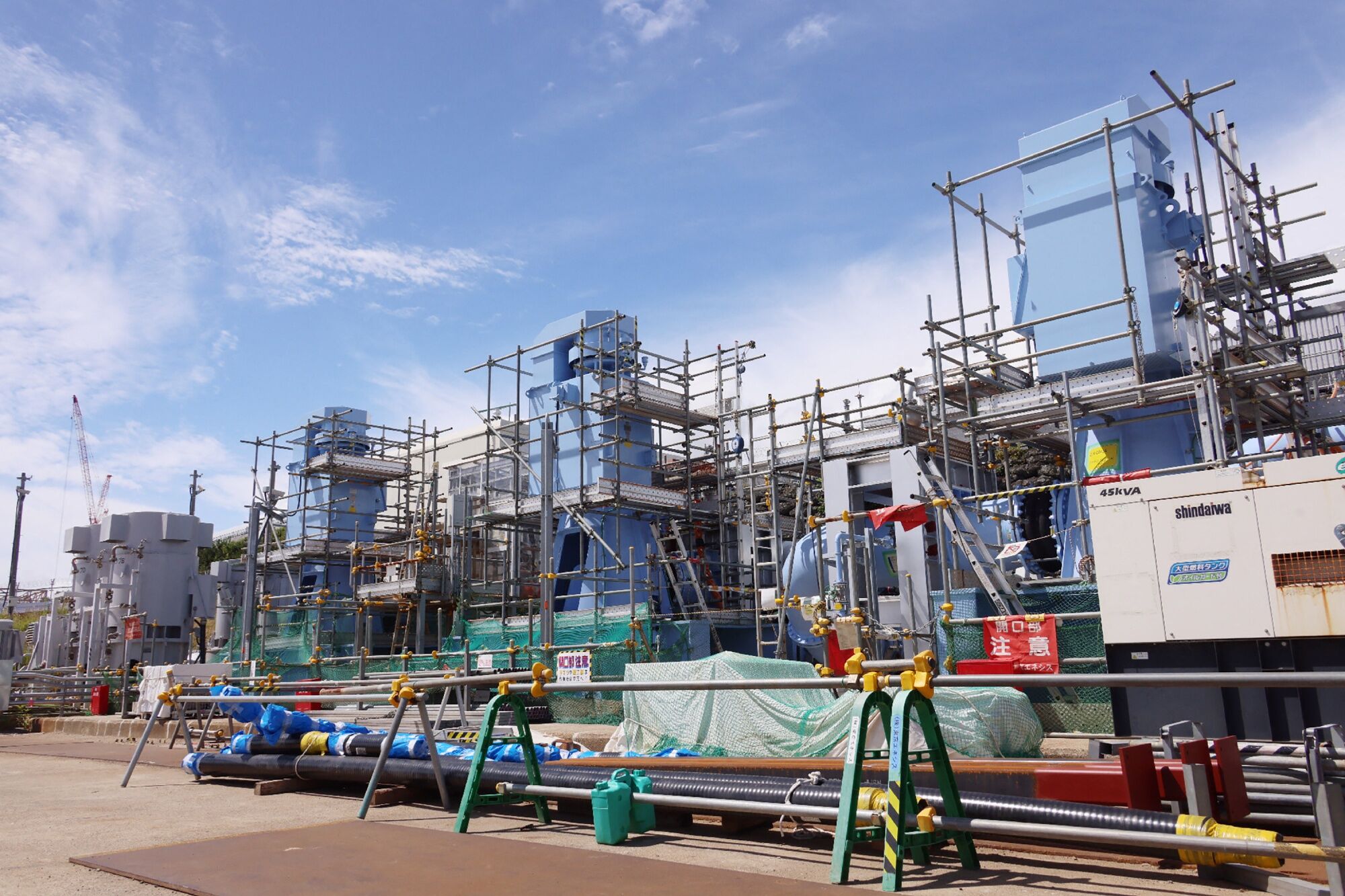
(Bloomberg) -- China's outrage over Japan's release of treated wastewater from the crippled Fukushima nuclear plant has dimmed prospects for improved ties when top officials of the two countries meet this week.
Prime Minister Fumio Kishida and Chinese Premier Li Qiang will attend the Asean summit in Jakarta in what could have been a chance to stabilize relations. Instead, Li might use the meeting with Southeast Asia nations and South Korea as an opportunity to berate Kishida in front of regional dignitaries.
Beijing has been the most vocal opponent to Japan's move to discharge treated radioactive water into the ocean. Even though scientists, including at least one from China who contributed to an International Atomic Energy Agency-led review of the plan, have said the release will have a negligible impact on people and the environment, the backlash was immediate and extreme.
Read more: Why Japan Is Releasing Fukushima Water Into the Sea: QuickTake
The government banned all Japanese seafood imports, prompting Tokyo to threaten World Trade Organization action. State media dialed up criticisms of the move. People called for boycotts of Japanese products. The Japanese embassy, consulates and schools in China were pelted with eggs and stones.
With the Asean summit starting Tuesday, Beijing may seize the chance to push back against Tokyo's increasingly cozy ties with Washington and Seoul. US President Joe Biden hosted a three-way summit with Kishida and South Korean President Yoon Suk Yeol in August that left China increasingly isolated.
“Anything that China can do to sow division between Japan and its regional partners, it will do,” said Bates Gill, executive director of the Asia Society Policy Institute's Center for China Analysis.
Fraught relations between China and Japan have laid the groundwork for public mistrust of the water release. Chinese state media promoted cartoons, including one that depicts a monster rising from the ocean apparently spawned by radiation. Hu Xijin, former editor-in-chief of Global Times, posted a clip from The Simpsons on his X account showing a three-eyed fish.
“The disinformation campaign around the water release has geopolitical context,” said Hamsini Hariharan, a China-focused researcher at Logically, a company that provides fact-checking services using AI.
“This is part of a larger campaign to point out how the US and its allies are failing the world and people across the world,” Hariharan said. “It's definitely to discredit Japan but is part of larger foreign policy goal that China has.”
The Chinese government has repeatedly said Japan failed to prove the release is safe and harmless to people and the environment. By dumping the water, Japan is spreading the risk to the rest of the world, according to Beijing.
The incident may also be a useful distraction from China's own problems. The world's second-biggest economy is slowing, debt is rising, the property market is in the doldrums and youth unemployment has soared to a record.
“Domestically, I think that China's playing a diversionary strategy,” said Yinan He, an associate professor in the Department of International Relations at Lehigh University. “This is a good opportunity for the government to divert public attention away from domestic problems to Japan.”

How far it will affect Japan's economy remains to be seen. Fisheries exports make up a tiny proportion of Japan's gross domestic product. Ill feeling could hamper an anticipated increase in Chinese tourism to Japan, although such downturns have in the past been short-lived, Bloomberg Economics said.
Read more: JAPAN INSIGHT: Wastewater, China Tourism Risk and History (1)
Relations between the two Asian giants hit their lowest point in decades in 2012 due to a territorial dispute over a group of islands in the East China Sea. It took former Prime Minister Shinzo Abe almost two years to secure a meeting with President Xi Jinping from which point ties gradually warmed.
Kishida himself scored a formal meeting with Xi on the sidelines of the Asia Pacific Economic Cooperation Forum in Bangkok in November last year, at which the two leaders asserted their desire to improve relations.
There are signs China wants to work on ties. Foreign Minister Wang Yi told his South Korean counterpart that he supports Seoul's efforts to resume three-way summits that include Japan. China and South Korea exchanged views on Japan's wastewater discharge, Beijing said in a statement late Thursday.
China and Japan are engaged in a “quarrel,” said Alfred Wu, associate professor at the National University of Singapore's Lee Kuan Yew School of Public Policy. He doesn't expect things to become as bad as 2012 when there were mass protests, but doesn't see a swift resolution either.
“It'll take time to go back to normal,” he said. “It'll take weeks, months or even more. Then the China side will gradually cool down.”
--With assistance from Stephen Stapczynski and James Mayger.
More stories like this are available on bloomberg.com
©2023 Bloomberg L.P.

-
Navigating Energy Crossroads: S Jaishankar's Call For Diversified Supply Chains At G20 Ministerial Meeting

As geopolitical fault lines continue to test maritime trade routes and commodity flows, Jaishankar's message remains pertinent: true economic resilience requires open markets, protected transit lines, and a genuine commitment to multilateral cooperation rather than coercion.
-
Indians Are Travelling, But Not Every Journey Is A Holiday | The Week In Whys
Pilgrims, patients and working women are the real travellers, and the system hasn't quite caught up with them.
-
Getting To Work Costs Women More | The Reason Why
It is not just about women paying more than men. It is about women paying much more in cities than in villages.
-
AI Bias In Investing Cannot Be Eliminated, But It Can Be Governed
Framing is a particularly important example as identical financial information presented in terms of gains rather than losses can lead an LLM to reach a different assessment.
-
Joining The Dots | Dark Skies, Steady Diya: Why Hope Holds This Diwali
With war, a weak rupee and foreign outflows weighing on sentiment, policymakers at the NDTV World Summit and market veterans at NDTV Profit Ignite: Diwali Edition offered the same advice: stay invested and filter out the noise.
-
The Curious Case of Equitas Small Finance Bank And A CEO Who Quit For Stock
PN Vasudevan believes persistent investor concerns over a perceived conflict of interest had become a governance overhang on Equitas Small Finance Bank's stock, even as the lender improved profitability and asset quality.
-
Talking Points This Week: AI Cash Burn, A Tiger Comeback And An India That Still Finds Its Own Path
India is not immune to higher oil or tighter global liquidity, yet its earnings base is broader, its domestic policy levers are still available.
-
Foreign Investors Own Half Of HDFC Bank and ICICI Bank. An LTCG Cut Could Matter Most Here
Foreign portfolio investors have US$115 billion parked in HDFC Bank, ICICI Bank. If the government cuts long-term capital gains tax, Jefferies says returning foreign money could land here first.
-
'Never Seen This Level Of Negativity': Sandeep Tandon Says The Next Rally May Be Closer Than You Think
Veteran investor Sandeep Tandon says foreign selling is easing, large-caps are due a comeback and mid-caps are crowded, while he turns positive on gold, power and pharma this Diwali.
-
Indians Stay With Family, Not In Hotels | The Reason Why
India still lacks enough clean, reliable and affordable hotels for budget-conscious travellers.










