China’s Factory Sector Contracts as Recovery Concerns Linger
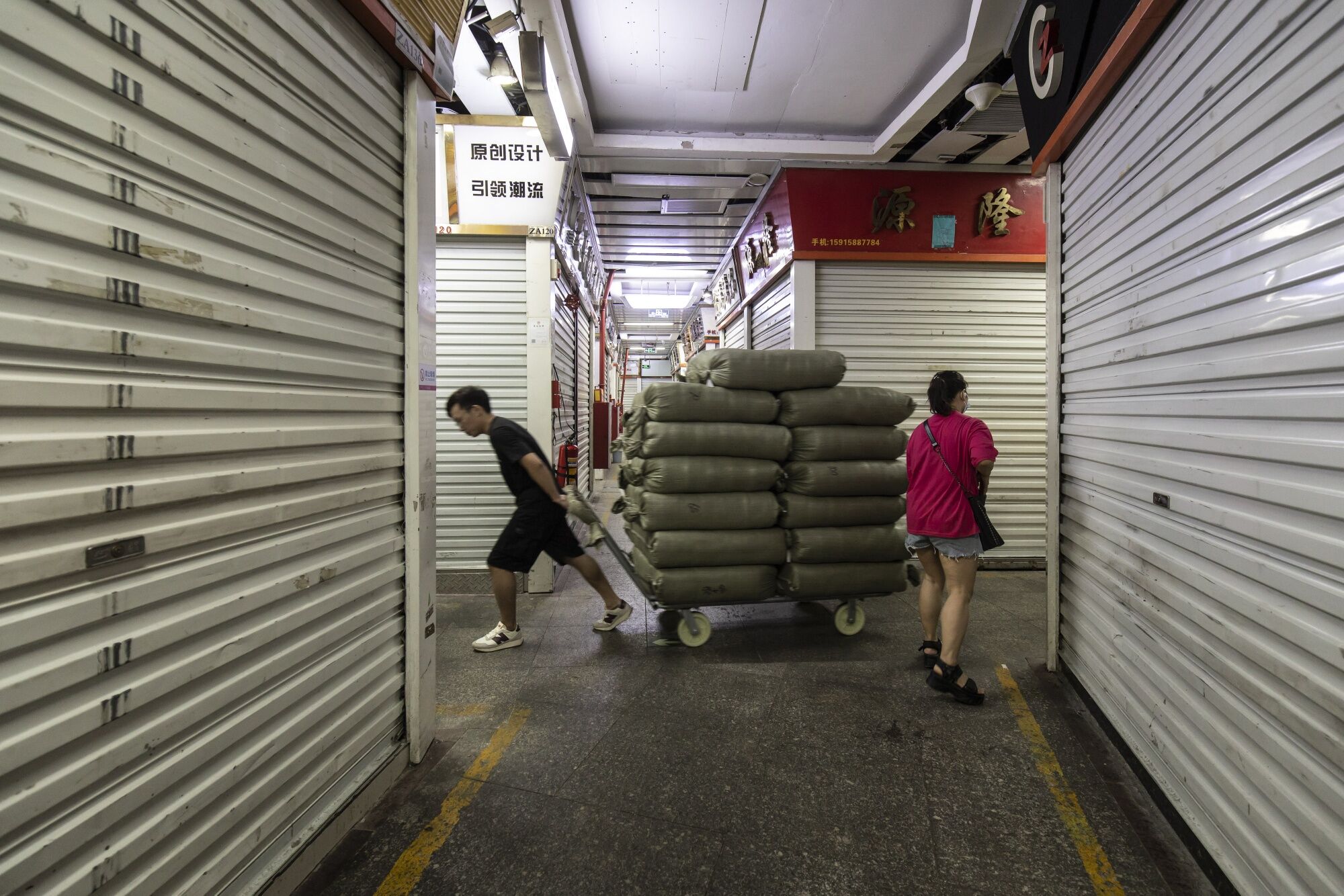
(Bloomberg) -- China's manufacturing activity unexpectedly contracted in April, a sign the economic recovery remains patchy and may be struggling to sustain momentum.
The official manufacturing purchasing managers' index fell to 49.2 from 51.9 in March, the National Bureau of Statistics said Sunday. The gauge dropped below the level of 50 — which signals contraction from the previous month — for the first time since December. Economists surveyed by Bloomberg had forecast 51.4.
A non-manufacturing gauge of activity in the services and construction sectors declined to 56.4 from 58.2 in March. Economists had forecast the index to hit 57. A reading above 50 indicates expansion.

“This is a mixed PMI report and suggests that China's post-Covid recovery has somewhat lost steam and calls for continued policy support,” said Zhou Hao, chief economist at Guotai Junan International Holdings Ltd.
The Communist Party's Politburo — the top decision-making body led by President Xi Jinping — on Friday said the recovery needs continued “forceful” fiscal and monetary support due to insufficient domestic demand. That signaled a cautious approach that keeps policy largely unchanged.
The world's second-largest economy expanded at the fastest pace in a year last quarter, driven by consumer spending as the end of Covid restrictions lifted activity. Several major banks raised their annual growth forecasts to about 6% or higher, expecting the economy to outperform Beijing's target of around 5% growth.
As the unexpected contraction in manufacturing activity showed, there's still uncertainty if the recovery can be sustained. The property sector's rebound has only just started, while investment has continued to fall. Industrial firms are struggling to turn a profit. Youth unemployment is also hovering near record highs.
“The recovery of domestic demand is not broad based,” and while travel may be up, property market activities seem still muted, and joblessness is high, said Zhang Zhiwei, chief economist at Pinpoint Asset Management Ltd. “These mixed signals will likely keep the pressure on the government to continue its supportive fiscal and monetary policies” in the second quarter, he said.
The new orders subindex under the manufacturing PMI was at 48.8, falling into contraction territory for the first time since December when Chinese authorities abruptly ended Covid restrictions and hundreds of millions were infected nationwide. The sub-gauges for new export orders and manufacturing employment also contracted.
The drop in the manufacturing gauge is “due to factors including insufficient market demand and the high base in the first quarter when the manufacturing industry rapidly recovered,” NBS senior statistician Zhao Qinghe said in a statement accompanying the data release.
Some analysts, including Bruce Pang, chief economist for Greater China at Jones Lang LaSalle Inc., also pointed to fewer working days in April due to public holidays as one of the factors resulting in the fall in factory activities.
Services activity expanded as consumption continued to rebound, though the growth came at a slower pace than the previous month. The services subindex under non-manufacturing PMI fell to 55.1 from 56.9. Construction activities grew rapidly, reflecting strong growth from infrastructure and other major projects.
(Updates with economists' comments, details of PMIs throughout.)
More stories like this are available on bloomberg.com
©2023 Bloomberg L.P.

-
Ten Things I Learnt This Samvat

Patience can be a trap. Cheap stocks can stay cheap. Leverage can wipe you out. What did Samvat 2082 teach us? Niraj Shah writes on 10 lessons from the year gone by.
-
Talking Points This Week: Tech Nerves, FII Buying, And A Faraway Banking Shock
The global markets are not shining this Diwali. The exception in the large markets is, India.
-
Midterm Rally Lasted A Day. The Hard Reality Of A Divided US May Last Two Years | Opinion
Between a contested AI boom, a debt ceiling that arrives in 2027 and a president with every incentive to act alone, the next two years may prove more volatile than the first day's rally suggests.
-
Blue Wave Will Derail the AI Trade but Won't Dismantle the AI Era | Unhedged Position
The Democrats' sweep of the US Congress will see politics collide with economic forces both over the long and short term.
-
It's Time To Take The GST Council's Bet On Trust Global
Payment records can prove India's services exports, and clear, proportionate rules can bring foreign digital sellers into the tax net.
-
Opinion | India at 38: From Innovation Overperformer to Innovation Powerhouse
India now has 453 VC-backed deep science startups, 18 of them late-stage, after 117 percent growth since 2020. Laurus Labs, at USD 9.3 billion, is the most valuable deep science company in any middle-income economy outside China.
-
Navigating Energy Crossroads: S Jaishankar's Call For Diversified Supply Chains At G20 Ministerial Meeting
As geopolitical fault lines continue to test maritime trade routes and commodity flows, Jaishankar's message remains pertinent: true economic resilience requires open markets, protected transit lines, and a genuine commitment to multilateral cooperation rather than coercion.
-
Indians Are Travelling, But Not Every Journey Is A Holiday | The Week In Whys
Pilgrims, patients and working women are the real travellers, and the system hasn't quite caught up with them.
-
Getting To Work Costs Women More | The Reason Why
It is not just about women paying more than men. It is about women paying much more in cities than in villages.









