China’s Export Slump Eases as Economy Searches for Stability
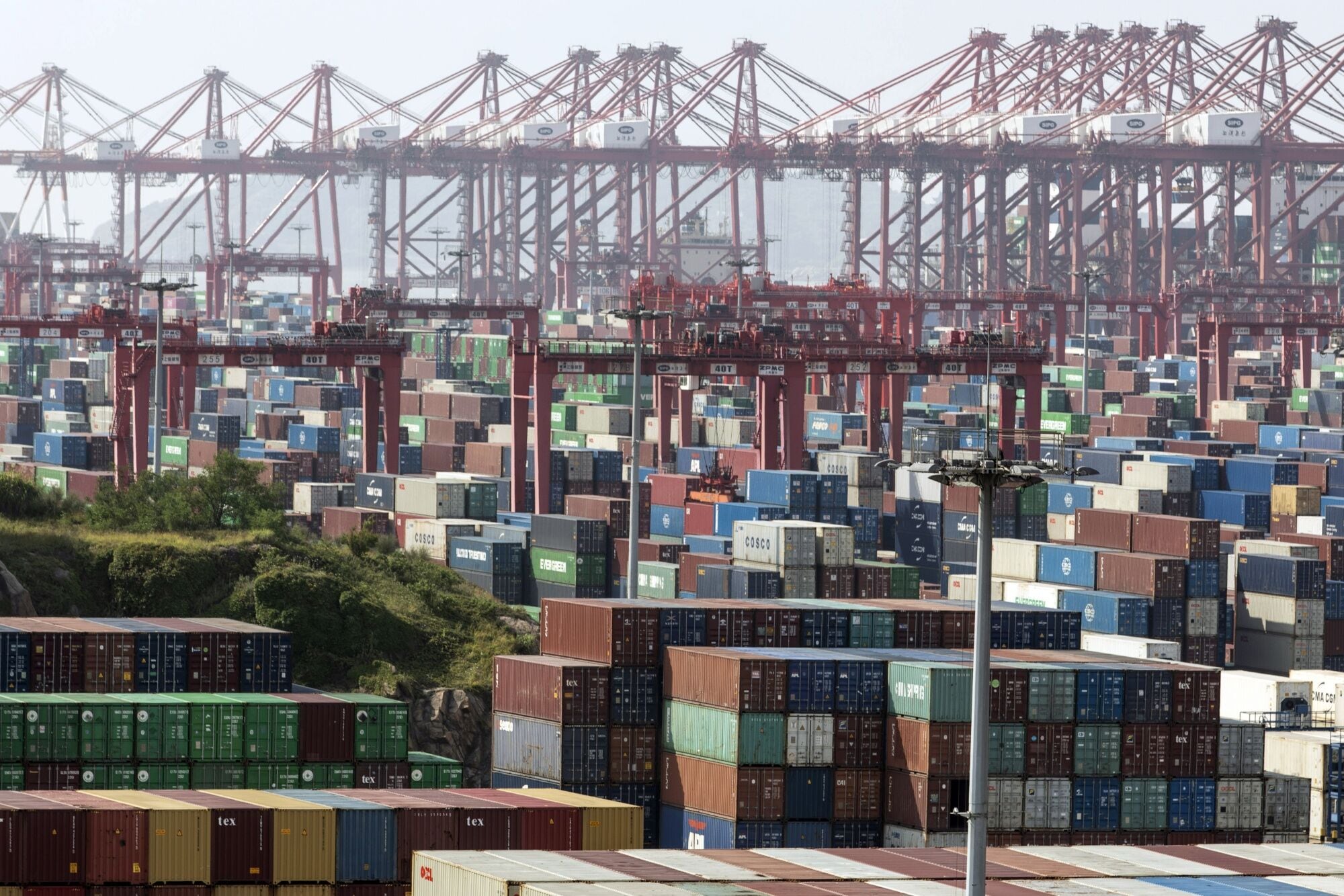
(Bloomberg) -- China's trade slump eased in August, adding to early signals the worst may be over for some parts of the world's second-largest economy as it tries to regain momentum.
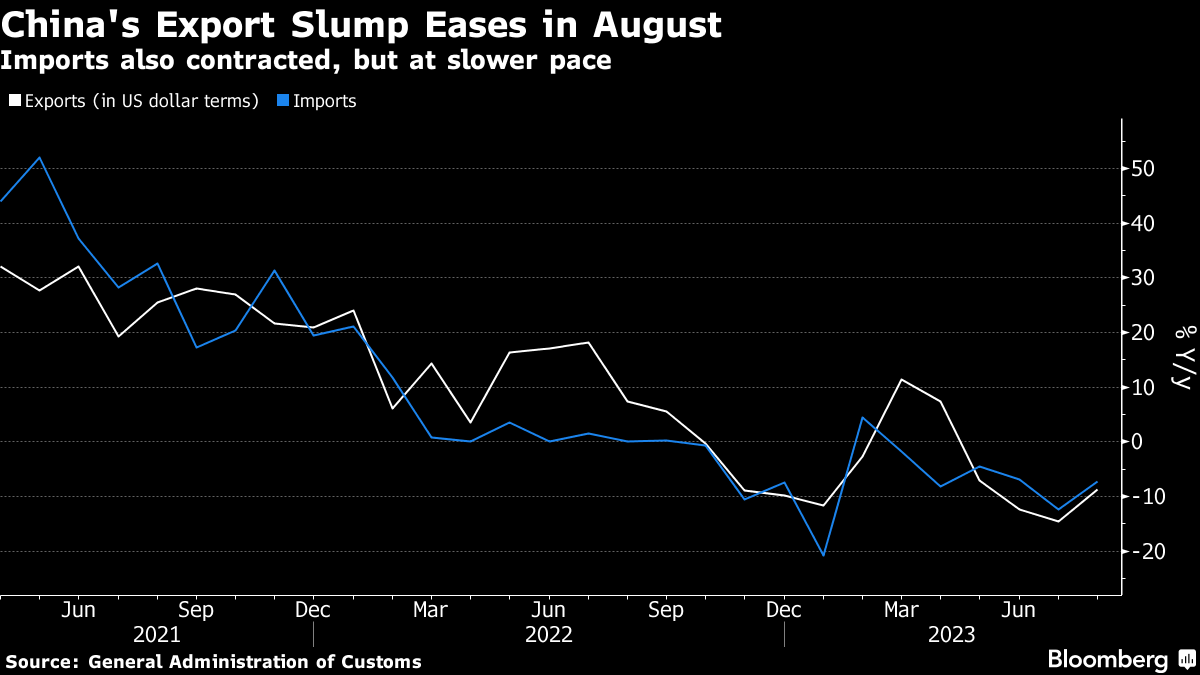
Overseas shipments fell 8.8% in dollar terms from a year earlier while imports contracted 7.3%, both better than estimates and significantly less severe than July's downturn. The trade surplus was $68 billion for the month.
“Improving China trade data is an early sign of growth stabilization,” said Raymond Yeung, chief economist for greater China at Australia & New Zealand Banking Group Ltd.
Other data has suggested global demand is beginning to pick up, providing some hope for China's trade in the coming months. South Korea's exports — a bellwether for world trade — also declined at a more moderate pace in August than the previous month.
Thursday's data showed China's shipments to Europe and Asean continuing to record double-digit declines, but there was a notable improvement in US trade: Exports dropped 9.5% in August, compared to a 23.1% slump in July.
Exports had been a key source of growth for the nation during the pandemic, but muted global demand has weighed on shipments throughout the year and exacerbated the economic slowdown. While economists still expect China's growth to match an official government target of around 5% for the year, the ongoing property crisis and weak confidence remain drags.
The milder decline in imports, meanwhile, provided a sign that the downturn in domestic demand may be bottoming out. China's government has in recent weeks rolled out a slew of incremental measures to revive business confidence and help the ailing property market, a key source of economic strain.
“Imports are likely to recover further in the coming months,” economists at Capital Economics Ltd. wrote in a research note. “Greater progress on existing housing projects and a step up in infrastructure spending are starting to boost construction activity.”
China's benchmark CSI 300 Index of stocks declined as much as 1% on Thursday, while the Hang Seng China Enterprises Index also lost up to 1%. The yield on 10-year government bonds edge up slightly to 2.76%.
The onshore yuan retained losses, trading close to its weakest level since 2007. Even with the improvement in trade data, investors will likely remain pessimistic about yuan assets due to overall sluggish growth and the expectation that US interest rates will remain higher for longer.
“The overall momentum remains lukewarm,” said Zhou Hao, chief economist at Guotai Junan International Holdings Ltd. “The figures still suggest the headwinds remain despite some marginal improvement.”
What Bloomberg Economics Says ...
“Even if the bleeding may be stopping, reviving demand that's been hit by a deepening property slump will require more forceful steps from the government. The bolder measures announced in recent weeks — including looser rules for home buyers — will take time to feed through.”
— Eric Zhu, economist
Read the full report here.
Zhou said the chance that trade has hit a bottom will hinge on several factors, including domestic demand and the impact of property sector easing measures.
Other recent data has given some reason for cautious optimism. While an official gauge of manufacturing activity shrank for a fifth consecutive month in August, services activity is slowing — a sign that consumer spending remains subdued.
Authorities have so far avoided any large-scale fiscal stimulus amid concerns over the high debt levels in the economy. Some economists project China will miss its growth target of about 5% for this year, and Bloomberg Economics has said the nation's gross domestic product may never overtake the US in the long term.
--With assistance from Zhu Lin and Wenjin Lv.
(Updates with additional details.)
More stories like this are available on bloomberg.com
©2023 Bloomberg L.P.

-
Navigating Energy Crossroads: S Jaishankar's Call For Diversified Supply Chains At G20 Ministerial Meeting

As geopolitical fault lines continue to test maritime trade routes and commodity flows, Jaishankar's message remains pertinent: true economic resilience requires open markets, protected transit lines, and a genuine commitment to multilateral cooperation rather than coercion.
-
Indians Are Travelling, But Not Every Journey Is A Holiday | The Week In Whys
Pilgrims, patients and working women are the real travellers, and the system hasn't quite caught up with them.
-
Getting To Work Costs Women More | The Reason Why
It is not just about women paying more than men. It is about women paying much more in cities than in villages.
-
AI Bias In Investing Cannot Be Eliminated, But It Can Be Governed
Framing is a particularly important example as identical financial information presented in terms of gains rather than losses can lead an LLM to reach a different assessment.
-
Joining The Dots | Dark Skies, Steady Diya: Why Hope Holds This Diwali
With war, a weak rupee and foreign outflows weighing on sentiment, policymakers at the NDTV World Summit and market veterans at NDTV Profit Ignite: Diwali Edition offered the same advice: stay invested and filter out the noise.
-
The Curious Case of Equitas Small Finance Bank And A CEO Who Quit For Stock
PN Vasudevan believes persistent investor concerns over a perceived conflict of interest had become a governance overhang on Equitas Small Finance Bank's stock, even as the lender improved profitability and asset quality.
-
Talking Points This Week: AI Cash Burn, A Tiger Comeback And An India That Still Finds Its Own Path
India is not immune to higher oil or tighter global liquidity, yet its earnings base is broader, its domestic policy levers are still available.
-
Foreign Investors Own Half Of HDFC Bank and ICICI Bank. An LTCG Cut Could Matter Most Here
Foreign portfolio investors have US$115 billion parked in HDFC Bank, ICICI Bank. If the government cuts long-term capital gains tax, Jefferies says returning foreign money could land here first.
-
'Never Seen This Level Of Negativity': Sandeep Tandon Says The Next Rally May Be Closer Than You Think
Veteran investor Sandeep Tandon says foreign selling is easing, large-caps are due a comeback and mid-caps are crowded, while he turns positive on gold, power and pharma this Diwali.
-
Indians Stay With Family, Not In Hotels | The Reason Why
India still lacks enough clean, reliable and affordable hotels for budget-conscious travellers.










