China Races To End Property Panic, Fill $446 Billion Gap
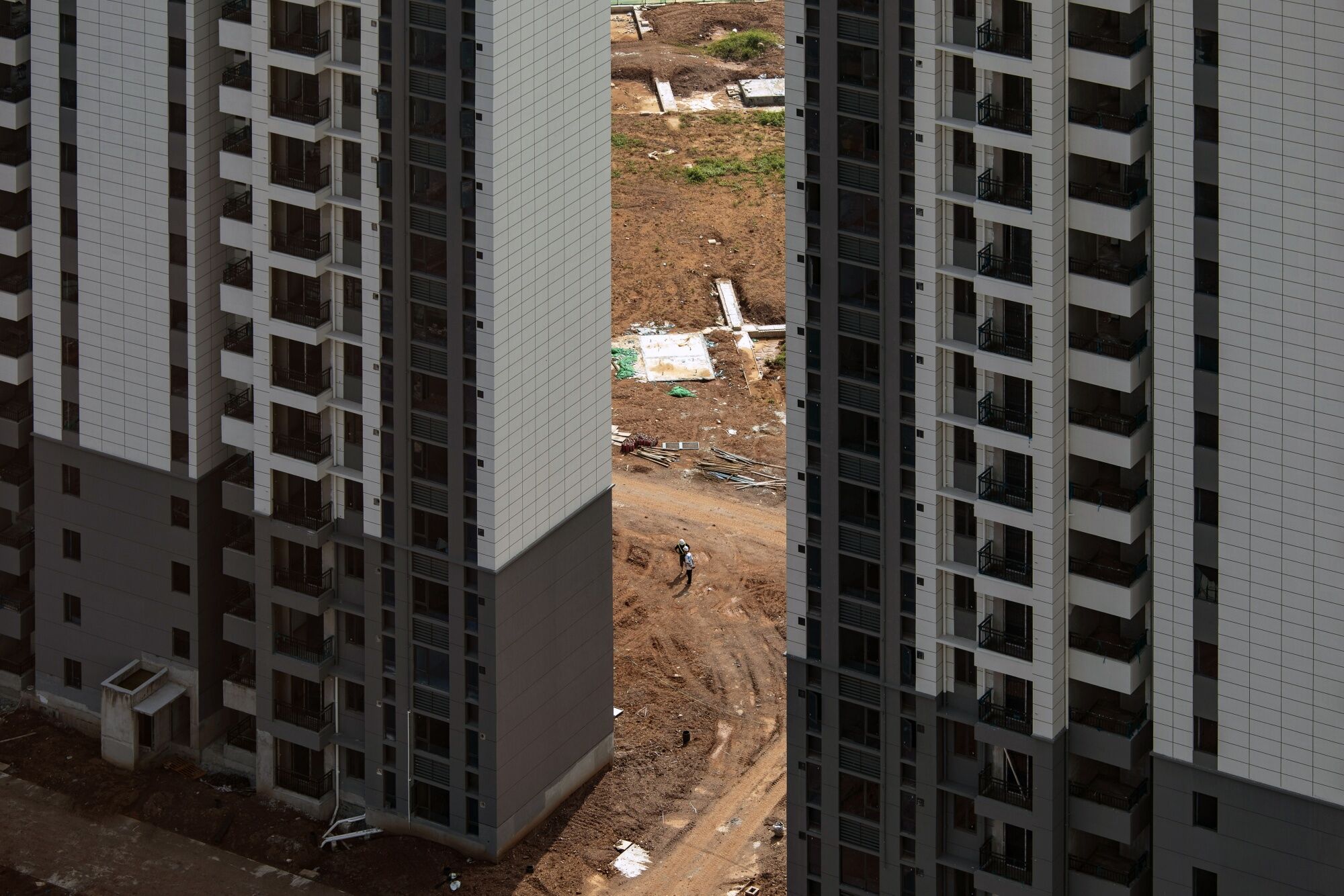
(Bloomberg) -- Chinese leaders are making their most forceful push yet to end the nation's property crisis, ramping up pressure on banks to plug an estimated $446 billion shortfall in funding needed to stabilize the industry and deliver millions of unfinished apartments.
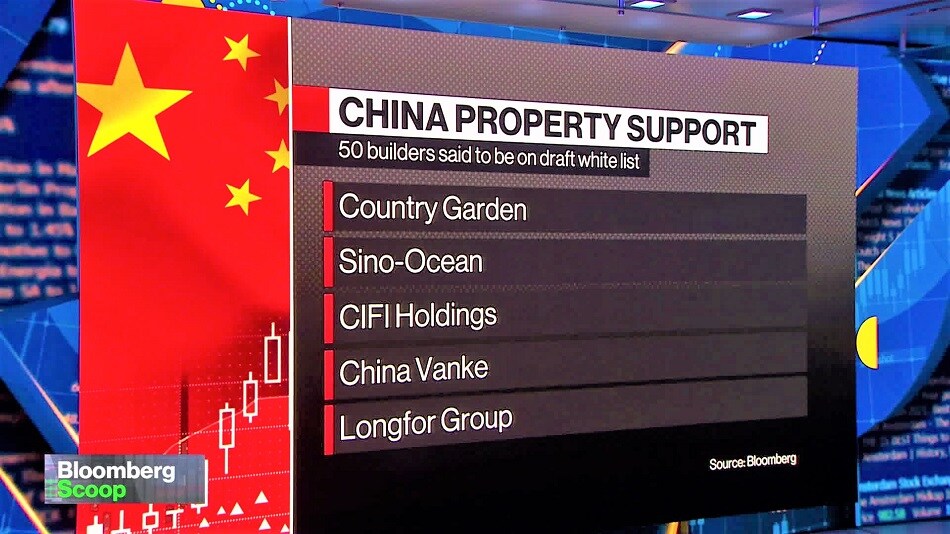
Policymakers are finalizing a draft list of 50 developers eligible for financial support that includes Country Garden Holdings Co. and Sino-Ocean Group, indicating a pivot by Beijing to help some of the most distressed builders. Meanwhile, the country's top lawmaking body said banks should increase funding for developers to reduce the risk of additional defaults and make certain that housing projects get completed.
“Ensuring unfinished homes be completed is a significant issue,” said Lu Ting, an economist at Nomura Holdings Inc. “It's about peoples' trust in the government and banks.”
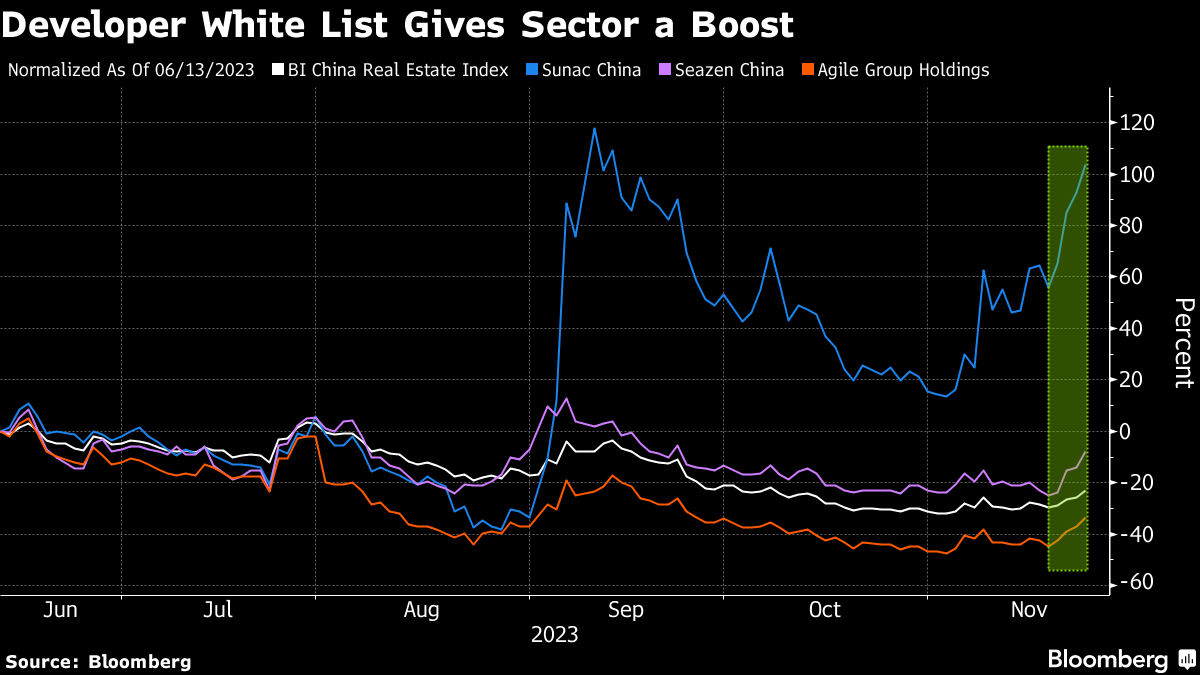
As Chinese President Xi Jinping steps up support for the broader economy, moves this week indicate increased urgency to stop a downward spiral in the property sector from derailing growth and endangering financial stability. While developer shares and bonds have climbed from distressed levels, it's unclear whether the latest measures will be enough to restore confidence. Shifting more of the burden to lenders also comes with risk.
China's $56 trillion banking industry has already been battling with shrinking margins and souring loans as authorities have steadily increased pressure on lenders to backstop the economy and the property sector. Net interest margins at the big state-owned banks dropped to a record 1.74% at the end of the first half of 2023, below the industry's 1.8% threshold seen as necessary to maintain a reasonable amount of profitability.
The sector's shares have taken a beating. A Bloomberg index of Hong Kong-listed Chinese banks has tumbled as much as 18% this year from a high in May, while the big four state banks remain near record low valuations of about 0.4 of their book value. That's even after regulators guided banks to trim deposit rates three times over the past year to ease their margin pressure and slashed reserve requirements twice this year to boost their lending capacity.
Increasing funding would ease “panicked expectations” of households, members of the standing committee of the National People's Congress, China's Communist Party-controlled parliament, said on Wednesday. The comments, by members who have nominal oversight of the central bank, add pressure on the PBOC to do more to support property.
“Like Morphine lessens the pain, but takes time to help in recovery, this is to make sure the delivery of unfinished projects, and to stop the worsening of worries on China's economic outlook,” said Steven Leung, an executive director at UOB Kay Hian in Hong Kong. “This is important to have before the Work Conference next month.”
Chinese officials are due to hold the annual Central Economic Work Conference in December to flesh out policy objectives for the coming year.
The task to stabilize the real estate sector remains challenging. Nomura estimates that the total funding gap to complete the remaining housing units would be around 3.2 trillion yuan ($446 billion), according to a note this month.
Country Garden, along with Sino-Ocean and CIFI Holdings Group Co. were included on China's draft list of 50 developers eligible for a range of support, people familiar said on Wednesday. Regulators are set to finalize the roster and distribute it to banks and other financial institutions within days, the people added.
Country Garden's 5.625% dollar bond due 2030 rallied 40% to 7.1 cents on the dollar Wednesday, the highest close since Sept. 26, according to Bloomberg-compiled data. Its 3.3% dollar bond due 2031 also gained 38% to 7.1 cents. Shares jumped as much as 7% in Hong Kong trading on Thursday.
In order for the latest policies to be effective, authorities will need to force banks to comply, said Hao Hong, chief economist at Grow Investment Group.
“If there are only incentives and no mandatory rules, it will probably be useless,” Hong said. “If you are the head of a bank and you grant property developers loans, there's a chance it will turn out to be a bad loan and those involved may be held accountable. Hard rules are needed, because otherwise why would a head of a bank take such a risk.”
Read more: Here's Everything China Is Doing to Save Its Property Market
China's previous measures have largely failed to arrest the slump in the market. The trickling of policies include mortgage-easing for homebuyers, down-payment reductions, income tax rebates, a push for urban infrastructure upgrades and affordable housing, and a 200 billion yuan special loan pledge to ensure projects are delivered.
--With assistance from John Cheng and Abhishek Vishnoi.
(Updates with analyst comments, details on support policies)
More stories like this are available on bloomberg.com
©2023 Bloomberg L.P.

-
Talking Points This Week: Tech Nerves, FII Buying, And A Faraway Banking Shock

The global markets are not shining this Diwali. The exception in the large markets is, India.
-
Midterm Rally Lasted A Day. The Hard Reality Of A Divided US May Last Two Years | Opinion
Between a contested AI boom, a debt ceiling that arrives in 2027 and a president with every incentive to act alone, the next two years may prove more volatile than the first day's rally suggests.
-
Blue Wave Will Derail the AI Trade but Won't Dismantle the AI Era | Unhedged Position
The Democrats' sweep of the US Congress will see politics collide with economic forces both over the long and short term.
-
It's Time To Take The GST Council's Bet On Trust Global
Payment records can prove India's services exports, and clear, proportionate rules can bring foreign digital sellers into the tax net.
-
Opinion | India at 38: From Innovation Overperformer to Innovation Powerhouse
India now has 453 VC-backed deep science startups, 18 of them late-stage, after 117 percent growth since 2020. Laurus Labs, at USD 9.3 billion, is the most valuable deep science company in any middle-income economy outside China.
-
Navigating Energy Crossroads: S Jaishankar's Call For Diversified Supply Chains At G20 Ministerial Meeting
As geopolitical fault lines continue to test maritime trade routes and commodity flows, Jaishankar's message remains pertinent: true economic resilience requires open markets, protected transit lines, and a genuine commitment to multilateral cooperation rather than coercion.
-
Indians Are Travelling, But Not Every Journey Is A Holiday | The Week In Whys
Pilgrims, patients and working women are the real travellers, and the system hasn't quite caught up with them.
-
Getting To Work Costs Women More | The Reason Why
It is not just about women paying more than men. It is about women paying much more in cities than in villages.
-
AI Bias In Investing Cannot Be Eliminated, But It Can Be Governed
Framing is a particularly important example as identical financial information presented in terms of gains rather than losses can lead an LLM to reach a different assessment.









