China Property Bonds Are ‘No Longer Analyzable’ As Crisis Grows
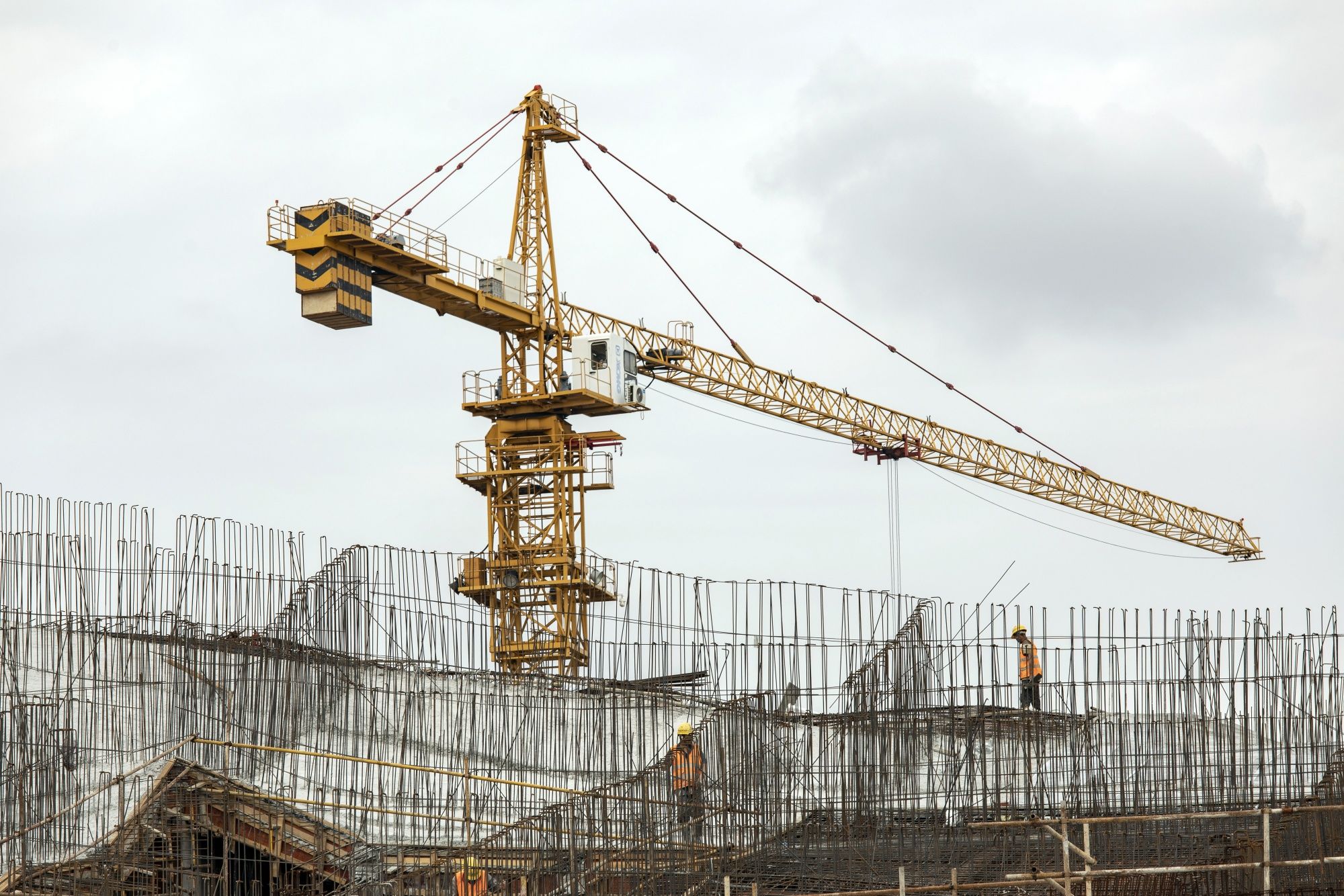
(Bloomberg) -- The crisis in Chinese property dollar bonds has become so extreme that an analyst who's been covering the market since its inception in 2005 says meaningful analysis is no longer possible.
“The proven investment approach is that it won't go wrong being negative or more negative ahead of the market,” said Zhi Wei Feng, a senior analyst at Loomis Sayles Investments Asia Pte, who was working on credit research at Barclays Capital in 2005, when the first-ever Chinese real estate firm dollar bond was issued.
“It is very frustrating when the market is no longer analyzable,” she said.
China's offshore property notes have plummeted to record lows that reflect deep distress, as defaults mount to unprecedented levels. The rout has its roots in a crackdown that started in 2020 on excessive leverage at developers as well as speculation among homebuyers, and has been worsened by Covid restrictions that exacerbated a slump in housing sales.
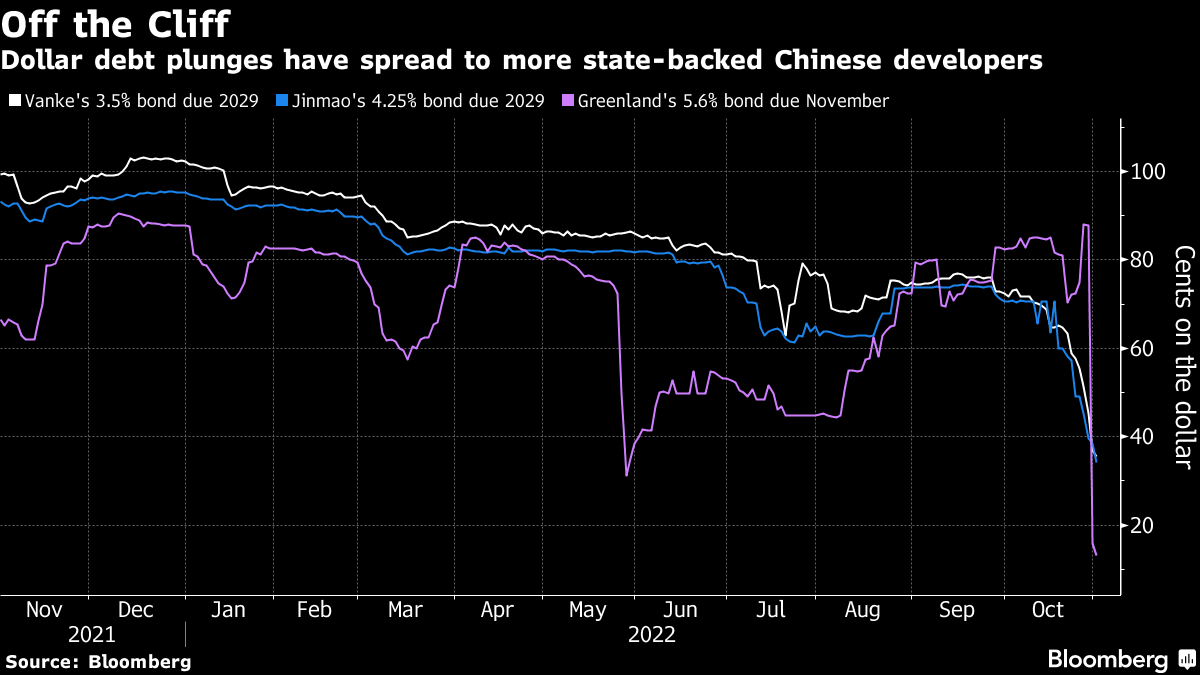
The market value of investment-grade Chinese real estate dollar bonds has dropped about 23% in the past month, versus a 7% decline for the broader Bloomberg USD China IG bond index. These better-quality builders' notes now trade at about 73% of par value on average, compared with 88% a month ago and about par as of the end of 2021, the index shows.
“Fundamental analysis of sector and company operating and financial numbers has given way to market chatters,” Feng added. She said that's being reinforced by the continued defaults, especially among builders which had been considered relatively strong or that have stayed current with releasing financial results and whose refinancing schedules hadn't suggested immediate distress.
It's an even worse picture for junk-rated firms. The average price of Chinese high-yield dollar securities, mostly issued by property companies, dropped to a record low of 50.2 cents this week, according to a Bloomberg index.
“Such prices are certainly not justified for any normal market but they are justified for a black box market which is beyond analysis,” Feng said. “We are going back to a sector of policy risk only while investors have lost all confidence towards the sector and the companies.”
More stories like this are available on bloomberg.com
©2022 Bloomberg L.P.

-
Opinion | India at 38: From Innovation Overperformer to Innovation Powerhouse

India now has 453 VC-backed deep science startups, 18 of them late-stage, after 117 percent growth since 2020. Laurus Labs, at USD 9.3 billion, is the most valuable deep science company in any middle-income economy outside China.
-
Navigating Energy Crossroads: S Jaishankar's Call For Diversified Supply Chains At G20 Ministerial Meeting
As geopolitical fault lines continue to test maritime trade routes and commodity flows, Jaishankar's message remains pertinent: true economic resilience requires open markets, protected transit lines, and a genuine commitment to multilateral cooperation rather than coercion.
-
Indians Are Travelling, But Not Every Journey Is A Holiday | The Week In Whys
Pilgrims, patients and working women are the real travellers, and the system hasn't quite caught up with them.
-
Getting To Work Costs Women More | The Reason Why
It is not just about women paying more than men. It is about women paying much more in cities than in villages.
-
AI Bias In Investing Cannot Be Eliminated, But It Can Be Governed
Framing is a particularly important example as identical financial information presented in terms of gains rather than losses can lead an LLM to reach a different assessment.
-
Joining The Dots | Dark Skies, Steady Diya: Why Hope Holds This Diwali
With war, a weak rupee and foreign outflows weighing on sentiment, policymakers at the NDTV World Summit and market veterans at NDTV Profit Ignite: Diwali Edition offered the same advice: stay invested and filter out the noise.
-
The Curious Case of Equitas Small Finance Bank And A CEO Who Quit For Stock
PN Vasudevan believes persistent investor concerns over a perceived conflict of interest had become a governance overhang on Equitas Small Finance Bank's stock, even as the lender improved profitability and asset quality.
-
Talking Points This Week: AI Cash Burn, A Tiger Comeback And An India That Still Finds Its Own Path
India is not immune to higher oil or tighter global liquidity, yet its earnings base is broader, its domestic policy levers are still available.
-
Foreign Investors Own Half Of HDFC Bank and ICICI Bank. An LTCG Cut Could Matter Most Here
Foreign portfolio investors have US$115 billion parked in HDFC Bank, ICICI Bank. If the government cuts long-term capital gains tax, Jefferies says returning foreign money could land here first.










