Pandemic Has Affected Employment In India: Chief Economic Adviser To NDTV
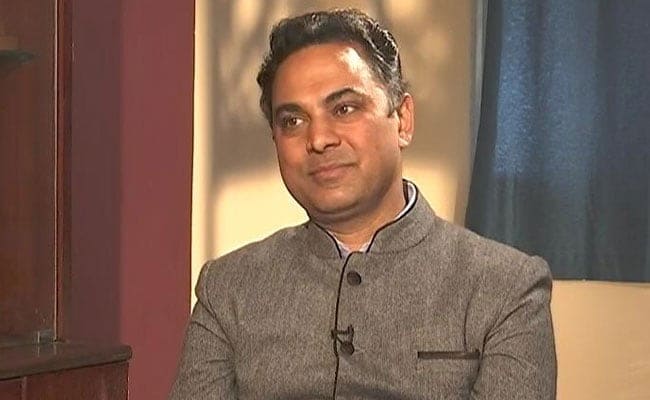
Chief Economic Adviser K Subramanian on Wednesday said that the economic fortune of the country is linked directly to the ongoing pandemic and the resultant restrictions imposed to curb its spread have impacted employment in India, like it has affected all the countries across the world.
Speaking to NDTV, Mr Subramanian said that the government is trying to spend more on key sectors like construction, as it helps in employment generation.
Responding to a range of questions, the chief economic adviser while replying to a query on whether the economy can face the impact of a possible third wave of the pandemic, he said, “as I was mentioning, not only in India, but in the entire world, the economic fortunes have been linked with the pandemic itself.”
When asked whether unemployment linked to Covid is one of the major socio-economic concerns, he said, “the restrictions (on movement of people) do have their impact. The world over there has been an impact on employment generation and India is not an exception. Therefore, the government has taken steps, especially on capital spending on construction and that is why it increased by 15 per cent in the fourth quarter of 2020-21. It is an important sector which creates jobs for urban poor.”
Sharing a positive perspective on the issue, Mr Subramanian said, “one redeeming feature is that impact of the second wave has not been felt as much as the first wave, as countries have learnt to live with the pandemic. The second thing is the pace of vaccination itself. Evidence suggests that even the first dose itself seems to matter a lot in providing protection. Apart from a few exceptions where people have been infected despite taking both the doses, on an aggregate, the vaccination has provided protection. Its pace has to be accelerated in order to face the third wave.”
Reacting to a question on whether economy will recover if India is able to curb the Coronavirus infection, the chief economic adviser noted, “if we look at the way the economy has performed in the last one year, after the first quarter decline (of 2020-21) we had predicted that economy should recover and it did recover in the third and the fourth quarters. After three quarters decline, the consumption increased by 2.7 per cent, investment by 10.8 per cent and construction by 15 per cent.”
He added further that “the second wave has been devastating, but just like its rise was deep, even the decline (in cases during the past few days) has been steep and once the second wave eases, we expect that economic activities will come back. The momentum was there in March, 2021 and once the second wave is gone, the recovery will happen”.
With industry bodies suggesting that one per cent GDP should be spent on direct benefit transfer for poor, as this would help address unemployment, Mr Subramanian said, “in the last one year we have seen that MGNREGA demand was significant. But in May this year however, the demand in it was not as high as last year. But it can go up along with spending on infrastructure, and we are considering some additional measures too.”
Elaborating on the government's vaccination programme, which he said can significantly help over the spread of the infection, Mr Subramanian said, “peak vaccination achieved in Indi was 40 lakhs a day. One crore per day is two and a half times more than that. If we do it possibly on a 24x7 basis, then it is possible to vaccinate one crore persons a day and that's the target we should be aiming at.”
He further informed that though Rs 35,000 crore have been provided in the Union Budget for vaccination, the Finance Minister has said that additional funds will be given for additional doses.
Fear of the pandemic had reduced last year when the number of positive cases had come down significantly and similarly it should happen this year too as greater vaccination will help open the economy, Mr Subramanian observed.
Responding to a point that if there is a variety of choices available in terms of vaccines, then it will create an opportunity to finance two billion doses to vaccinate more people by December 2021, the chief economic adviser said, “even with a two-dose vaccine, the first dose has an impact. Once the fear of the pandemic got reduced after first wave, economic activities had picked up. Whatever we can do to vaccinate more people, the cost of that will not be as high compared to the benefit which we will get from the economic activities coming back to normal.”
On being asked about the actual cost which may be incurred on vaccinating all adults in India, the chief economic adviser did not reveal an actual figure but said that it would depend on how the vaccination programme will pan out.
As both public as well as private sectors along with the states are participating in the vaccination programme, therefore the actual cost is not known as of now, Mr Subramanian informed.
On being specifically asked about the cost if only Centre's participation in the vaccination programme is taken into account, Mr Subramanian said, “the benefits of vaccination which we will get are far higher than the costs.”

-
High US Salaries, No Green Card Certainty: The Financial Calculation Facing Indian H-1B Families

The suspension of PERM processing at eight technology employers does not cancel existing H-1B visas. What it does is force a question many Indian families have been avoiding: is the US salary worth tying your career and family plans to one employer?
-
Swiggy vs Eternal: Food Delivery's Two Rivals Are No Longer In The Same Race
Eternal is building a private AI assistant, dark.ai. Swiggy is still working out how to make Instamart pay, with an operating loss of Rs 895 crore in the July-September quarter while Blinkit stayed profitable.
-
Where You Live Shapes How You Get To Work | The Reason Why
Two-wheelers are the most popular way to get to work in India, accounting for nearly 43% of workplace commutes.
-
Unhedged Position: Can India See An Indonesia-Style Time Correction?
The Nifty is trading below levels it first clocked in 2024. Is there, then, as I have suggested in the headline, potential that the current time correction drags on painfully for the next three-five, even ten years?
-
Navigating Friction And Energy Realities: An Analysis Of Marco Rubio's October Visit To India
Occurring at a critical juncture marked by stalled trade negotiations and escalating geopolitical pressures over global energy supplies, the visit offers a profound window into modern US-India relations.
-
India Exports Capital. Why Not Export Trusteeship?
The big question, then, is whether India can build an institution that global borrowers, investors, banks, and lawyers can trust, even without an Indian connection.
-
France's Economy & Politics Are In Crisis | The Reason Why
Let's look at how the French economy and politics evolved under Nicolas Sarkozy, Franois Hollande and Emmanuel Macron.
-
You May Inherit The Business. You Must Earn Its Credibility.
Succession tests the founder's ability to share authority as much as it tests the next generation's readiness to assume it.
-
Signing Deals Is One Thing; Making Them Work Is Another | The Week In Whys
Sometimes, things don't turn out as planned. Indian companies have lost some bids to rivals, some projects won't produce until 2030.
-
FOMC Wall, PERM Suspension, Hospital Stocks | Talking Points This Week
A PERM suspension would directly affect green-card sponsorship rather than H-1B visas, so the near-term earnings impact could remain relatively limited. The key question is whether this marks a new phase in US scrutiny of Indian IT.









