Chidambaram, Pranab Put Pressure Over Interest Rates, Claims Ex-RBI Chief Subbarao
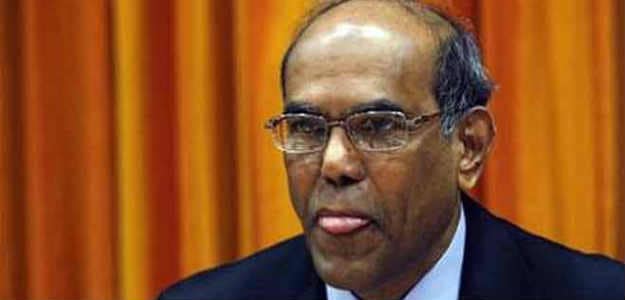
Mumbai: In scathing comments on his bosses in North Block, former RBI governor Duvvuri Subbarao has alleged that ex-finance ministers P Chidambaram and Pranab Mukherjee interfered in the functioning of the central bank, especially on setting interest rates, and the differences even led to two of his deputies not getting extensions.
"Both Chidambaram and Pranab Mukherjee were piqued by the Reserve Bank's tight interest rate policy on the ground that high interest rates were inhibiting investment and hurting growth," writes Mr Subbarao, who manned the Mint Road during the global financial crisis and had a five-year tenure from September 5, 2008 to September 4, 2013.
The comments in the 'Who Moved My Interest Rates'- Leading the Reserve Bank of India through Five Turbulent Years, a tell-tale memoir running into 352 pages and hitting the stands today, come within a month of present RBI Governor Raghuram Rajan refusing to accept a second term, apparently upset by the personal criticism levelled against him.
The book narrates how Mr Chidambaram and Dr Mukherjee, as finance ministers during his term at the central bank, often made public their differences with the RBI on decisions on policy rates.
According to Mr Subbarao, who led the RBI through five turbulent years since the fall of the Lehman Brothers, there was not only pressure on him from Mr Chidambaram and Dr Mukherjee to cut interest rates, but his refusal to do so cost him dearly.
"I have been asked several times if there was pressure from the government on setting interest rates. There certainly was, although the precise psychological mechanics of pressure would vary depending on the context, setting and personalities," he has written in the book.
He goes onto say that he had to pay the price for not falling in line as the government turned down Mr Subbarao's recommendations to give extension to two of his deputy governors--Usha Thorat during Mukherjee's tenure and Subir Gokarn when Mr Chidambaram returned to the finance ministry.
Mr Subbarao recalls that throughout his five-year term, the government was very uncomfortable with the RBI for raising interest rates and blamed this for falling growth rates.
"The logic of why the Reserve Bank should compromise its judgement so as to become a cheerleader for the economy never appealed to me," he writes.
The former bureaucrat-turned-central bank Governor also suggests that Mr Chidambaram had broken a tacit agreement between the government and the RBI to keep such differences behind closed doors and painfully recalls how the then FM rebuked him publicly.
In October 2012, after he left the policy rate unchanged, Mr Chidambaram unveiled a fiscal road map just before the RBI policy meeting.
Soon after the RBI's policy statement, Mr Chidambaram said: "Growth is as much a concern as inflation. If the government has to walk alone to face the challenge of growth, we will walk alone."
Not just that, Mr Subbarao recalls, in the chapter titled 'Walking Alone', less than a week after this statement they were together in Mexico for the dinner hosted by the Indian ambassador on the sidelines of the G20 meeting and Chidambaram "greeted everyone, but pointedly ignored me all through the evening, leaving me with an uncomfortable feeling".
Mr Chidambaram went further and threatened to "walk alone" to "face the challenge of growth" if the central bank did not realise the importance of growth.
On his trial by fire baptism into central banking, within a fortnight of his joining office, the world was plunged into a crisis following the Lehman Brothers' collapse pushing the global financial sector into what he calls a "near-death experience", and within the same month, "Chidambaram had clearly overstepped into the RBI turf as liquidity management is a quintessential central bank function".
"Not only did he not consult me but he had not even informed me of this before the notification was issued," he claimed.
But, Mr Subbarao adds, "little did I know that this set the tone for what would be an uneasy relationship between us in the last year of my term."
He also denies Mr Chidambaram's claim in his column in a daily wherein he said the government and the RBI were on the same page in 8 of 10 monetary policy statements, saying that it may be the minister's experience.
"I found that all through my tenure, the government was distinctly uncomfortable with the RBI raising interest rates and seemed convinced that monetary policy was choking growth," he says.
He goes onto add that "the logic of why the Reserve Bank should compromise its judgement so as to become a cheerleader for the economy never appealed to me".
Mr Subbarao even hints that his own reappointment in 2011 was not pursued eagerly by Dr Mukherjee, but he got it nevertheless because of the intervention of Prime Minister Manmohan Singh. And that he got to know about his own reappointment from news channels, which quoted the PMO website and not the finance ministry's.
Mr Subbarao did not even get a call from the finance ministry. It was the PM's principal secretary TKA Nair, who called him to confirm his reappointment. But the deputy governors did not have such luck.
"Usha became a part of the price we had to pay for asserting the autonomy of the Reserve Bank," Mr Subbarao writes.
The book has been published by Penguin Random House.
(This story has not been edited by NDTV staff and is auto-generated from a syndicated feed.)

-
Opinion | India at 38: From Innovation Overperformer to Innovation Powerhouse

India now has 453 VC-backed deep science startups, 18 of them late-stage, after 117 percent growth since 2020. Laurus Labs, at USD 9.3 billion, is the most valuable deep science company in any middle-income economy outside China.
-
Navigating Energy Crossroads: S Jaishankar's Call For Diversified Supply Chains At G20 Ministerial Meeting
As geopolitical fault lines continue to test maritime trade routes and commodity flows, Jaishankar's message remains pertinent: true economic resilience requires open markets, protected transit lines, and a genuine commitment to multilateral cooperation rather than coercion.
-
Indians Are Travelling, But Not Every Journey Is A Holiday | The Week In Whys
Pilgrims, patients and working women are the real travellers, and the system hasn't quite caught up with them.
-
Getting To Work Costs Women More | The Reason Why
It is not just about women paying more than men. It is about women paying much more in cities than in villages.
-
AI Bias In Investing Cannot Be Eliminated, But It Can Be Governed
Framing is a particularly important example as identical financial information presented in terms of gains rather than losses can lead an LLM to reach a different assessment.
-
Joining The Dots | Dark Skies, Steady Diya: Why Hope Holds This Diwali
With war, a weak rupee and foreign outflows weighing on sentiment, policymakers at the NDTV World Summit and market veterans at NDTV Profit Ignite: Diwali Edition offered the same advice: stay invested and filter out the noise.
-
The Curious Case of Equitas Small Finance Bank And A CEO Who Quit For Stock
PN Vasudevan believes persistent investor concerns over a perceived conflict of interest had become a governance overhang on Equitas Small Finance Bank's stock, even as the lender improved profitability and asset quality.
-
Talking Points This Week: AI Cash Burn, A Tiger Comeback And An India That Still Finds Its Own Path
India is not immune to higher oil or tighter global liquidity, yet its earnings base is broader, its domestic policy levers are still available.
-
Foreign Investors Own Half Of HDFC Bank and ICICI Bank. An LTCG Cut Could Matter Most Here
Foreign portfolio investors have US$115 billion parked in HDFC Bank, ICICI Bank. If the government cuts long-term capital gains tax, Jefferies says returning foreign money could land here first.










