Feud Not Over, Centre To Push Governance Changes In Next RBI Meet: Report
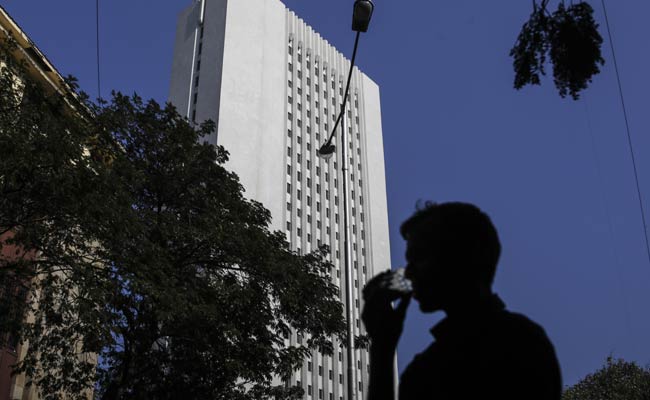
The government wants to discuss changes to the Reserve Bank of India's governance structure at a board meeting next month, including setting up some oversight panels, Economic Secretary Subhash Chandra Garg told ET Now. Garg, who is a government nominee for the RBI board, told another television channel, CNBC-TV18, that the administration will ask for more interim dividends from the central bank as it seeks to plug gaps in its budget before a general election next year. The proposals to discuss governance at the RBI's December 14 board meeting may further inflame tensions between the finance ministry and central bank.
The two have been at loggerheads over issues including the transfer of surplus funds, easing of bad-loan rules and providing liquidity to the shadow-banking sector. Signs of a truce emerged at a meeting between the two sides last week, but Garg's comments suggest the dispute is far from over.
"We should not shy away from discussions or have a fresh look," Garg told ET Now. Any changes to the board's governance structure shouldn't be construed as an attempt to control the RBI's powers, he said.
The RBI's board is an advisory body that guides the regulator, leaving decision-making to Governor Urjit Patel and his colleagues. Bloomberg reported earlier this month that the government is proposing changes that will enable closer supervision of the central bank.
Swaminathan Gurumurthy, a chartered accountant nominated to the RBI board by the government, and other nominees such as Garg and Rajiv Kumar, have recently commented about perceived shortcomings in banking supervision, the flow of credit to industry and the need for easing financial conditions to counter a crisis in the shadow-banking sector. Garg told CNBC that the tight liquidity conditions were a concern and would be discussed at the next board meeting.
Worsening Tensions
Tensions between the government and the RBI worsened last month when central bank Deputy Governor Viral Acharya delivered a defence of the institution's autonomy during a lecture. His speech appeared to have been motivated by the government's threat to invoke Section 7 of the RBI Act, 1934, a never-used provision that allows the government to dictate policy to the RBI on matters of public interest.
At the previous RBI board meeting last week, the central bank said it would set up a committee to look into its capital framework.
Analysts say the dispute between the government of Prime Minister Narendra Modi and the central bank backs the arguments of PM Modi's critics who say he has mismanaged the economy and is trampling on independent agencies.
"At the next meeting of the board, there will certainly be a determined push by the government to make the board decide on more issues," former finance minister Palaniappan Chidambaram wrote in the Indian Express on Sunday. "If Urjit Patel does not stand his ground and yields more space, another institution -- a venerable one -- would have fallen."

-
Talking Points This Week: Tech Nerves, FII Buying, And A Faraway Banking Shock

The global markets are not shining this Diwali. The exception in the large markets is, India.
-
Midterm Rally Lasted A Day. The Hard Reality Of A Divided US May Last Two Years | Opinion
Between a contested AI boom, a debt ceiling that arrives in 2027 and a president with every incentive to act alone, the next two years may prove more volatile than the first day's rally suggests.
-
Blue Wave Will Derail the AI Trade but Won't Dismantle the AI Era | Unhedged Position
The Democrats' sweep of the US Congress will see politics collide with economic forces both over the long and short term.
-
It's Time To Take The GST Council's Bet On Trust Global
Payment records can prove India's services exports, and clear, proportionate rules can bring foreign digital sellers into the tax net.
-
Opinion | India at 38: From Innovation Overperformer to Innovation Powerhouse
India now has 453 VC-backed deep science startups, 18 of them late-stage, after 117 percent growth since 2020. Laurus Labs, at USD 9.3 billion, is the most valuable deep science company in any middle-income economy outside China.
-
Navigating Energy Crossroads: S Jaishankar's Call For Diversified Supply Chains At G20 Ministerial Meeting
As geopolitical fault lines continue to test maritime trade routes and commodity flows, Jaishankar's message remains pertinent: true economic resilience requires open markets, protected transit lines, and a genuine commitment to multilateral cooperation rather than coercion.
-
Indians Are Travelling, But Not Every Journey Is A Holiday | The Week In Whys
Pilgrims, patients and working women are the real travellers, and the system hasn't quite caught up with them.
-
Getting To Work Costs Women More | The Reason Why
It is not just about women paying more than men. It is about women paying much more in cities than in villages.
-
AI Bias In Investing Cannot Be Eliminated, But It Can Be Governed
Framing is a particularly important example as identical financial information presented in terms of gains rather than losses can lead an LLM to reach a different assessment.









