Centre-State Stalemate Over GST Jurisdiction Continues
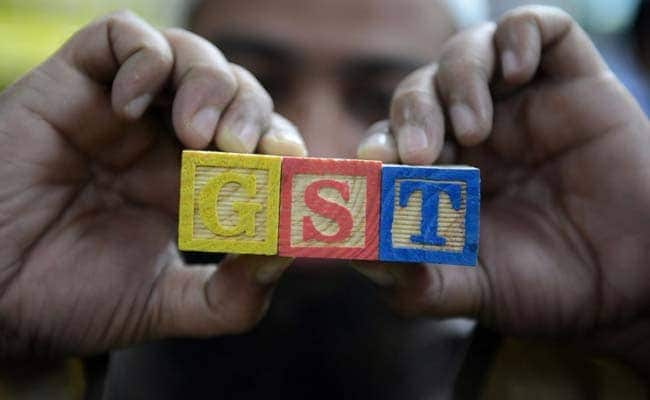
New Delhi: Stalemate between the Centre and states over administrative control under the proposed goods and services tax (GST) regime continued on Sunday with an informal meet called by Finance Minister Arun Jaitley failing to break the deadlock.
Mr Jaitley's informal meeting with state finance ministers failed to arrive at a common ground on how Centre and states will control assessees under the new regime that will subsume an array of taxes like excise duty and service tax as well as VAT, multiple ministers participating in the meeting said.
With states unrelenting on their position of being given right to control all assessees with up to Rs 1.5 crore annual turnover, it was decided that officials will meet again tomorrow before the meeting of the all powerful GST Council on November 25.
"The meeting has remained incomplete. Discussions will continue on November 25," Mr Jaitley told reporters after the over three hour long meeting.
The issue has remained a contentious one during the previous two GST Council meetings and any disagreement at the next meet holds potential of derailing rollout of the GST from the targeted April 1, 2017.
Mr Jaitley had earlier this month stated that the proposed GST needs to be rolled out by September 16, 2017 before the validity of the Constitutional Amendment brought in by Centre and ratified by states expires.
States like West Bengal, Kerala, Uttarakhand, Uttar Pradesh and Tamil Nadu have insisted on exclusive control over small taxpayers, who earn less than Rs 1.5 crore in annual revenue, for both goods and services.
Uttarakhand Finance Minister Indira Hridayesh said states demanded exclusive control for both goods and service tax assessees of Rs 1.5 crore and below.
"Centre is agreeable on goods, but is not yielding on services. States are looking at their interest to safeguard their revenue. Centre will have to yield to states to get the CGST and IGST bills passed. A middle ground on the issue has to be worked out politically," she said.
Kerala Finance Minister Thomas Issac said it is a stalemate and his state is unwilling to compromise as it has virtually given up its taxation rights.
Today's informal meeting was held sans civil servants to arrive at a political solution.
According to sources, many states including West Bengal, Uttar Pradesh, Kerala, Rajasthan, Odisha and Uttarakhand, said that small taxpayers cannot be harassed by dual control.
Rajasthan Urban Development Minister R Shekhawat said Centre and states are working on different permutations and combinations.
Isaac said Centre prefers to have a vertical split of all dealers for assessment under GST. "They are taking a rigid stand but I hope good sense will prevail at the Centre," he said.
The GST Council was earlier discussing five proposals for deciding on jurisdiction, but in the last meeting on November 4, arrived at two options -- horizontal division and vertical division.
'Horizontal Division' would mean taxpayers would be divided both for administrative and audit purposes based on a cut off turnover. Those with a turnover over Rs 1.5 crore would be administered both by the Centre and states, while those with below Rs 1.5 crore would be administered solely by the state.
'Vertical Division', based on ratios, assigns taxpayers to a tax administration, Centre or state, for a period of 3 years for all purposes including audit. Taxpayers could be divided in a ratio which would balance the interest of the Centre and the states, both with respect to revenue and spread of numbers.
States feel they have infrastructure deployment at grassroot level and small taxpayers are familiar with state authorities.
Centre, on the other hand is unagreeable to the states' demand of exclusive control over small entities which earn less than Rs 1.5 crore in annual revenue, as it wants single registration mechanism for ease to service taxpayers.
Instead of horizontally splitting the taxpayers, it has proposed to divide entire taxpayer base vertically.
As a compromise, it is willing to give states administrative power over 2/3rd of taxpayer base, with service tax continuing to be administered by Centre.
(This story has not been edited by NDTV staff and is auto-generated from a syndicated feed.)

-
Midterm Rally Lasted A Day. The Hard Reality Of A Divided US May Last Two Years | Opinion

Between a contested AI boom, a debt ceiling that arrives in 2027 and a president with every incentive to act alone, the next two years may prove more volatile than the first day's rally suggests.
-
Blue Wave Will Derail the AI Trade but Won't Dismantle the AI Era | Unhedged Position
The Democrats' sweep of the US Congress will see politics collide with economic forces both over the long and short term.
-
It's Time To Take The GST Council's Bet On Trust Global
Payment records can prove India's services exports, and clear, proportionate rules can bring foreign digital sellers into the tax net.
-
Opinion | India at 38: From Innovation Overperformer to Innovation Powerhouse
India now has 453 VC-backed deep science startups, 18 of them late-stage, after 117 percent growth since 2020. Laurus Labs, at USD 9.3 billion, is the most valuable deep science company in any middle-income economy outside China.
-
Navigating Energy Crossroads: S Jaishankar's Call For Diversified Supply Chains At G20 Ministerial Meeting
As geopolitical fault lines continue to test maritime trade routes and commodity flows, Jaishankar's message remains pertinent: true economic resilience requires open markets, protected transit lines, and a genuine commitment to multilateral cooperation rather than coercion.
-
Indians Are Travelling, But Not Every Journey Is A Holiday | The Week In Whys
Pilgrims, patients and working women are the real travellers, and the system hasn't quite caught up with them.
-
Getting To Work Costs Women More | The Reason Why
It is not just about women paying more than men. It is about women paying much more in cities than in villages.
-
AI Bias In Investing Cannot Be Eliminated, But It Can Be Governed
Framing is a particularly important example as identical financial information presented in terms of gains rather than losses can lead an LLM to reach a different assessment.
-
Joining The Dots | Dark Skies, Steady Diya: Why Hope Holds This Diwali
With war, a weak rupee and foreign outflows weighing on sentiment, policymakers at the NDTV World Summit and market veterans at NDTV Profit Ignite: Diwali Edition offered the same advice: stay invested and filter out the noise.









