Rs 5 Lakh Crore Spent On MGNREGA (Rural Employment) Scheme In 8 Years: Nirmala Sitharaman
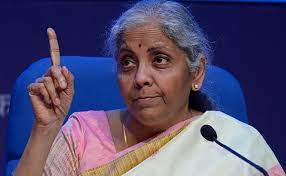
The Centre has spent Rs 5 lakh crore on MGNREGA scheme during the past eight years, out of which 20 per cent was spent during the COVID-19 pandemic, Union Finance Minister Nirmala Sitharaman has said.
Speaking to reports in Kamareddy district of Telangana on Thursday, she said the state was given Rs 20,000 crore under the the Mahatma Gandhi National Rural Employment Guarantee scheme in the past eight years.
"During the past eight years, Telangana received Rs 20,000 crore under MGNREGA. During the same period all over the country Rs 5 lakh crore has been spent, out of which more than 20 per cent was spent in 2020-21 during COVID-19 pandemic," she said replying to a query.
The important issue in this is survey teams will come (to any state) if there are any complaints that the money was not spent accordingly or there are any remarks in the audit report.
Referring to the allegations that survey teams are being sent to curtail the scheme, she said the survey teams will come to correct the anomalies, if any.
During the UPA regime there were several loopholes in the scheme and the government under Prime Minister Narendra Modi corrected them and is implementing it through direct benefit transfer (DBT), she further said.
Slamming the TRS government in Telangana over alleged rising debt, farmers' distress and other issues, the Union minister said the state that used to be revenue surplus, has now gone into revenue deficit.
K Chandrashekar Rao's government was taking loans without showing them in the budget and without informing the state assembly, she claimed.
Farmers' debt is rampant in the state and it is ranked fourth in farmers' suicides, Sitharaman further said.
The minister also accused the TRS government of changing the names of central schemes and projecting them as the state's schemes.
On Thursday, she attended the meeting of district office-bearers, mandal presidents and karyakartas of Zaheerabad Parliamentary Constituency at Kamareddy town as part of 'Lok Sabha Pravas Yojana'.

-
Unhedged Position: Can India See An Indonesia-Style Time Correction?

The Nifty is trading below levels it first clocked in 2024. Is there, then, as I have suggested in the headline, potential that the current time correction drags on painfully for the next three-five, even ten years?
-
Navigating Friction And Energy Realities: An Analysis Of Marco Rubio's October Visit To India
Occurring at a critical juncture marked by stalled trade negotiations and escalating geopolitical pressures over global energy supplies, the visit offers a profound window into modern US-India relations.
-
India Exports Capital. Why Not Export Trusteeship?
The big question, then, is whether India can build an institution that global borrowers, investors, banks, and lawyers can trust, even without an Indian connection.
-
France's Economy & Politics Are In Crisis | The Reason Why
Let's look at how the French economy and politics evolved under Nicolas Sarkozy, Franois Hollande and Emmanuel Macron.
-
You May Inherit The Business. You Must Earn Its Credibility.
Succession tests the founder's ability to share authority as much as it tests the next generation's readiness to assume it.
-
Signing Deals Is One Thing; Making Them Work Is Another | The Week In Whys
Sometimes, things don't turn out as planned. Indian companies have lost some bids to rivals, some projects won't produce until 2030.
-
FOMC Wall, PERM Suspension, Hospital Stocks | Talking Points This Week
A PERM suspension would directly affect green-card sponsorship rather than H-1B visas, so the near-term earnings impact could remain relatively limited. The key question is whether this marks a new phase in US scrutiny of Indian IT.
-
Everything, Everywhere, All At Once: Dalal Street's Week To Forget | Joining The Dots
Visa curbs, a Starlink spat and cancer drug caps: what connects this week's shocks for Indian markets
-
India Is Going Abroad For Critical Minerals. But It May Take Years To Pay Off | The Reason Why
Although India's steps are in the right direction, they remain modest compared with India's growing dependence.
-
When Everyone Has AI, What Gives You An Edge?
India's young workforce is entering an uncertain world of work where powerful AI tools are becoming widely accessible. The advantage will belong to those who combine deep expertise with digital fluency, and the distinctly human capabilities that technology cannot manufacture.









