Centre Mulls Making Domestic Steel Use Binding For Government Projects
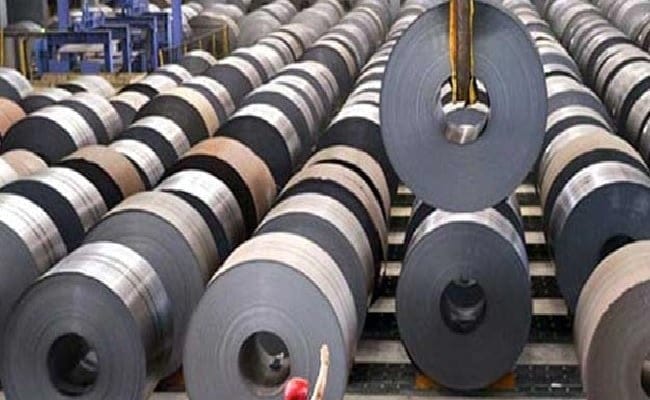
New Delhi: In a bid to increase domestic steel consumption, the Centre is planning to come up with a policy under which it will be mandatory to use locally manufactured steel for all infrastructure and construction projects of the government.
"Talks are going on with concerned ministries for introduction of policy to make it mandatory to use India made steel for all infrastructure and construction projects of the government," Steel Minister Chaudhary Birender Singh said during meeting of the Parliamentary Consultative Committee. The meeting was on initiatives taken by the steel ministry to enhance demand and production of steel and status of completion of projects by PSUs.
"We are exploring new avenues for usage of steel like steel bridges, containers, water tanks and crash barriers and so on. We have spoken to different central and state governments to enhance usage of steel. Many steps were taken by the government in last few months, to provide a level-playing field to Indian steel producers," Mr Singh said.
The steel minister said his ministry was keeping a constant watch on the fast-changing scenario in Indian and international steel industry and has taken appropriate decisions in consultation with other ministries to provide a conducive growth environment for the Indian steel industry. The Ministry of Steel have constituted four committees with representatives from steel producers, consultants, architects and government authorities among other to promote steel usage.
The mandates for these committees are formulation of codes and standards, life cycle cost analysis and sustainability, development of designs of various utility structures and skill development in steel sector.
Similarly, four task forces have been constituted for increasing steel usage in railways, urban development, road transport and highways and shipbuilding sector. Rural housing targets to achieve one crore dwelling units in the next three years. Usage of steel-based structures can provide huge impetus to the demand of steel.
The steel ministry is approaching concerned authorities to share advantages of steel houses like less erection time, more durability, better flexibility and eco-friendliness. Presentations with prototype designs have been made to key officials of rural development ministry.
Domestic production of steel has increased by 10.5 per cent in April to December 2016, compared to the corresponding period last year. Moreover, this momentum will be sustained through a multi-pronged strategy in the coming months and years, he said. The steel minister said his ministry would explore the possibility of setting up scrap-based steel plants in northern and western part of the country.
"These plants will be energy efficient, eco-friendly, cost-effective and with capacity to produce high quality steel," said Mr Singh.
(This story has not been edited by NDTV staff and is auto-generated from a syndicated feed.)

-
Midterm Rally Lasted A Day. The Hard Reality Of A Divided US May Last Two Years | Opinion

Between a contested AI boom, a debt ceiling that arrives in 2027 and a president with every incentive to act alone, the next two years may prove more volatile than the first day's rally suggests.
-
Blue Wave Will Derail the AI Trade but Won't Dismantle the AI Era | Unhedged Position
The Democrats' sweep of the US Congress will see politics collide with economic forces both over the long and short term.
-
It's Time To Take The GST Council's Bet On Trust Global
Payment records can prove India's services exports, and clear, proportionate rules can bring foreign digital sellers into the tax net.
-
Opinion | India at 38: From Innovation Overperformer to Innovation Powerhouse
India now has 453 VC-backed deep science startups, 18 of them late-stage, after 117 percent growth since 2020. Laurus Labs, at USD 9.3 billion, is the most valuable deep science company in any middle-income economy outside China.
-
Navigating Energy Crossroads: S Jaishankar's Call For Diversified Supply Chains At G20 Ministerial Meeting
As geopolitical fault lines continue to test maritime trade routes and commodity flows, Jaishankar's message remains pertinent: true economic resilience requires open markets, protected transit lines, and a genuine commitment to multilateral cooperation rather than coercion.
-
Indians Are Travelling, But Not Every Journey Is A Holiday | The Week In Whys
Pilgrims, patients and working women are the real travellers, and the system hasn't quite caught up with them.
-
Getting To Work Costs Women More | The Reason Why
It is not just about women paying more than men. It is about women paying much more in cities than in villages.
-
AI Bias In Investing Cannot Be Eliminated, But It Can Be Governed
Framing is a particularly important example as identical financial information presented in terms of gains rather than losses can lead an LLM to reach a different assessment.
-
Joining The Dots | Dark Skies, Steady Diya: Why Hope Holds This Diwali
With war, a weak rupee and foreign outflows weighing on sentiment, policymakers at the NDTV World Summit and market veterans at NDTV Profit Ignite: Diwali Edition offered the same advice: stay invested and filter out the noise.









