Centre Gives Sanction To Prosecute Joint Drugs Controller In Bribery Case
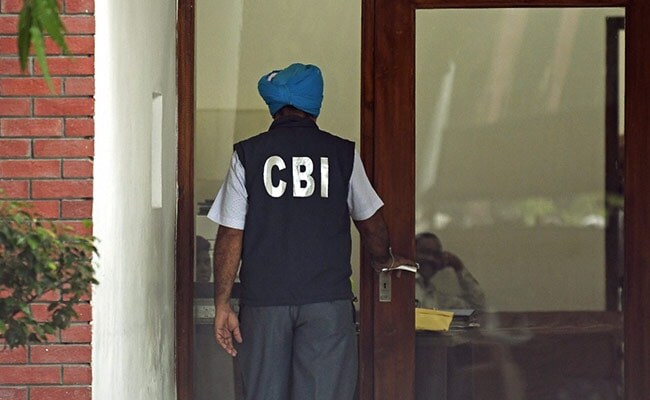
The government has granted the sanction to prosecute Central Drugs Standard Control Organisation's joint drugs controller S Eswara Reddy, clearing the decks for initiating a trial against him for allegedly taking a bribe to favourably recommend Biocon Biologics' insulin injection, officials said Sunday. The CBI submitted the sanction for prosecution, accorded by the Director (Vigilance) in the Union Ministry for Health and Family Welfare, before a special court here.
Repeated calls made to the office phone of Reddy seeking his comments remained unanswered.
The agency has also received the sanction against Animesh Kumar, Assistant Drugs Inspector, who is a co-accused in the case, they said.
Apart from Reddy and Animesh Kumar, the CBI had also arrested Biocon Biologics' Associate Vice President L Praveen Kumar, Synergy Network India Private Limited director Dinesh Dua, who allegedly gave Reddy Rs 4 lakh as bribe, and Guljit Sethi, an alleged conduit of Biocon Biologics.
The arrests were made in June last year in the bribery case allegedly to waive the Phase 3 clinical trial of 'Insulin Aspart' injection, a product developed by the company to manage Type 1 and Type 2 diabetes.
However, Biocon Biologics, a subsidiary of Kiran Mazumdar Shaw-led Biocon, denied the allegations of bribery.
Reddy was suspended but the health ministry revoked his last year and reinstated him as the joint drugs controller. The agency had filed the charge sheet in August last year against the accused persons, but the trial had not commenced as the sanction for prosecution, a mandatory requirement before proceedings in a case against a government servant under the Prevention of Corruption Act can be initiated, was awaited, they said.
In its charge sheet filed in August last year, the agency alleged the bribe payment was made to Reddy after clearance from associate vice president of Biocon Biologics L Praveen Kumar, they said.
After the charge sheet was filed, the company had said in a statement that it follows global best practices in regulatory science which have earned it the distinction of being the only Indian company with the largest number of regulatory approvals for Biosimilars in ICH countries like the USA, Canada, EU, Japan amongst others.
"We have followed due process in seeking phase 3 waiver from DCGI for our biosimilar product Insulin Aspart, as per the current provisions and with precedence of the word 'protocol' used for such approvals. Insulin Aspart was approved by the EU and Canada respectively prior to the filing of an application before the Indian CDSCO, and this is one of the considerations for the grant of an Indian approval," the statement had said.
It said under the Indian regulations, approval for a foreign-approved drug is not an exception, as surmised by the investigating agency and is in fact, within the rules.
"The company has not made any payments to Bioinnovat Research or any other party named to facilitate the alleged bribe to the CDSCO official. We deny other allegations of wrongdoings in seeking approval for Insulin Aspart under existing provisions and precedence. We reiterate our confidence in the judicial system and have fully cooperated with the investigating agency," it had said.
(Except for the headline, this story has not been edited by NDTV staff and is published from a syndicated feed.)

-
High US Salaries, No Green Card Certainty: The Financial Calculation Facing Indian H-1B Families

The suspension of PERM processing at eight technology employers does not cancel existing H-1B visas. What it does is force a question many Indian families have been avoiding: is the US salary worth tying your career and family plans to one employer?
-
Swiggy vs Eternal: Food Delivery's Two Rivals Are No Longer In The Same Race
Eternal is building a private AI assistant, dark.ai. Swiggy is still working out how to make Instamart pay, with an operating loss of Rs 895 crore in the July-September quarter while Blinkit stayed profitable.
-
Where You Live Shapes How You Get To Work | The Reason Why
Two-wheelers are the most popular way to get to work in India, accounting for nearly 43% of workplace commutes.
-
Unhedged Position: Can India See An Indonesia-Style Time Correction?
The Nifty is trading below levels it first clocked in 2024. Is there, then, as I have suggested in the headline, potential that the current time correction drags on painfully for the next three-five, even ten years?
-
Navigating Friction And Energy Realities: An Analysis Of Marco Rubio's October Visit To India
Occurring at a critical juncture marked by stalled trade negotiations and escalating geopolitical pressures over global energy supplies, the visit offers a profound window into modern US-India relations.
-
India Exports Capital. Why Not Export Trusteeship?
The big question, then, is whether India can build an institution that global borrowers, investors, banks, and lawyers can trust, even without an Indian connection.
-
France's Economy & Politics Are In Crisis | The Reason Why
Let's look at how the French economy and politics evolved under Nicolas Sarkozy, Franois Hollande and Emmanuel Macron.
-
You May Inherit The Business. You Must Earn Its Credibility.
Succession tests the founder's ability to share authority as much as it tests the next generation's readiness to assume it.
-
Signing Deals Is One Thing; Making Them Work Is Another | The Week In Whys
Sometimes, things don't turn out as planned. Indian companies have lost some bids to rivals, some projects won't produce until 2030.
-
FOMC Wall, PERM Suspension, Hospital Stocks | Talking Points This Week
A PERM suspension would directly affect green-card sponsorship rather than H-1B visas, so the near-term earnings impact could remain relatively limited. The key question is whether this marks a new phase in US scrutiny of Indian IT.









