Central Banks Unleash 350 Basis Points More Of Rate Hikes In Inflation Fight
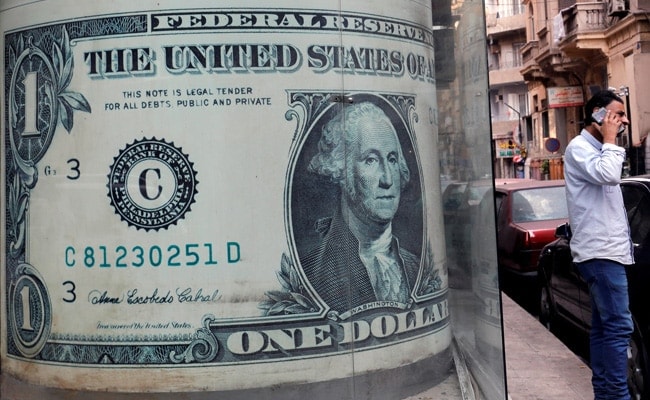
Major central banks have stepped up their fight against runaway inflation, unleashing another 350 basis points of hikes in a pivotal week in which policymakers are determined to show they mean business.
The Federal Reserve raised U.S. rates by three-quarters of a percentage point for a third straight time on Wednesday, while the British, Swiss and Norwegian central banks all delivered large hikes on Thursday.
Central banks in the 10 big developed economies have raised rates by a combined 1,965 basis points in this cycle to date, with Japan the holdout "dove", sticking on Thursday with its ultra-low rates policy.
Here's a look at where policymakers stand in the race to contain inflation, from hawkish to dovish.
1) UNITED STATES
The Federal Reserve lifted rates by 75 bps on Wednesday, vaulting the dollar index to a two-decade high. Fed Chair Jerome Powell signalled further increases were due and warned there was no painless way to contain inflation.
The Fed's new projections showed its policy rate rising to 4.4% by year-end, before peaking at 4.6% in 2023. Rate cuts are not expected until 2024.
2) CANADA
Money markets bet the Bank of Canada will raise its policy rate by 50 bps in October to 3.75%. The BoC will do whatever is needed to bring price increases back to target, a Bank of Canada official said on Tuesday.
On Sept. 7, the BoC hiked its policy rate to 3.25%, its highest level in 14 years. Canada was the first among the world's advanced economies in the current policy-tightening cycle to deliver a 100 bps rate.
3) NEW ZEALAND
The Reserve Bank of New Zealand last month delivered its seventh straight hike - and fourth consecutive rise of 50 bps - to lift rates to 3%, the highest since September 2015.
The RBNZ struck a more hawkish tone and sees rates at 4% by early 2023, versus a previous projection of 3.7%. That implies at least one more 50 bps rate hike at upcoming meetings.
4) BRITAIN
The Bank of England hiked interest rates by 50 bps on Thursday, less than the 75 bps some in the market had expected. The BoE also forecast a peak in inflation just below 11%, down from an earlier forecast of 13.3%.
But the prospect of entrenched double-digit inflation, and the need for the BoE to tighten monetary policy as a new government loosens fiscal policy, has caused investors to jack up their rate hike expectations. Money markets were on Thursday pricing in a peak in rates at around 4.9% by June 2023.
5) NORWAY
Norway, the first big developed economy to kick off a rate-hiking cycle last year, on Thursday raised its benchmark rate by 50 basis points to 2.25%. But the central bank said future hikes would be more "gradual", weakening the crown currency.
6) AUSTRALIA
The Reserve Bank of Australia hiked by another 50 bps earlier in September, for a fifth month running. But the central bank dropped a reference to "normalising" policy, suggesting rates were now closer to neutral, while flagging it had more work to do.
The RBA has delivered 225 bps of hikes since May, taking its key rate to a seven-year high of 2.35%.
7) SWEDEN
Sweden raised rates on Tuesday by a larger-than-expected one percentage point to 1.75% and warned of more to come over the next six months as it gets to grips with surging inflation.
The rate hike was the biggest since the inflation target was adopted in 1993, equalling the full percentage point hike of November 1992 during Sweden's domestic financial crisis when the main rate hit 500% for a short period.
8) EURO ZONE
The ECB was late to the hiking game but is catching up fast.
Earlier in September, the euro zone's central bank hiked rates by a record 0.75%, bringing its deposit rate to 0.75% and its main refinancing rate to 1.25%, their highest levels since 2011.
The ECB said it was "frontloading" policy to get a hold of inflation and it implied rate rises could continue into early 2023 even as the bloc braces for recession.
That pushed traders to ramp up bets on a sequence of large hikes. Money markets now price in around 70 bps of hikes in both October and December. They see rates peaking at over 2.8% in mid-2023, compared to 2.2% before the meeting.
9) SWITZERLAND
The Swiss National Bank (SNB) raised its policy rate on Thursday by another 75 basis points from minus 0.25% to 0.5% as expected, putting an end to the negative rates experiment in Europe.
The bank, delivering its second rate hike this cycle, also raised its inflation forecasts for 2022 and 2023 to 3% and 2.4% respectively, adding it couldn't rule out that further rate hikes will be needed to control inflation.
10) JAPAN
Japan is the sole remaining policy dove and on Thursday the Bank of Japan maintained its ultra-low interest rates and policy guidance.
It reassured markets that it will continue to swim against a global tide of monetary policy tightening. But Japanese authorities also intervened to shore up the weak yen, which has been hurt by the policy divergence between Japan and the United States.
(This story has not been edited by NDTV staff and is auto-generated from a syndicated feed.)

-
Unhedged Position: Can India See An Indonesia-Style Time Correction?

The Nifty is trading below levels it first clocked in 2024. Is there, then, as I have suggested in the headline, potential that the current time correction drags on painfully for the next three-five, even ten years?
-
Navigating Friction And Energy Realities: An Analysis Of Marco Rubio's October Visit To India
Occurring at a critical juncture marked by stalled trade negotiations and escalating geopolitical pressures over global energy supplies, the visit offers a profound window into modern US-India relations.
-
India Exports Capital. Why Not Export Trusteeship?
The big question, then, is whether India can build an institution that global borrowers, investors, banks, and lawyers can trust, even without an Indian connection.
-
France's Economy & Politics Are In Crisis | The Reason Why
Let's look at how the French economy and politics evolved under Nicolas Sarkozy, Franois Hollande and Emmanuel Macron.
-
You May Inherit The Business. You Must Earn Its Credibility.
Succession tests the founder's ability to share authority as much as it tests the next generation's readiness to assume it.
-
Signing Deals Is One Thing; Making Them Work Is Another | The Week In Whys
Sometimes, things don't turn out as planned. Indian companies have lost some bids to rivals, some projects won't produce until 2030.
-
FOMC Wall, PERM Suspension, Hospital Stocks | Talking Points This Week
A PERM suspension would directly affect green-card sponsorship rather than H-1B visas, so the near-term earnings impact could remain relatively limited. The key question is whether this marks a new phase in US scrutiny of Indian IT.
-
Everything, Everywhere, All At Once: Dalal Street's Week To Forget | Joining The Dots
Visa curbs, a Starlink spat and cancer drug caps: what connects this week's shocks for Indian markets
-
India Is Going Abroad For Critical Minerals. But It May Take Years To Pay Off | The Reason Why
Although India's steps are in the right direction, they remain modest compared with India's growing dependence.
-
When Everyone Has AI, What Gives You An Edge?
India's young workforce is entering an uncertain world of work where powerful AI tools are becoming widely accessible. The advantage will belong to those who combine deep expertise with digital fluency, and the distinctly human capabilities that technology cannot manufacture.









