Cash Withdrawal Restrictions Likely To Go Away By February-End, Say Bankers
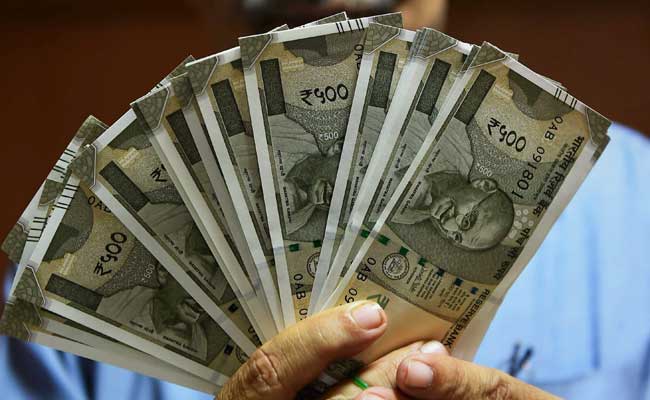
New Delhi: With the cash crunch situation easing gradually, the Reserve Bank of India may remove cash withdrawal limits by the end of next month, say bankers. The central bank had recently raised the ATM withdrawal limit to Rs 10,000 per day, but maintained the weekly limit at Rs 24,000 for savings accounts and Rs 1 lakh in case of current accounts.
Restrictions on cash withdrawals are entirely a decision to be taken by the Reserve Bank of India and the central bank would make a decision in this regard after making a holistic assessment of the situation, Bank of Maharashtra executive director R K Gupta told news agency Press Trust of India.
"I think the restrictions on withdrawal by RBI should be completely lifted by February-end or by first half of March as cash situation is easing gradually," Mr Gupta added.
The economic research department of SBI in a report said that it estimates that 88 per cent of the currency could return into the financial system by February-end.
"By the end of February, 78-88 per cent of the currency could be back in the system under the best case scenario in terms of an optimal currency distribution (more small denomination notes),"a report from SBI said.
Things would be "pretty close to normal" within the coming two months it seems, the SBI Research report added.
A senior official official of a state-run bank also acknowledged that the situation is easing.
The RBI has been progressively easing the curbs and it is a matter of weeks before the withdrawal restrictions are eased further, the official said, adding, "My hunch is that it should happen before end of the current fiscal."
The Reserve Bank of India had earlier increased the daily limit on cash withdrawals from ATMs to Rs 4,500 from Rs 2,500, effective January 1, a day after the 50-day demonetisation period ended.
Meanwhile, Reserve Bank of India Governor Urjit Patel did not give a timeframe before the Standing Committee on Finance for return of normalcy in the banking system even as the central bank asserted that Rs 9.2 lakh crore or 60 per cent of demonetised currency had been replaced.
Prime Minister Narendra Modi had on November 8 last year announced demonetisation of old Rs 500 and Rs 1,000 notes, promising that the problems faced due to the sudden would be eased within the next 50 days.
After the government's decision, the Reserve Bank of India had put restrictions cash withdrawals from ATMs as well as from banks to deal with shortage of new high denomination currency notes. This led to long queues at ATMs and bank branches.
All over the country, the banks had to deal with huge rush of people who thronged their branches to deposit junked notes. The deadline for depositing old notes with banks ended on December 30, 2016.
Meanwhile, the Reserve Bank of India had last week said it still did not know the "exact number" of junked currency notes in circulation and was still "reconciling" the number of notes that were deposited back.
"The exact number of Specified Bank Notes (SBNs) withdrawn from circulation is being worked out," the central bank had said in a written submission to Parliament's Public Accounts Committee (PAC).
(With inputs from PTI)

-
Where You Live Shapes How You Get To Work | The Reason Why

Two-wheelers are the most popular way to get to work in India, accounting for nearly 43% of workplace commutes.
-
High US Salaries, No Green Card Certainty: The Financial Calculation Facing Indian H-1B Families
The suspension of PERM processing at eight technology employers does not cancel existing H-1B visas. What it does is force a question many Indian families have been avoiding: is the US salary worth tying your career and family plans to one employer?
-
Unhedged Position: Can India See An Indonesia-Style Time Correction?
The Nifty is trading below levels it first clocked in 2024. Is there, then, as I have suggested in the headline, potential that the current time correction drags on painfully for the next three-five, even ten years?
-
Navigating Friction And Energy Realities: An Analysis Of Marco Rubio's October Visit To India
Occurring at a critical juncture marked by stalled trade negotiations and escalating geopolitical pressures over global energy supplies, the visit offers a profound window into modern US-India relations.
-
India Exports Capital. Why Not Export Trusteeship?
The big question, then, is whether India can build an institution that global borrowers, investors, banks, and lawyers can trust, even without an Indian connection.
-
France's Economy & Politics Are In Crisis | The Reason Why
Let's look at how the French economy and politics evolved under Nicolas Sarkozy, Franois Hollande and Emmanuel Macron.
-
You May Inherit The Business. You Must Earn Its Credibility.
Succession tests the founder's ability to share authority as much as it tests the next generation's readiness to assume it.
-
Signing Deals Is One Thing; Making Them Work Is Another | The Week In Whys
Sometimes, things don't turn out as planned. Indian companies have lost some bids to rivals, some projects won't produce until 2030.
-
FOMC Wall, PERM Suspension, Hospital Stocks | Talking Points This Week
A PERM suspension would directly affect green-card sponsorship rather than H-1B visas, so the near-term earnings impact could remain relatively limited. The key question is whether this marks a new phase in US scrutiny of Indian IT.
-
Everything, Everywhere, All At Once: Dalal Street's Week To Forget | Joining The Dots
Visa curbs, a Starlink spat and cancer drug caps: what connects this week's shocks for Indian markets









