After PM's Shock Notes Ban, Indians Revert To Old Habit Of Hoarding Cash
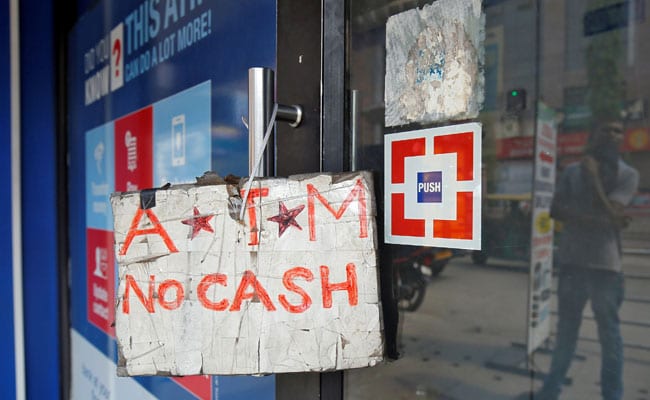
Having speeded up printing presses to refill banks' empty ATMs in some parts of the country, the Reserve Bank of India released data on Wednesday showing that people were still hoarding cash as withdrawals outpaced spending. Typically, economists say, cash withdrawn from banks takes a few months to re-enter circulation as people spend. Because of these lags, the weekly reserve money figures don't tell exactly how much people have hoarded, but the data does give a strong sense of the trend.
The incremental increase in currency in circulation, a component of the data, shows how much people are withdrawing every week and the amount of new money the RBI is supplying to banks.
During the week to April 20, they took Rs 16,340 crore out of the banks, bringing the total for the first three weeks of the month to Rs 59,520 crore, the RBI data showed. In the previous three weeks withdrawals totalled Rs 16,470 crore.
Currency withdrawals in the January-March quarter stood at Rs 1.4 lakh crore, about 27 per cent more than in same quarter of 2016.
Overall, the currency in circulation stood at Rs 18.9 lakh crore as of April 20, 18.9 per cent up since the beginning of last October when withdrawals began to gather pace.
Alarm bells only rang this month when cash dispensers began running dry in several states, including Andhra Pradesh, Telangana, Karnataka, Madhya Pradesh and Bihar.
Neither the central bank nor commercial bankers appear to have a clear idea about this sudden pick up in withdrawals.
The RBI did not elaborate on Wednesday's reserve money data but in a circular last week it had said the shortage could be due to a delay in getting cash to the ATMs and that it has ramped up note printing.
But there is concern that Prime Minister Narendra Modi's audacious decision to take high value banknotes out of circulation in late 2016 may be suffering a blowback, as Indians revert to old habits of keeping cash out of the banks, and out of sight of the taxman.
Rupa Rege Nitsure, group chief economist at L&T Finance Holdings, suspected the spike in withdrawals could be a belated reaction after the government's so-called "demonetisation" move.
"Post demonetisation, there is a fear among people over availability of cash and there could be a tendency of small businesses withdrawing money and hoarding cash given that bank credit is not easily available to them," she said.
The government had wanted to push people toward making more transactions electronically, rather than rely on cash.
But the recent shortages of the new 2,000 rupee bank notes has left analysts wondering if mattresses are being re-stuffed.
Analysts reckon a number of factors are behind the hoarding, including concerns over the health of Indian banks, avoidance of a new goods and services tax, preparations for campaign spending ahead of an election in Karnataka, and farmers withdrawing money during the harvest season of January to March.
Some analysts also say that, as economic growth managed to outpace the recovery in money supply after the 'demonetisation', there was always going to be a squeeze on demand for cash.
Afterall, it took until March for currency in circulation to rise above Rs 17.98 lakh crore level posted before the 2016 demonetisation.
"The currency supply by RBI has not kept pace with the growth in the economy and that is the reason the demand for cash has increased," said State Bank of India's chief economist Soumya Kanti Ghosh.
According to a note from SBI issued on April 18 the RBI still had to print an additional Rs 70,000 crore to bridge the gap between demand and supply.
Neeraj Vyas, SBI's chief operating officer, told Reuters, that the downtime for ATMs out of money had reduced, but the situation should return to normal in "maybe another 5-7 days".

-
Unhedged Position: Can India See An Indonesia-Style Time Correction?

The Nifty is trading below levels it first clocked in 2024. Is there, then, as I have suggested in the headline, potential that the current time correction drags on painfully for the next three-five, even ten years?
-
Navigating Friction And Energy Realities: An Analysis Of Marco Rubio's October Visit To India
Occurring at a critical juncture marked by stalled trade negotiations and escalating geopolitical pressures over global energy supplies, the visit offers a profound window into modern US-India relations.
-
India Exports Capital. Why Not Export Trusteeship?
The big question, then, is whether India can build an institution that global borrowers, investors, banks, and lawyers can trust, even without an Indian connection.
-
France's Economy & Politics Are In Crisis | The Reason Why
Let's look at how the French economy and politics evolved under Nicolas Sarkozy, Franois Hollande and Emmanuel Macron.
-
You May Inherit The Business. You Must Earn Its Credibility.
Succession tests the founder's ability to share authority as much as it tests the next generation's readiness to assume it.
-
Signing Deals Is One Thing; Making Them Work Is Another | The Week In Whys
Sometimes, things don't turn out as planned. Indian companies have lost some bids to rivals, some projects won't produce until 2030.
-
FOMC Wall, PERM Suspension, Hospital Stocks | Talking Points This Week
A PERM suspension would directly affect green-card sponsorship rather than H-1B visas, so the near-term earnings impact could remain relatively limited. The key question is whether this marks a new phase in US scrutiny of Indian IT.
-
Everything, Everywhere, All At Once: Dalal Street's Week To Forget | Joining The Dots
Visa curbs, a Starlink spat and cancer drug caps: what connects this week's shocks for Indian markets
-
India Is Going Abroad For Critical Minerals. But It May Take Years To Pay Off | The Reason Why
Although India's steps are in the right direction, they remain modest compared with India's growing dependence.
-
When Everyone Has AI, What Gives You An Edge?
India's young workforce is entering an uncertain world of work where powerful AI tools are becoming widely accessible. The advantage will belong to those who combine deep expertise with digital fluency, and the distinctly human capabilities that technology cannot manufacture.









