Business Organisations Need To Pay Up To Rs 20 For Using Aadhaar Services: UIDAI
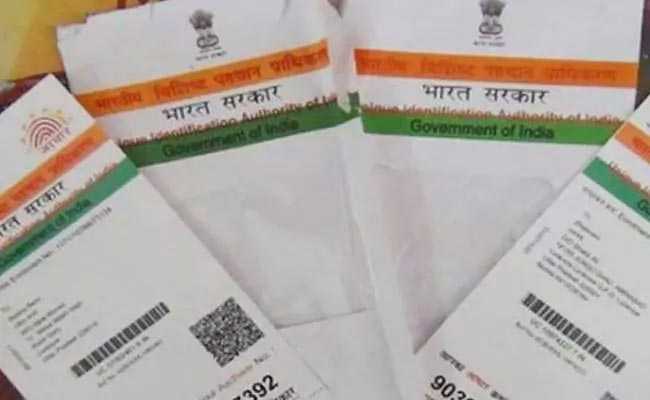
Business organisations using Aadhaar services will now have to pay Rs 20 for each customer verification and 50 paise for authentication of each transaction carried out by the entities, the Unique Identification Authority of India (UIDAI) said on Thursday.
"Aadhaar authentication services shall be charged at the rate of Rs 20 (including taxes) for each e-KYC transaction and Rs 0.50 (including taxes) for each Yes and No authentication transaction from requesting entities," a notification by the UIDAI said.
The gazette notification, the Aadhaar (Pricing of Aadhaar Authentication Services) Regulations 2019, however, exempts government entities and the Department of Posts from authentication transaction charges.
"The entities have been incurring a cost of Rs 150-200 per KYC sans Aadhaar. They have been demanding to use Aadhaar-based authentication and KYC services on account of these being convenient to them and their customers and also the fact that they will save huge amount which they currently incur in doing KYC through traditional means such as paper, physical verification, etc," an official source told PTI.
The UIDAI source said with a nominal cost for each eKYC transaction entities would still be saving on Know Your Customer (KYC) cost while serving people with ease.
According to the notification, the entities shall be required to deposit the authentication transaction charges within 15 days of issuance of the concerned invoice based on the usage. The delay in payment beyond 15 days shall attract interest compounded at 1.5 per cent per month and discontinuation of authentication and e-KYC services.
Sources said that if an existing requesting entity (except those exempt), continues to use Aadhaar authentication services beyond the date of publication of these Regulations, it shall be deemed to have agreed to the specified authentication charges.
The source said that now as per the amendments made through the Aadhaar Ordinance, several entities may now become eligible to use Aadhaar authentication subject to their meeting security and other conditions as per the Aadhaar Act and related regulations.
"Therefore, it is just, fair and reasonable that such entities should contribute to meet expenses nominally which are incurred by UIDAI in providing these services," the source said.
The notification says that the scheduled commercial banks engaged in providing Aadhaar enrolment and update facilities in accordance with its gazette notification issued in July 2017 shall be exempt from authentication transaction charges.
However, such banks, which fall short of the Aadhaar enrolment and update targets, as communicated from time to time, will be charged in proportion to the shortfall in achieving the target.
UIDAI sources said that the above charges shall be in addition to the licence fees and financial disincentives, as applicable. The details of the transaction error codes and its charges shall be issued separately.
The official said that in case a requesting entity does not wish to pay authentication transaction charges, it shall discontinue the use of Aadhaar authentication services and intimate its decision to the UIDAI immediately and surrender its access to the authentication facilities "However, the transaction charges as applicable till the date of de-activation of access to authentication services shall have to be paid," the source said.

-
High US Salaries, No Green Card Certainty: The Financial Calculation Facing Indian H-1B Families

The suspension of PERM processing at eight technology employers does not cancel existing H-1B visas. What it does is force a question many Indian families have been avoiding: is the US salary worth tying your career and family plans to one employer?
-
Swiggy vs Eternal: Food Delivery's Two Rivals Are No Longer In The Same Race
Eternal is building a private AI assistant, dark.ai. Swiggy is still working out how to make Instamart pay, with an operating loss of Rs 895 crore in the July-September quarter while Blinkit stayed profitable.
-
Where You Live Shapes How You Get To Work | The Reason Why
Two-wheelers are the most popular way to get to work in India, accounting for nearly 43% of workplace commutes.
-
Unhedged Position: Can India See An Indonesia-Style Time Correction?
The Nifty is trading below levels it first clocked in 2024. Is there, then, as I have suggested in the headline, potential that the current time correction drags on painfully for the next three-five, even ten years?
-
Navigating Friction And Energy Realities: An Analysis Of Marco Rubio's October Visit To India
Occurring at a critical juncture marked by stalled trade negotiations and escalating geopolitical pressures over global energy supplies, the visit offers a profound window into modern US-India relations.
-
India Exports Capital. Why Not Export Trusteeship?
The big question, then, is whether India can build an institution that global borrowers, investors, banks, and lawyers can trust, even without an Indian connection.
-
France's Economy & Politics Are In Crisis | The Reason Why
Let's look at how the French economy and politics evolved under Nicolas Sarkozy, Franois Hollande and Emmanuel Macron.
-
You May Inherit The Business. You Must Earn Its Credibility.
Succession tests the founder's ability to share authority as much as it tests the next generation's readiness to assume it.
-
Signing Deals Is One Thing; Making Them Work Is Another | The Week In Whys
Sometimes, things don't turn out as planned. Indian companies have lost some bids to rivals, some projects won't produce until 2030.
-
FOMC Wall, PERM Suspension, Hospital Stocks | Talking Points This Week
A PERM suspension would directly affect green-card sponsorship rather than H-1B visas, so the near-term earnings impact could remain relatively limited. The key question is whether this marks a new phase in US scrutiny of Indian IT.









