Budweiser Beer Maker AB InBev Banned For 3 Years In Delhi. Here Is Why
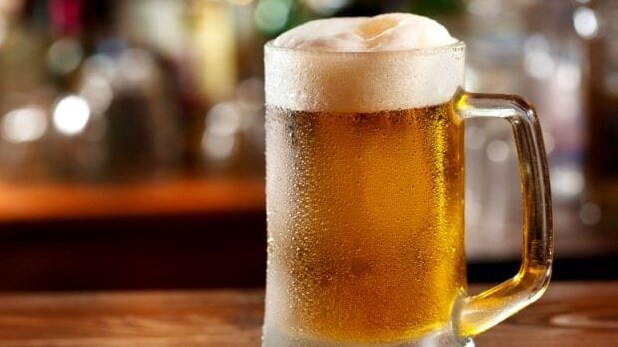
The government has banned the world's largest brewer, Anheuser-Busch InBev, from selling its products in the key New Delhi market for 3 years for allegedly evading local taxes, government orders seen by Reuters showed.
The Delhi government orders from earlier this month followed a 3-year investigation which found that beer maker SABMiller - acquired by AB InBev in 2016 for around $100 billion - used duplicate barcodes on its beer bottles supplied to city retailers that year, allowing it to pay lower levies.
AB InBev said in a statement it denied the Delhi government's allegations and would appeal against the order.
"The barcodes were being duplicated by ... SABMiller and supplied to the retail outlets to evade payment of excise duty," said a 19-page order, dated July 16, which detailed the findings.
In a second order last week, the Delhi city authority said that AB InBev should be put on a "blacklist" for three years. It also called for the sealing of two of AB InBev's warehouses in the capital city, an action that a senior Delhi government official told Reuters on Tuesday had already been completed.
"This means the company is debarred from Delhi market for all purposes, unless they appeal against this," said the official, adding that no fresh stock of AB InBev beer brands can be sold at liquor shops or restaurants.
Neither of the orders had been previously reported.
AB InBev, which counts popular beer brands such as Budweiser, Hoegaarden and Stella Artois in its portfolio, told Reuters the Delhi government's allegations related to operations of SABMiller prior to its takeover, and it looked forward to receiving a fair hearing on the matter.
"Integrity and ethics are part of our core values ... (We) look forward to presenting our views in full cooperation with the excise appellate process," a company spokesman said.
AB InBev is the second biggest player in India's $7 billion beer market, accounting for a 17.5 per cent market share, according to research firm IWSR Drinks Market Analysis.
Though separate local market share figures were not available, industry executives said the Delhi ban would be a major setback for AB InBev, which is also battling a separate antitrust probe concerning alleged beer price fixing by SABMiller and other companies.
"New Delhi remains an extremely critical market for any beer company ... this is the country's social capital, apart from Mumbai. It's a showcase market for the premium beer portfolio," said a former senior AB InBev executive, who declined to be identified.
This month, AB InBev cancelled the planned listing in Hong Kong of its Asia Pacific unit, citing "several factors, including the prevailing market conditions".
Pub culture
A young and affluent population and a growing pub culture, especially in the big cities, have spurred beer consumption in India. That is despite the fact that the industry is tightly regulated, with most states individually regulating pricing and imposing taxes, which form a vital source of their revenues.
Sandeep Chilana, a New Delhi-based lawyer specializing in excise law, said that rules mandate each beer bottle sold in the city has to have a unique barcode for track and trace purposes, and to ensure there is no duty evasion.
The current dispute centres around a random inspection at BarShala, a drinking spot in a posh New Delhi area, on the night of August 16, 2016. City officials said they found 12 beer bottles of SABMiller brands at the bar that barcode records showed should have been in the company warehouse at the time.
A follow-on investigation showed that some beer bottles sent to the bar in November had identical barcodes to those found in the inspection in August, the government order said.
The bar denied any wrongdoing.
The brewer argued the discrepancy could be due to the technical or clerical errors in the barcoding system, but the city government said the company's defence was "devoid of merit", according to the order.
The Delhi government said it was "reasonable to believe" that the same barcodes were duplicated multiple times and supplied to various retail vendors in Delhi, adding that this amounted to the offence of selling non-duty paid liquor.
"The same barcodes were supplied twice at the same restaurant and hence the discrepancy could be noticed. Had the same been supplied to a different retail outlet the discrepancy could not have been noticed easily," the order said.

-
Navigating Friction And Energy Realities: An Analysis Of Marco Rubio's October Visit To India

Occurring at a critical juncture marked by stalled trade negotiations and escalating geopolitical pressures over global energy supplies, the visit offers a profound window into modern US-India relations.
-
India Exports Capital. Why Not Export Trusteeship?
The big question, then, is whether India can build an institution that global borrowers, investors, banks, and lawyers can trust, even without an Indian connection.
-
France's Economy & Politics Are In Crisis | The Reason Why
Let's look at how the French economy and politics evolved under Nicolas Sarkozy, Franois Hollande and Emmanuel Macron.
-
You May Inherit The Business. You Must Earn Its Credibility.
Succession tests the founder's ability to share authority as much as it tests the next generation's readiness to assume it.
-
Signing Deals Is One Thing; Making Them Work Is Another | The Week In Whys
Sometimes, things don't turn out as planned. Indian companies have lost some bids to rivals, some projects won't produce until 2030.
-
FOMC Wall, PERM Suspension, Hospital Stocks | Talking Points This Week
A PERM suspension would directly affect green-card sponsorship rather than H-1B visas, so the near-term earnings impact could remain relatively limited. The key question is whether this marks a new phase in US scrutiny of Indian IT.
-
Everything, Everywhere, All At Once: Dalal Street's Week To Forget | Joining The Dots
Visa curbs, a Starlink spat and cancer drug caps: what connects this week's shocks for Indian markets
-
India Is Going Abroad For Critical Minerals. But It May Take Years To Pay Off | The Reason Why
Although India's steps are in the right direction, they remain modest compared with India's growing dependence.
-
When Everyone Has AI, What Gives You An Edge?
India's young workforce is entering an uncertain world of work where powerful AI tools are becoming widely accessible. The advantage will belong to those who combine deep expertise with digital fluency, and the distinctly human capabilities that technology cannot manufacture.
-
Wrong Labels, High Pesticide Residues Holding Back Agri Exports | The Reason Why
India needs stronger domestic food-safety and labelling standards, with best practices becoming part of everyday business for farmers, traders and food companies.










