24 Hours Before Budget, Here's What's Expected On Tax Rates And More
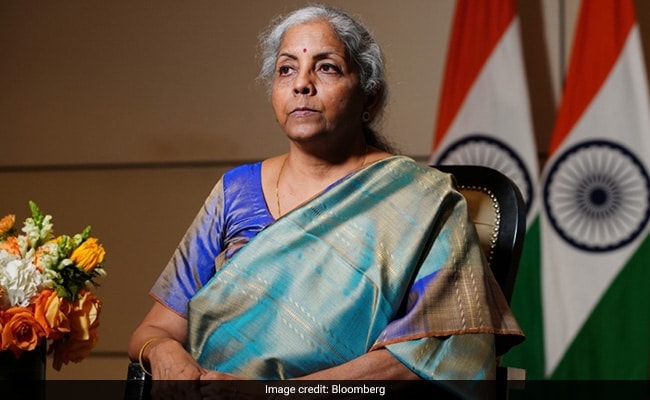
India, which is set to regain the world's fastest-growing major economy title, will likely prioritize growth over fiscal consolidation by boosting spending, according to economists surveyed ahead of Tuesday's presentation of the nation's Union Budget.
Finance Minister Nirmala Sitharaman will probably increase the budget by about 14% year-on-year to Rs 39.6 lakh crore ($527 billion) in the fiscal year beginning April, according to the median of estimates compiled by Bloomberg. She is expected to leave tax rates largely unchanged, and instead rely on income from asset sales and a near-record borrowing of about Rs 13 lakh crore to partly fund the plan, the survey showed.
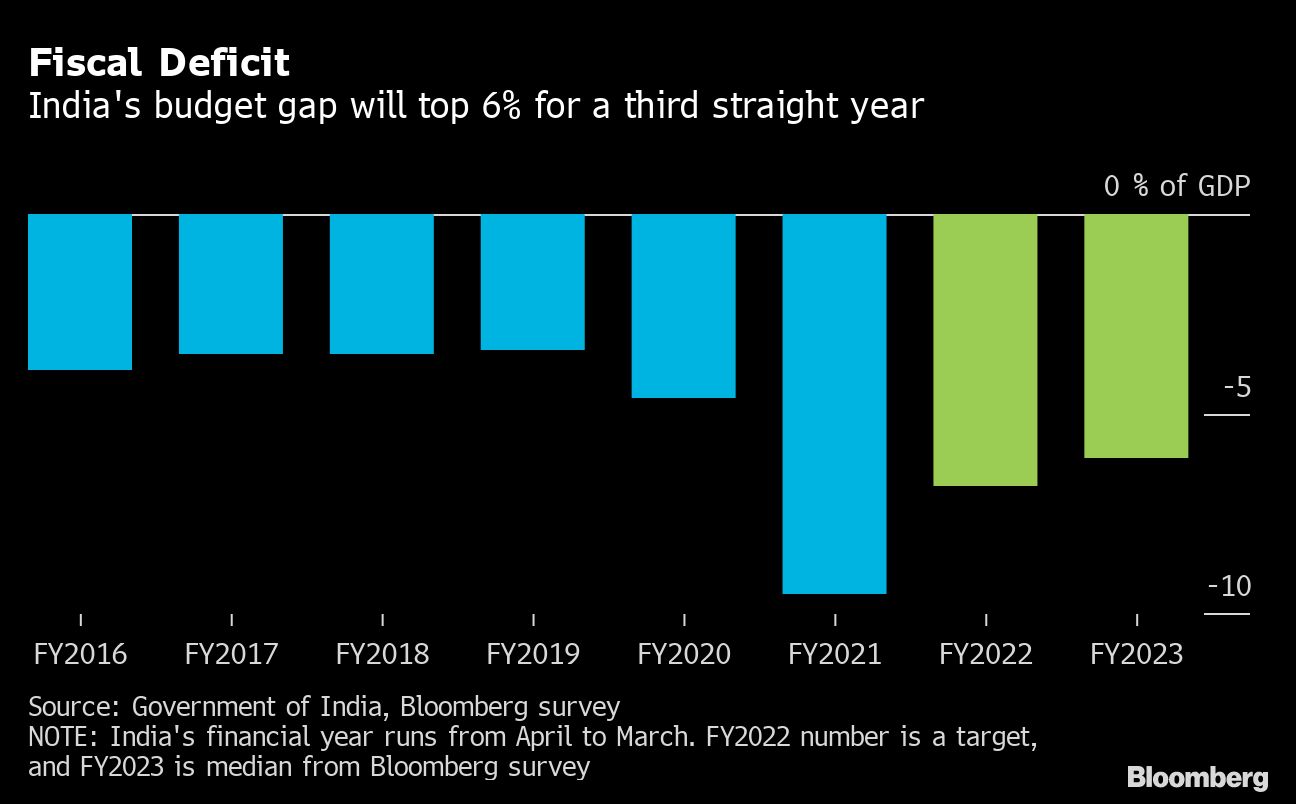
Elevated expenditure will, for yet another year, keep the government's budget deficit wider than 6% of gross domestic product. Economists predict Sitharaman will target a fiscal gap of 6.1% of GDP next fiscal year after ending the current year with a 6.8% shortfall, thanks to looser spending to see the economy through the pandemic.
“The recovery from the pandemic has been swift but incomplete,” Dhiraj Nim and Sanjay Mathur, economists at Australia & New Zealand Banking Group Ltd. wrote in a report. “A fine balancing act between fiscal retreat and economic recovery is thus needed.”
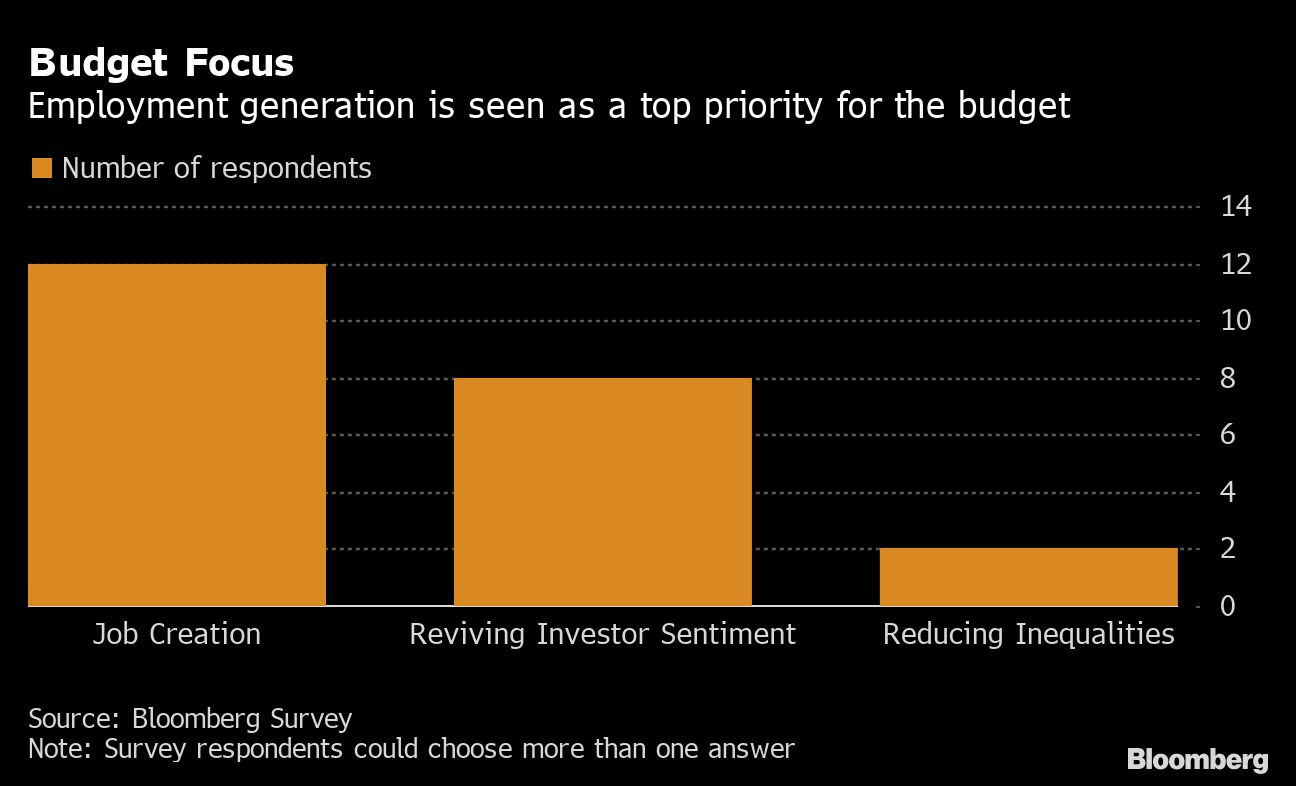
With curbs to stem the omicron variant of Covid-19 fanning unemployment and inequalities, Sitharaman will be under pressure to step up spending on everything from infrastructure projects to health care in a bid to create jobs and pull people out of poverty. Oxfam is recommending the government impose a 1% surcharge on the richest 10% of the population to invest in health and education.
Wealth has surged for the rich globally during the pandemic as the value of everything from stock prices to crypto and commodities has jumped. India, where urban unemployment jumped close to 15% last May and food insecurity worsened, now counts more billionaires than France, Sweden and Switzerland combined, according to Oxfam.
Most survey participants see Sitharaman desisting from any populist steps in the budget despite the ruling Bharatiya Janata Party heading into key state elections next month, even as expectations are growing that she will change some tax rules to boost foreign demand for India's sovereign debt.
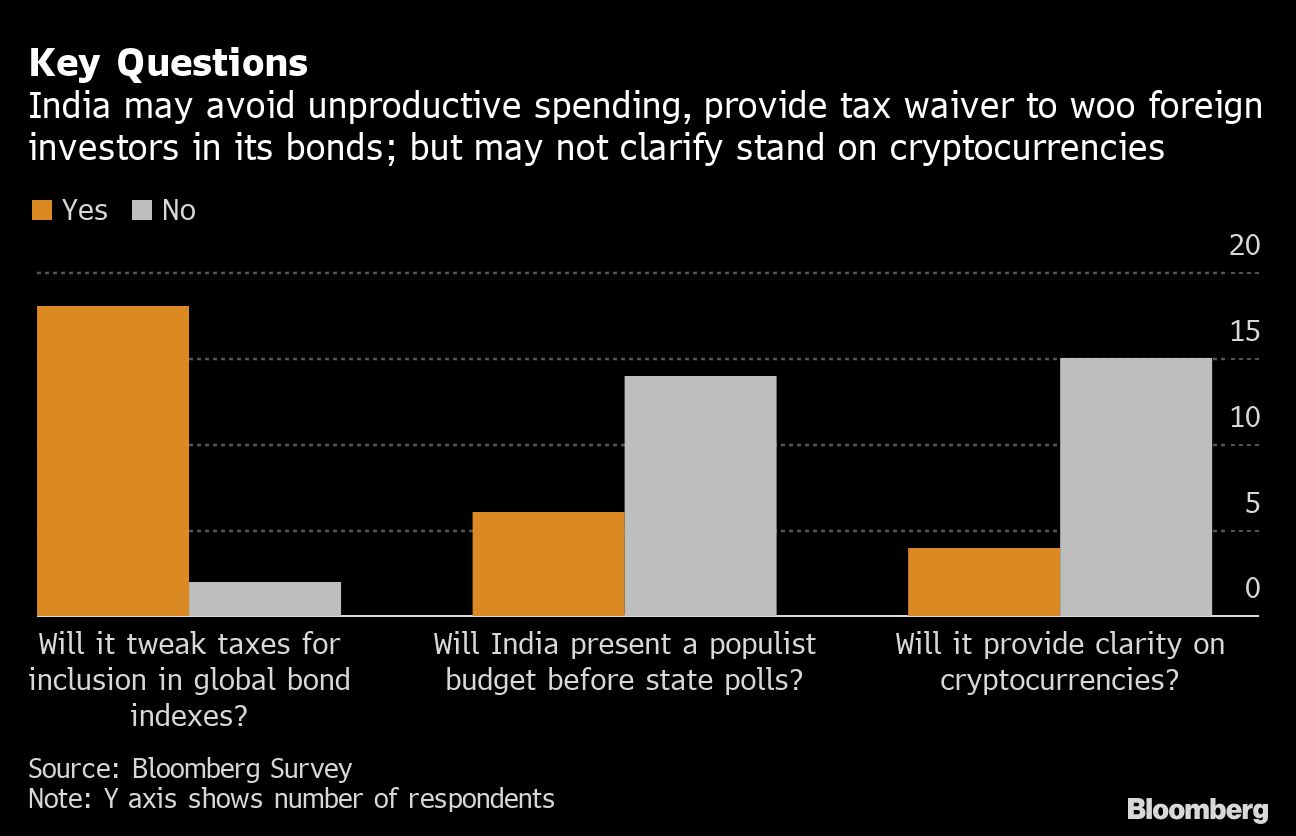
Scrapping the capital gains tax on bond investors will advance India's case for inclusion in global bond indexes, which HSBC Holdings Plc estimates could pave the way for as much as $40 billion of foreign inflows. It can also ease domestic pressure given expectations of near-record borrowing by the government just as the central bank winds back some of its pandemic-era monetary stimulus.
Most respondents see the manufacturing sector emerging as the biggest beneficiary of the budget, with few economists expecting any major gains for the country's dominant services and agriculture sectors. At the same time, they think it's the poor who would benefit the most from the government's growth-boosting policies.
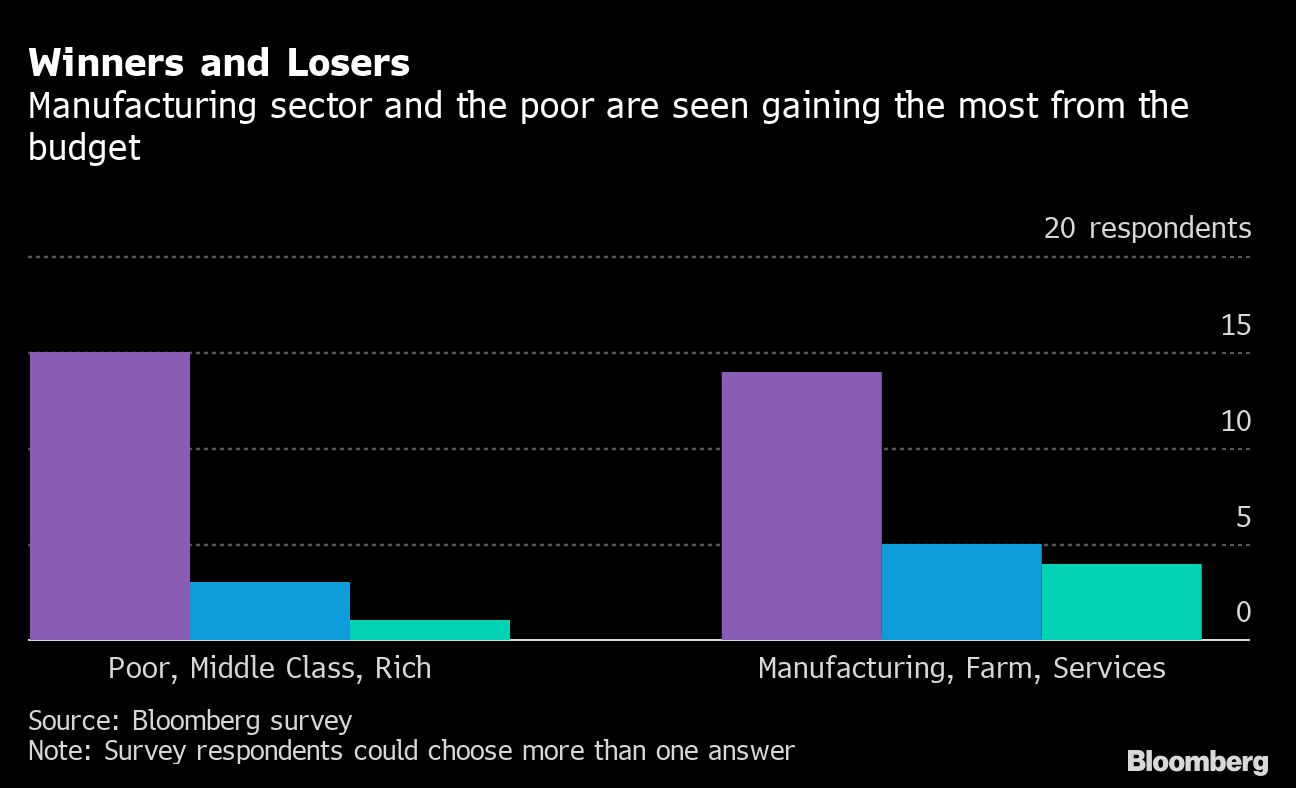
The budget will continue to support the rural sector “via employment generation and higher fertilizer subsidies,” said Gaura Sen Gupta, an economist with IDFC First Bank Ltd. in Mumbai. “The focus of fiscal policy will shift from near-term relief measures to strengthening engines of growth -- consumption and investment,” she said.

-
High US Salaries, No Green Card Certainty: The Financial Calculation Facing Indian H-1B Families

The suspension of PERM processing at eight technology employers does not cancel existing H-1B visas. What it does is force a question many Indian families have been avoiding: is the US salary worth tying your career and family plans to one employer?
-
Swiggy vs Eternal: Food Delivery's Two Rivals Are No Longer In The Same Race
Eternal is building a private AI assistant, dark.ai. Swiggy is still working out how to make Instamart pay, with an operating loss of Rs 895 crore in the July-September quarter while Blinkit stayed profitable.
-
Where You Live Shapes How You Get To Work | The Reason Why
Two-wheelers are the most popular way to get to work in India, accounting for nearly 43% of workplace commutes.
-
Unhedged Position: Can India See An Indonesia-Style Time Correction?
The Nifty is trading below levels it first clocked in 2024. Is there, then, as I have suggested in the headline, potential that the current time correction drags on painfully for the next three-five, even ten years?
-
Navigating Friction And Energy Realities: An Analysis Of Marco Rubio's October Visit To India
Occurring at a critical juncture marked by stalled trade negotiations and escalating geopolitical pressures over global energy supplies, the visit offers a profound window into modern US-India relations.
-
India Exports Capital. Why Not Export Trusteeship?
The big question, then, is whether India can build an institution that global borrowers, investors, banks, and lawyers can trust, even without an Indian connection.
-
France's Economy & Politics Are In Crisis | The Reason Why
Let's look at how the French economy and politics evolved under Nicolas Sarkozy, Franois Hollande and Emmanuel Macron.
-
You May Inherit The Business. You Must Earn Its Credibility.
Succession tests the founder's ability to share authority as much as it tests the next generation's readiness to assume it.
-
Signing Deals Is One Thing; Making Them Work Is Another | The Week In Whys
Sometimes, things don't turn out as planned. Indian companies have lost some bids to rivals, some projects won't produce until 2030.
-
FOMC Wall, PERM Suspension, Hospital Stocks | Talking Points This Week
A PERM suspension would directly affect green-card sponsorship rather than H-1B visas, so the near-term earnings impact could remain relatively limited. The key question is whether this marks a new phase in US scrutiny of Indian IT.









