Budget 2024: Indian Solar Industry Seeking Boost For Manufacturing
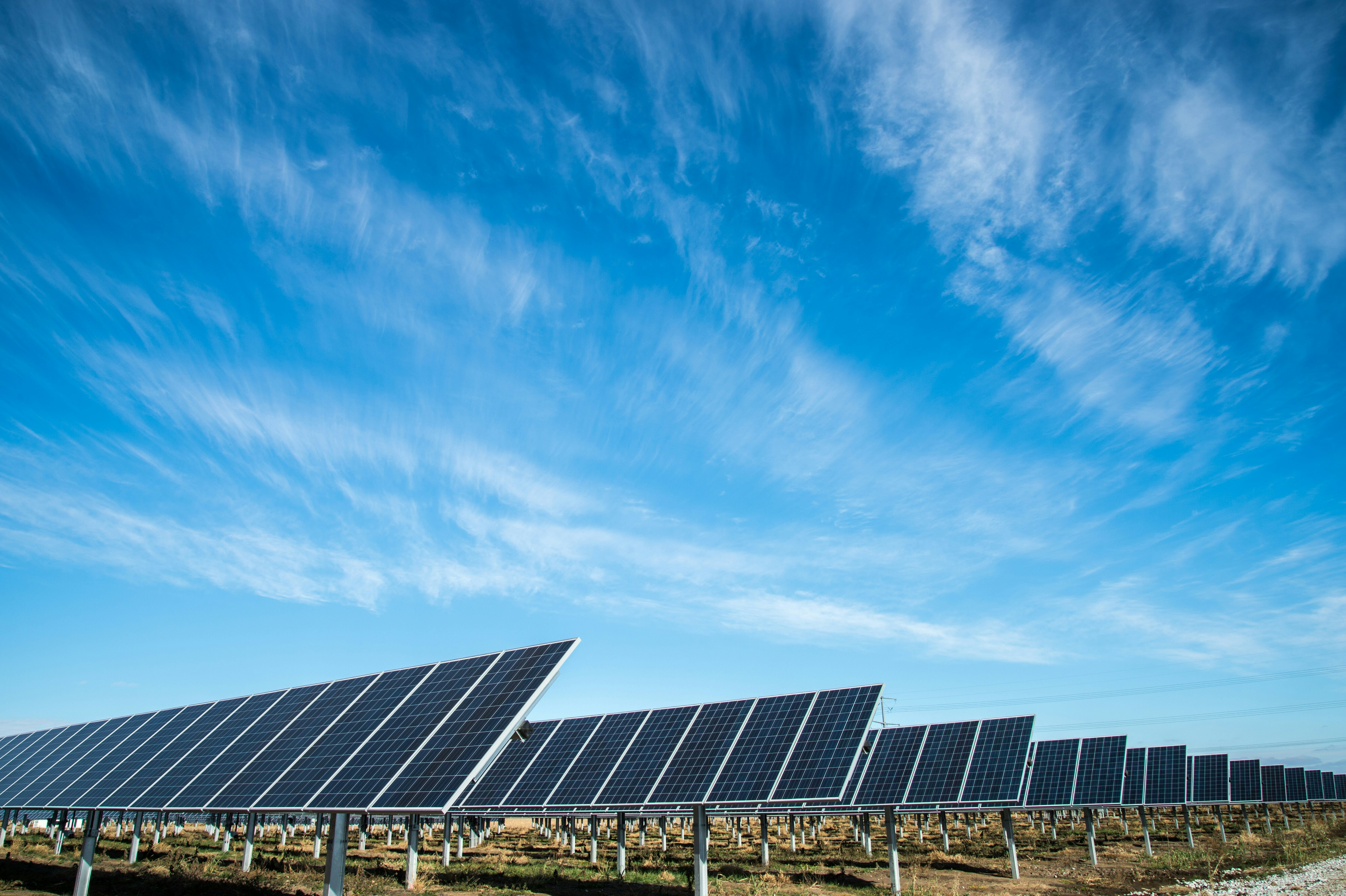
The solar energy industry is looking at policy support and incentives such as a boost for domestic manufacturing of solar panels in the upcoming annual budget.
Solar energy is crucial to India's transition from coal-fired thermal power plants to renewables. The country's current solar capacity stands at 85 gigawatts, according to data from the Ministry of New and Renewable Energy. That accounts for 57% of India's grid connected renewable capacity.
The government earlier this year announced measures for the sector such as the Pradhan Mantri Suryodya Yojana, and made allocation for solar projects.
Here are some key policy and incentives which the sector can expect in the upcoming budget.
Pradhan Mantri Suryodaya Yojana
The Pradhan Mantri Suryodaya Yojana was first introduced during the interim budget presented earlier this year. The scheme aims to install rooftop solar systems in one crore Indian households. Benefits of the scheme include up to 300 units of free electricity monthly, potential annual savings of Rs 15,000 to Rs 18,000, and the option to sell surplus electricity to distribution companies.
While the interim budget laid the groundwork for the Pradhan Mantri Suryodaya Yojana, the Union Budget is expected to provide more concrete details and implementation strategies, such as:
Financial Allocations: A clear allocation of funds for the scheme to facilitate its implementation.
Eligibility Criteria: Specific guidelines on who is eligible to benefit from the scheme.
Implementation Mechanism: A detailed plan on how the scheme will be rolled out, including the role of state governments and distribution companies.
Subsidies And Incentives: Potential subsidies or incentives for rooftop solar installations to encourage wider adoption.
Target Achievement: A timeline for achieving the target of one crore rooftop solar installations.
Increased Budget Allocation For Grid-Based Solar Power
The interim budget witnessed a significant allocation boost for grid-based solar power projects to Rs 10,000 crore for the year ending March 2025—more than twice the previous revised estimates of Rs 4,757 crore.
The higher allocation can help boost opportunities in the sector.
Boost In Domestic Manufacturing
The government has laid out initiatives such as the approved list of models and manufacturers which mandates the use of solar panels manufactured by those players that are part of the list, for government solar projects.
While India is self-sufficient in solar module production, it lacks solar cell production capabilities. This has led to a rise in solar cell and panel imports.
India imported solar cells and panels worth over Rs 51,460 crore in the FY24, 2.84 times greater than the year ago, according to Commerce Ministry data. The main reason for the rise is landed imported costs of solar panels are lower by 4 cents per watt compared to domestic panels, according to ICRA. Furthermore, solar cell imports attract a 25% basic customs duty.
Adjustments to this duty or expansion of the production-linked incentive schemes for solar cell and panel manufacturing could attract investments and boost domestic production.
What Companies Say
The upcoming budget presents a good opportunity for the government to support domestic solar panel manufacturing, according to Hitesh Doshi, chief managing director of Waaree Energies Ltd., India's largest solar panel manufacturer.
"The industry expects the budget to support more and more end-to-end manufacturing, support all the ancillaries in the sector as well as the products required to make solar panels, batteries, etc.," he told NDTV Profit.
While the government has launched production-linked incentives to help with support in terms of capital and interest rates. India is currently competing with countries whose solar manufacturing capabilities are ahead of India's and thus increased capital support and PLI schemes will help the country compete on a global level, Doshi said. "At present, there are no benefits if India exports solar products, this makes us less competitive."

-
The More Food Turns Into Fuel, The Harder It Is To Read Agricultural Markets | The Reason Why

A policy designed to reduce dependence on imported fuel can create new pressures elsewhere in the food economy.
-
Your iPhone Costs 12 Grams Of Gold, A Car About 100. What Does Your Life Weigh?
Measured in rupees, almost everything looks more expensive than it did a generation ago. Measured in grams of gold, a lot of it has become cheaper.
-
Gold Is Rs 22,000 Cheaper Than A Month Ago. Should You Buy Amid The Wedding Season?
Gold's potential slide to $3,500 could save around Rs 4,700 per 10 grams, but a soft inflation print could just as easily push prices back up. One way to split the risk is to buy in parts, some now and the rest after the Fed's Dec. 9 decision.
-
AI Agents Are Gaining Power. Who Governs Them?
Artificial intelligence agents promise to transform productivity by moving machines from assisting decisions to executing them. But as organisations delegate greater authority to these AI-agents, they must first establish who controls that authority and who remains accountable when things go wrong.
-
Why Swapping Your Old Gold Can Trigger A Rs 5 Lakh Tax Bill, And How You Can Avoid It Legally
Swapping old gold for new is taxed as a sale and a fresh purchase. Getting your own gold remade can cut most of that bill, though it has its own costs.
-
The AI Trade is Done. The Real Opportunity for Investors Starts in 2027 | Unhedged Position
As pureplay AI stocks plunge and circular, capex-led financing unwinds, 2027 is set to be a year of reckoning for AI companies. Yet the bust clears the way for a better opportunity for investors in 2027 -- shifting the spotlight from AI builders to the companies using AI.
-
Leadership As Mission: Why The Age Of AI Demands More Human Leadership
Debjani Ghosh examines how AI is changing leadership, arguing that its success must be measured by its impact on people and the accountability of those guiding its use.
-
We May Need Another Tukaram Mundhe To Fight Air Pollution | The Reason Why
Developers may install basic measures such as sprinklers and green nets, resume work, and continue violating rules when this equipment stops working.
-
Extracting Value From Battery Scrap Could Be Challenging For India | The Reason Why
A discarded lithium-ion battery still contains valuable materials such as lithium, nickel and cobalt. These can be recovered and reused. When such batteries are crushed and shredded, they produce a dark powder called black mass.
-
One El Nino, India Can Handle. Two Could Break The Granary
India's grain stocks can absorb one bad year, but a second El Nino could drain the buffer in two to three years, economists say.









