Cabinet Approves Second Tranche Of Rs 19,500 Crore Solar PLI Scheme
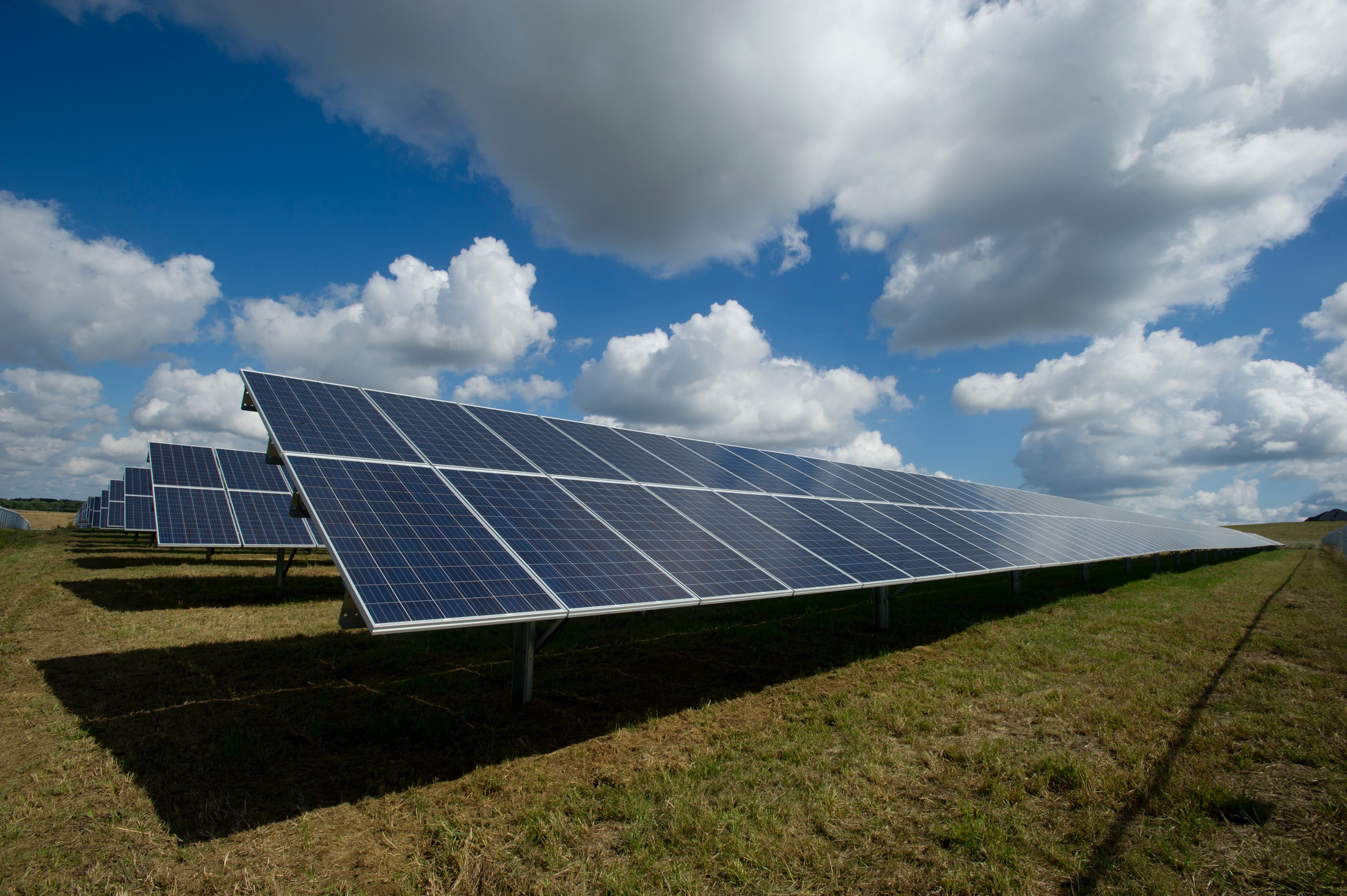
The central government on Wednesday approved the much-awaited Ministry of New and Renewable Energy's Rs 19,500 crore production linked incentive scheme for solar PV modules.
The scheme is expected to achieve manufacturing capacity of gigawatt scale high efficiency solar panels in the country, which will help India become 'atmanirbhar' and reduce dependence on imports, said the Union Information and Broadcasting Minister Anurag Thakur, while giving details about the Cabinet decision on Wednesday.
The solar panel manufacturers will be selected on a transparent basis, and incentives will be disbursed for five years after the commissioning of the plant.
"It is estimated that around 65,000 MW per annum manufacturing capacity of fully and partially integrated, solar PV modules would be installed under the scheme," an official statement by the Press Information Bureau said.
It will also attract direct investments of Rs 94,000 crore and provide direct and indirect employment to over 9 lakh people, the statement said.
The scheme is expected to help in import substitution of Rs 1.37 lakh crore, it said.
In the Union Budget 2022, Finance Minister Nirmala Sitharaman had enhanced funding under the PLI scheme for domestic solar cells and module manufacturing to Rs 24,000 crore from the initial outlay of Rs 4,500 crore.
"For facilitating domestic manufacturing for the ambitious goal of 280 GW of installed solar capacity by 2030, an additional allocation of Rs 19,500 crore for PLI scheme for manufacturing of high efficiency (solar) modules with a priority of fully-integrated manufacturing units for polysilicon to solar PV modules will be made," Sitharaman said in her Budget speech in the Lok Sabha.
The Rs 19,500 crore allocation was done to clear the waiting list of bidders in the first tranche. However, the plan to clear the wait list was terminated and a fresh tender under the second tranche was proposed by the Ministry of Power.
As per the draft guidelines for Tranche II, Rs 12,000 crore was reserved for companies setting up integrated capacity of polysilicons, wafers, cells and modules, while Rs 4,500 crore was reserved for those setting up wafers, cells and modules capacity, and Rs 3,000 crore for cells and modules capacity.
The majority of the companies that participated in the first tender had bid for cells and modules capacity. However, in the second tranche, the PLI is higher for companies setting up the entire value chain, as highlighted in the draft guidelines.
In April 2021, the Union Cabinet approved a Rs 4,500 crore production-linked incentive scheme to boost the domestic manufacturing capacity of solar PV modules.
Reliance Industries Ltd.'s solar arm, Reliance New Energy Solar Ltd., Adani Infra India Ltd., and Sri Shirdi Sai Electricals Ltd. were the three winners in the first tender.
Some of the prominent names that were wait-listed included L&T Ltd., Tata Power Solar Systems Ltd., NTPC Ltd. and Coal India Ltd., and some of the big solar panel manufacturers such as Waaree Energies Ltd. and Vikram Solar Ltd.

-
The More Food Turns Into Fuel, The Harder It Is To Read Agricultural Markets | The Reason Why

A policy designed to reduce dependence on imported fuel can create new pressures elsewhere in the food economy.
-
Your iPhone Costs 12 Grams Of Gold, A Car About 100. What Does Your Life Weigh?
Measured in rupees, almost everything looks more expensive than it did a generation ago. Measured in grams of gold, a lot of it has become cheaper.
-
Gold Is Rs 22,000 Cheaper Than A Month Ago. Should You Buy Amid The Wedding Season?
Gold's potential slide to $3,500 could save around Rs 4,700 per 10 grams, but a soft inflation print could just as easily push prices back up. One way to split the risk is to buy in parts, some now and the rest after the Fed's Dec. 9 decision.
-
AI Agents Are Gaining Power. Who Governs Them?
Artificial intelligence agents promise to transform productivity by moving machines from assisting decisions to executing them. But as organisations delegate greater authority to these AI-agents, they must first establish who controls that authority and who remains accountable when things go wrong.
-
Why Swapping Your Old Gold Can Trigger A Rs 5 Lakh Tax Bill, And How You Can Avoid It Legally
Swapping old gold for new is taxed as a sale and a fresh purchase. Getting your own gold remade can cut most of that bill, though it has its own costs.
-
The AI Trade is Done. The Real Opportunity for Investors Starts in 2027 | Unhedged Position
As pureplay AI stocks plunge and circular, capex-led financing unwinds, 2027 is set to be a year of reckoning for AI companies. Yet the bust clears the way for a better opportunity for investors in 2027 -- shifting the spotlight from AI builders to the companies using AI.
-
Leadership As Mission: Why The Age Of AI Demands More Human Leadership
Debjani Ghosh examines how AI is changing leadership, arguing that its success must be measured by its impact on people and the accountability of those guiding its use.
-
We May Need Another Tukaram Mundhe To Fight Air Pollution | The Reason Why
Developers may install basic measures such as sprinklers and green nets, resume work, and continue violating rules when this equipment stops working.
-
Extracting Value From Battery Scrap Could Be Challenging For India | The Reason Why
A discarded lithium-ion battery still contains valuable materials such as lithium, nickel and cobalt. These can be recovered and reused. When such batteries are crushed and shredded, they produce a dark powder called black mass.
-
One El Nino, India Can Handle. Two Could Break The Granary
India's grain stocks can absorb one bad year, but a second El Nino could drain the buffer in two to three years, economists say.









