Budget 2023: Centre Likely To Extend Incentives Scheme To More Sectors
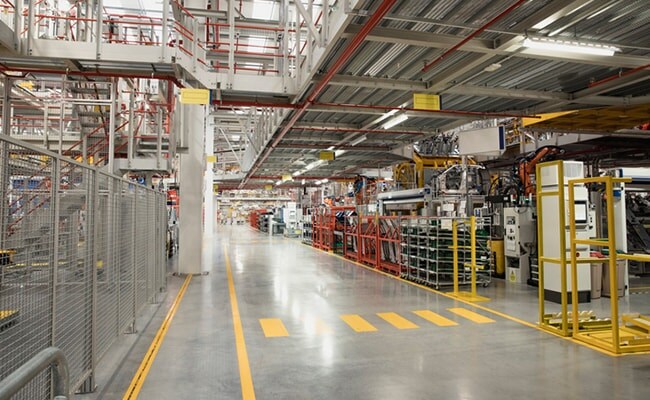
The government is likely to extend fiscal incentives for production of toys, bicycles and leather and footwear in the forthcoming budget as it looks to expand production linked incentive (PLI) scheme to cover more high-employment potential sectors, sources said.
The government has already rolled out the scheme with an outlay of about Rs 2 lakh crore for as many as 14 sectors, including automobiles and auto components, white goods, pharma, textiles, food products, high efficiency solar PV modules, advance chemistry cell and speciality steel.
The scheme aims to make domestic manufacturing globally competitive and create global champions in manufacturing, and it is yielding solid results, sources said.
A proposal to extend PLI scheme benefits to different sectors such as toys and leather are at advanced stages of finalisation and there is a likelihood that it may figure in Budget, they added.
One of the sources said there are some savings from this Rs 2 lakh crore which could be considered for other sectors.
Budget for 2023-24 is scheduled to be presented by Finance Minister Nirmala Sitharaman on February 1.
The PLI scheme is aimed at making Indian manufacturers globally competitive, attracting investment in the areas of core competency and cutting-edge technology; ensuring efficiencies; creating economies of scale; enhancing exports and making India an integral part of the global supply chain.
As of September 2022, the PLI scheme for LSEM (Large-Scale Electronics Manufacturing) has attracted investment of Rs 4,784 crore, and led to total production of Rs 2,03,952 crore, including exports of Rs 80,769 crore, according to a government statement.
The PLI for LSEM has attracted leading global players, including Foxconn, Samsung, Pegatron, Rising Star and Wistron while leading domestic companies, including Lava, Micromax, Optiemus, United Telelinks Neolyncs and Padget Electronics, have also participated in this scheme.
Under the scheme, all the 14 sectors have received significant participation from the private sector.
According to a statement of the commerce and industry ministry issued on December 16 last year, 650 applications have been approved under 13 schemes so far and more than 100 MSMEs are among the PLI beneficiaries in sectors such as bulk drugs, medical devices, telecom, white goods and food processing.
The scheme was specifically designed to boost domestic manufacturing in sunrise and strategic sectors, curb cheaper imports and reduce import bills, improve cost competitiveness of domestically manufactured goods, and enhance domestic capacity and exports.
(Except for the headline, this story has not been edited by NDTV staff and is published from a syndicated feed.)

-
Why Amazon And Flipkart Are Struggling To Beat Meesho In India's Smaller Cities

With 274 million users and lowest-cost logistics, Meesho is defending its value commerce crown against giants like Amazon and Flipkart.
-
High US Salaries, No Green Card Certainty: The Financial Calculation Facing Indian H-1B Families
The suspension of PERM processing at eight technology employers does not cancel existing H-1B visas. What it does is force a question many Indian families have been avoiding: is the US salary worth tying your career and family plans to one employer?
-
Swiggy vs Eternal: Food Delivery's Two Rivals Are No Longer In The Same Race
Eternal is building a private AI assistant, dark.ai. Swiggy is still working out how to make Instamart pay, with an operating loss of Rs 895 crore in the July-September quarter while Blinkit stayed profitable.
-
Where You Live Shapes How You Get To Work | The Reason Why
Two-wheelers are the most popular way to get to work in India, accounting for nearly 43% of workplace commutes.
-
Unhedged Position: Can India See An Indonesia-Style Time Correction?
The Nifty is trading below levels it first clocked in 2024. Is there, then, as I have suggested in the headline, potential that the current time correction drags on painfully for the next three-five, even ten years?
-
Navigating Friction And Energy Realities: An Analysis Of Marco Rubio's October Visit To India
Occurring at a critical juncture marked by stalled trade negotiations and escalating geopolitical pressures over global energy supplies, the visit offers a profound window into modern US-India relations.
-
India Exports Capital. Why Not Export Trusteeship?
The big question, then, is whether India can build an institution that global borrowers, investors, banks, and lawyers can trust, even without an Indian connection.
-
France's Economy & Politics Are In Crisis | The Reason Why
Let's look at how the French economy and politics evolved under Nicolas Sarkozy, Franois Hollande and Emmanuel Macron.
-
You May Inherit The Business. You Must Earn Its Credibility.
Succession tests the founder's ability to share authority as much as it tests the next generation's readiness to assume it.
-
Signing Deals Is One Thing; Making Them Work Is Another | The Week In Whys
Sometimes, things don't turn out as planned. Indian companies have lost some bids to rivals, some projects won't produce until 2030.










