Budget 2022: Nirmala Sitharaman Says Money Going To Address Rural Distress In Different Ways
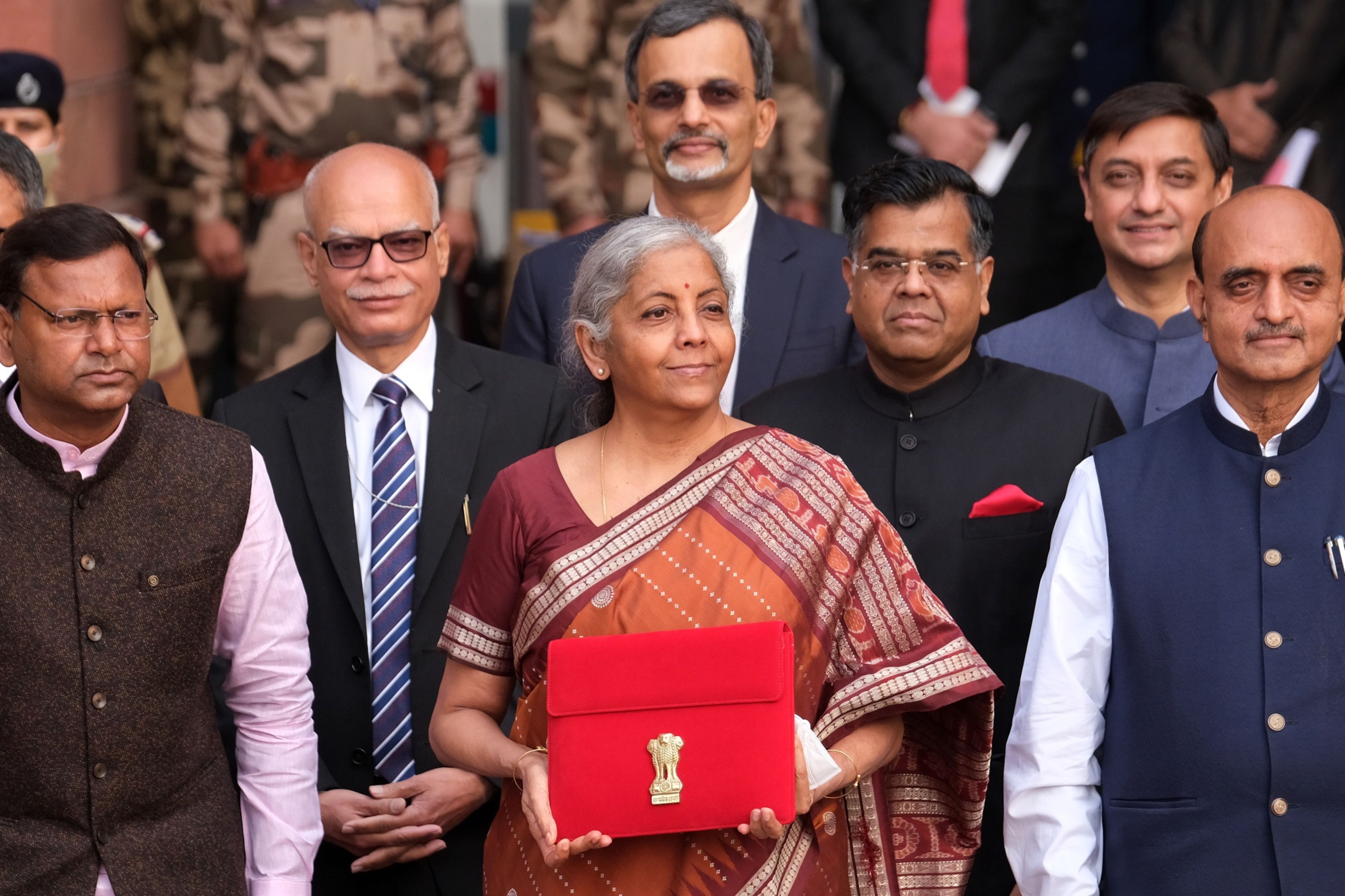
Finance Minister Nirmala Sitharaman has said Budget 2022's healthy capex spend will boost growth through a multiplier effect, and the government is using other measures to alleviate rural distress.
“Rural distress is being addressed in various ways, not just DBT (direct benefit transfers) to farmers,” Sitharaman said while addressing industry leaders at CII National Council's post-budget interaction on Saturday.
While allocation to capex rose, outlays for some of the welfare schemes and subsidies have fallen in budget proposals for 2022-23. The outlay for the rural jobs guarantee scheme or MNREGA is Rs 73,000 crore, the same as FY22 before it was increased to Rs 98,000 crore owing to higher job demand.
“MGNREGA is demand driven. If there is a demand, the government will increase it (the allocation)," Revenue Secretary Tarun Bajaj said while answering a query. "We hope industries will also employ more this year.”
Sitharaman said the government has increased allocation for micronutrients from Rs 26,000 crore to Rs 43,000 crore, and also bore the price rise in fertilisers.
"Money is going to them (rural economy) in different ways such as poshan abhiyaan, housing, cooking gas, electricity, health," she said "We are ensuring rural self-help groups are given seed money for corpus and also supporting procurement and storage (of farmer produce) can happen through FPOs at the local level.”
The finance minister also referred to the e-sharm portal to help formalise informal labour.
“Labour, especially semi-skilled, has remained largely informal, and during the pandemic through this portal they have been gradually formalised," she said. "The government expected to reach 28-30 crore registrations and we're already reaching the figure,” she said.
Sitharaman urged companies to invest and use the window of opportunity to scale up growth as the economy recovers.

-
Ten Things I Learnt This Samvat

Patience can be a trap. Cheap stocks can stay cheap. Leverage can wipe you out. What did Samvat 2082 teach us? Niraj Shah writes on 10 lessons from the year gone by.
-
Talking Points This Week: Tech Nerves, FII Buying, And A Faraway Banking Shock
The global markets are not shining this Diwali. The exception in the large markets is, India.
-
Midterm Rally Lasted A Day. The Hard Reality Of A Divided US May Last Two Years | Opinion
Between a contested AI boom, a debt ceiling that arrives in 2027 and a president with every incentive to act alone, the next two years may prove more volatile than the first day's rally suggests.
-
Blue Wave Will Derail the AI Trade but Won't Dismantle the AI Era | Unhedged Position
The Democrats' sweep of the US Congress will see politics collide with economic forces both over the long and short term.
-
It's Time To Take The GST Council's Bet On Trust Global
Payment records can prove India's services exports, and clear, proportionate rules can bring foreign digital sellers into the tax net.
-
Opinion | India at 38: From Innovation Overperformer to Innovation Powerhouse
India now has 453 VC-backed deep science startups, 18 of them late-stage, after 117 percent growth since 2020. Laurus Labs, at USD 9.3 billion, is the most valuable deep science company in any middle-income economy outside China.
-
Navigating Energy Crossroads: S Jaishankar's Call For Diversified Supply Chains At G20 Ministerial Meeting
As geopolitical fault lines continue to test maritime trade routes and commodity flows, Jaishankar's message remains pertinent: true economic resilience requires open markets, protected transit lines, and a genuine commitment to multilateral cooperation rather than coercion.
-
Indians Are Travelling, But Not Every Journey Is A Holiday | The Week In Whys
Pilgrims, patients and working women are the real travellers, and the system hasn't quite caught up with them.
-
Getting To Work Costs Women More | The Reason Why
It is not just about women paying more than men. It is about women paying much more in cities than in villages.









