Budget Looks At Spending More To Keep World's Fastest-Recovery Going
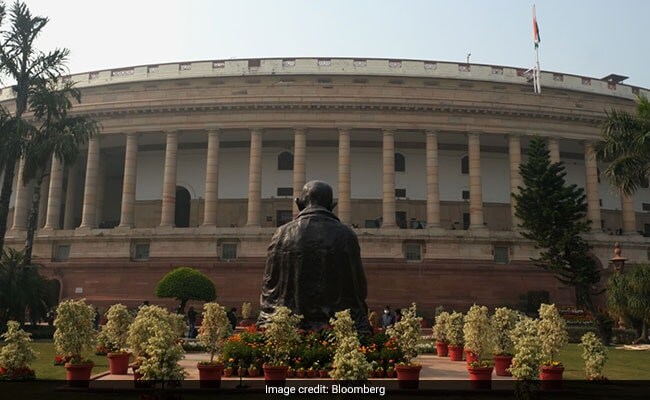
India pledged to spend more to fire up the key engines of growth in Asia's third-largest economy, as it stages a world-beating recovery from the pandemic.
Finance Minister Nirmala Sitharaman proposed increasing the size of the economy's annual spending to 39.5 trillion rupees ($529 billion) to support growth plans for the year beginning April. Capital expenditure is budgeted to rise significantly once again -- by 35% -- to 7.5 trillion rupees, she said.
That will leave her with a budget shortfall equivalent to 6.4% of gross domestic product, wider than the median 6.1% seen in a Bloomberg survey. The government will end the current financial year with a deficit of 6.9% of GDP against a targeted 6.8%, she said.

Budget 2022: India has given more focus on economic expansion in the Budget.
"This budget continues to provide impetus for growth," she said in Parliament in New Delhi on Tuesday. Indian bonds fell, with the yield on benchmark 10-year notes rising by as much as nine basis points after she targeted a higher budget deficit for next fiscal year. Benchmark stocks were trading up 1.6%.
The budget is one of the most keenly watched economic events with businesses, investors and India's 1.4 billion people looking to it for direction on policy and spending priorities. Boosting government expenditure on infrastructure, creating jobs and increasing productivity are key to the country's sustained recovery from the pandemic-induced contraction last fiscal year.
Gross domestic product is seen growing by 9.2% -- the quickest rate among major economies -- in the current year ending March, with her ministry expecting the performance to be repeated in the next year with an estimated 8%-8.5% expansion.

Budget 2022: GDP is seen growing by 9.2% -- the quickest rate among major economies.
Ms Sitharaman, who has increasingly turned to income from state-asset sales to fund her budget, said the proposals will directly benefit the country's youth, women, farmers, as well as public and private investment.
She expects to shortly complete the listing of Life Insurance Corp. of India, which could replenish the state's coffers by as much as $10 billion if the government sells a 5% stake. That will provide the administration with funds needed to boost capital spending.
The budget's "approach is driven by seven engines," Ms Sitharaman said, listing roads, railways, airports, ports, mass transport, waterways and logistics infrastructure as the key areas. "All seven engines will pull forward the economy in unison" complemented by energy transmission, IT communication, water and sewerage sector and social infrastructure, she said.

-
Talking Points This Week: Tech Nerves, FII Buying, And A Faraway Banking Shock

The global markets are not shining this Diwali. The exception in the large markets is, India.
-
Midterm Rally Lasted A Day. The Hard Reality Of A Divided US May Last Two Years | Opinion
Between a contested AI boom, a debt ceiling that arrives in 2027 and a president with every incentive to act alone, the next two years may prove more volatile than the first day's rally suggests.
-
Blue Wave Will Derail the AI Trade but Won't Dismantle the AI Era | Unhedged Position
The Democrats' sweep of the US Congress will see politics collide with economic forces both over the long and short term.
-
It's Time To Take The GST Council's Bet On Trust Global
Payment records can prove India's services exports, and clear, proportionate rules can bring foreign digital sellers into the tax net.
-
Opinion | India at 38: From Innovation Overperformer to Innovation Powerhouse
India now has 453 VC-backed deep science startups, 18 of them late-stage, after 117 percent growth since 2020. Laurus Labs, at USD 9.3 billion, is the most valuable deep science company in any middle-income economy outside China.
-
Navigating Energy Crossroads: S Jaishankar's Call For Diversified Supply Chains At G20 Ministerial Meeting
As geopolitical fault lines continue to test maritime trade routes and commodity flows, Jaishankar's message remains pertinent: true economic resilience requires open markets, protected transit lines, and a genuine commitment to multilateral cooperation rather than coercion.
-
Indians Are Travelling, But Not Every Journey Is A Holiday | The Week In Whys
Pilgrims, patients and working women are the real travellers, and the system hasn't quite caught up with them.
-
Getting To Work Costs Women More | The Reason Why
It is not just about women paying more than men. It is about women paying much more in cities than in villages.
-
AI Bias In Investing Cannot Be Eliminated, But It Can Be Governed
Framing is a particularly important example as identical financial information presented in terms of gains rather than losses can lead an LLM to reach a different assessment.









