Budget 2022: 80% In Rural India Want MSP For Farmers, Over 90% Back Right To Health
That inequality has risen sharply in India during the Covid-19 pandemic-triggered economic crisis has often been highlighted by the media and economic observers.
Unsurprisingly, India has been called one the most unequal countries by the World Inequality Report 2022. The top 10 percent and top 1 percent in India hold 57 percent and 22 percent of total national income respectively, while the bottom 50 percent hold just 13 percent.
In light of the grim economic scenario, Fight Inequality Alliance, a group of NGOs, has come out with a pre-budget survey report, which highlights the expectations of the common man from budget 2022.
Here are six takeaways from the pre-budget survey, which took inputs of 3,231 Indians from 24 states:
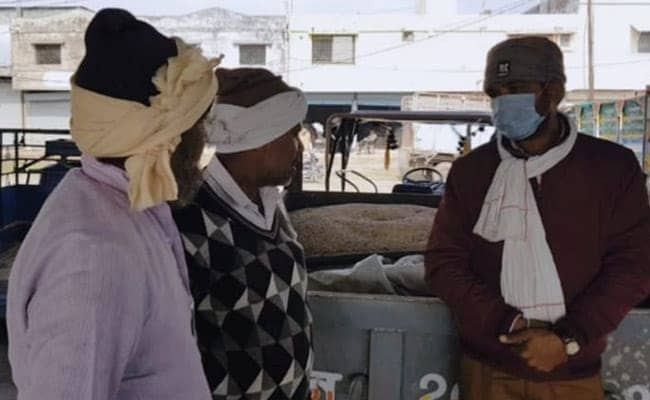
1. Eight out of 10 respondents in rural India want the government to provide Minimum Support Price (MSP) to farmers. However, as per the Shanta Kumar Committee report, only about six percent of India's farmers gain from MSP. “Farmers constitute a substantial portion of the labour force. However, they have been facing financial crunch, accentuated by the Covid-19 pandemic. MSP will provide them a security blanket against economic distress,” said Anjela Taneja, Lead, Fight Inequality Alliance India.
2. 94.3 percent of those surveyed want the government to provide universal minimum social security including health and maternity benefits, accident insurance, life insurance and pension to all unorganized workers. The unorganised sector, comprising nearly 90% of the labour force, was badly hit by the Covid-19 pandemic. A recent report noted that the informal workers have faced a 22.6 percent fall in wages due to the pandemic.
3. 94.1 percent of the respondents support an increase in allocation for the National Health Mission, the largest scheme of the Health Ministry. The survey report cites the Economic Survey 2020-21 that recommended increasing public spending on healthcare from 1 percent to 2.5-3 percent of the GDP, in order to reduce the out-of-pocket healthcare expenditure from 65 percent to 35 percent.
4. Over 94 percent of the people want the government to introduce ‘Right to Health'. Arguing that such a right will help in providing a minimum standard of healthcare, the survey adds that such a right can reduce the high out-of-pocket expense. About 6 crore people fall into poverty every year because of high out-of-pocket expenditure on health, according to former Ayushman Bharat CEO Indu Bhushan.
5. Nine in 10 people surveyed want the government to ensure that all schools provide additional academic support to students who experienced learning loss and roll out National Education Policy provisions like breakfast in schools. A recent UNICEF report said that 76 percent of Indian students faced learning losses during the pandemic. This is especially true for students from low-income families who may also not afford digital education, the World Bank noted.
6. Nine in 10 respondents want the Centre to increase allocation for scholarships and skill development for the marginalised sections. It is to be noted that the 2021 Budget allocated Rs 3,000 crore for apprenticeships. “With large scale migration during the pandemic, the government needs to spend more on skill development. During the pandemic, more women lost their jobs as compared to men. The budget allocation needs to promote women to take up work in better paying sectors like science and technology,” said MsTaneja.

-
Talking Points This Week: Tech Nerves, FII Buying, And A Faraway Banking Shock

The global markets are not shining this Diwali. The exception in the large markets is, India.
-
Midterm Rally Lasted A Day. The Hard Reality Of A Divided US May Last Two Years | Opinion
Between a contested AI boom, a debt ceiling that arrives in 2027 and a president with every incentive to act alone, the next two years may prove more volatile than the first day's rally suggests.
-
Blue Wave Will Derail the AI Trade but Won't Dismantle the AI Era | Unhedged Position
The Democrats' sweep of the US Congress will see politics collide with economic forces both over the long and short term.
-
It's Time To Take The GST Council's Bet On Trust Global
Payment records can prove India's services exports, and clear, proportionate rules can bring foreign digital sellers into the tax net.
-
Opinion | India at 38: From Innovation Overperformer to Innovation Powerhouse
India now has 453 VC-backed deep science startups, 18 of them late-stage, after 117 percent growth since 2020. Laurus Labs, at USD 9.3 billion, is the most valuable deep science company in any middle-income economy outside China.
-
Navigating Energy Crossroads: S Jaishankar's Call For Diversified Supply Chains At G20 Ministerial Meeting
As geopolitical fault lines continue to test maritime trade routes and commodity flows, Jaishankar's message remains pertinent: true economic resilience requires open markets, protected transit lines, and a genuine commitment to multilateral cooperation rather than coercion.
-
Indians Are Travelling, But Not Every Journey Is A Holiday | The Week In Whys
Pilgrims, patients and working women are the real travellers, and the system hasn't quite caught up with them.
-
Getting To Work Costs Women More | The Reason Why
It is not just about women paying more than men. It is about women paying much more in cities than in villages.
-
AI Bias In Investing Cannot Be Eliminated, But It Can Be Governed
Framing is a particularly important example as identical financial information presented in terms of gains rather than losses can lead an LLM to reach a different assessment.









