Economic Survey Exhorts Rating Agencies To Be More Transparent
India's sovereign credit ratings do not reflect the economy's fundamentals, the Economic Survey said on Friday and nudged the global agencies to become more transparent and less subjective in their ratings.
The Economic Survey 2020-21, tabled in Parliament, said that sovereign credit ratings methodology must be amended to reflect economies' ability and willingness to pay their debt obligations, and suggested that developing economies must come together to address this bias and subjectivity inherent in sovereign credit ratings methodology.
"Never in the history of sovereign credit ratings has the fifth largest economy in the world been rated as the lowest rung of the investment-grade (BBB-/Baa3). While sovereign credit ratings do not reflect the Indian economy's fundamentals, noisy, opaque and biased credit ratings damage FPI flows," the survey said.
It is therefore imperative that countries engage with credit rating agencies to make the case that their methodology must be corrected to reflect economies' ability and willingness to pay their external obligations.
Quoting Bengali poet Rabindranath Thakur "Where the mind is without fear and the head is held high ... Into that heaven of freedom, my Father, let my country awake", the survey said it is imperative that sovereign credit ratings methodology be made more transparent, less subjective and better attuned to reflect economies' fundamentals."
As ratings do not capture India's fundamentals, the survey said that past sovereign credit rating changes for India have not had a major adverse impact on select indicators such as Sensex return, foreign exchange rate and government securities yield.
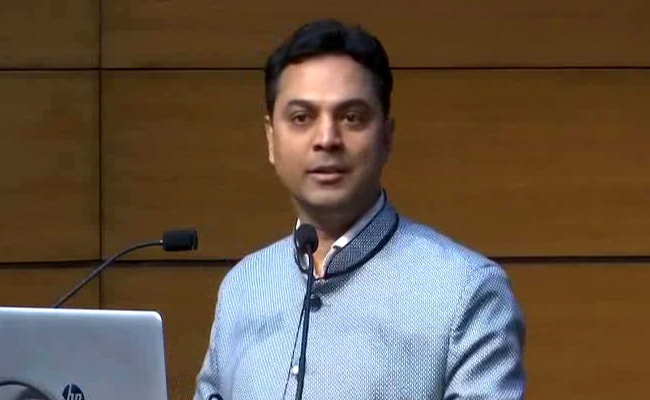
"Past episodes of rating changes have no or weak correlation with macroeconomic indicators... India's fiscal policy, therefore, must not remain beholden to a noisy/biased measure of India's fundamentals and should instead reflect Gurudev Rabindranath Thakur's sentiment of a mind without fear," said the survey authored by Chief Economic Adviser Krishnamurthy Subramanian.
Stating that there is a bias against emerging giants in sovereign credit ratings, the survey said India has been an outlier in terms of GDP growth rate, inflation, general government debt, political stability, rule of law, control of corruption, investor protection, ease of doing business, short-term external debt (as per cent of reserves), reserve adequacy ratio and sovereign default history, for the last decade.
"Within its sovereign credit ratings cohort - countries rated between A+/A1 and BBB-/Baa3 for S&P/ Moody's - India is a clear outlier on several parameters, i.e. a sovereign whose rating is significantly lower than mandated by the effect on the sovereign rating of the parameter," it said.
Global ratings agencies have the lowest investment-grade rating on India, which is just above the junk status.
In June, Fitch Ratings revised India's outlook to ''negative'' from ''stable'' and affirmed the rating at ''BBB-'', stating that the coronavirus pandemic has significantly weakened the country's growth prospects for the year and exposed the challenges associated with a high public-debt burden.
Moody's Investors Service had downgraded India's sovereign rating to ''Baa3'' from ''Baa2'', saying there will be challenges in the implementation of policies to mitigate risks of a sustained period of low growth and deteriorating fiscal position.
S&P Global Ratings retained the ''BBB-'' rating for India for the 13th year in a row in June last year.
The survey said credit ratings map the probability of default and therefore reflect the willingness and ability of the borrower to meet its obligations. India's willingness to pay is unquestionably demonstrated through its zero sovereign default history.
It said India's ability to pay can be gauged not only by the extremely low foreign currency-denominated debt of the sovereign but also by the comfortable size of its foreign exchange reserves that can pay for the short-term debt of the private sector as well as the entire stock of external debt, including that of the private sector.
Sovereign credit ratings methodology must be amended to reflect economies ability and willingness to pay their debt obligations by becoming more transparent and less subjective. Developing economies must come together to address this bias and subjectivity inherent in sovereign credit ratings methodology to prevent exacerbation of crises in future," the survey added.
Moreover, the pro-cyclical nature of credit ratings and its potential adverse impact on economies, especially low-rated developing economies must be expeditiously addressed.

-
Unhedged Position: Can India See An Indonesia-Style Time Correction?

The Nifty is trading below levels it first clocked in 2024. Is there, then, as I have suggested in the headline, potential that the current time correction drags on painfully for the next three-five, even ten years?
-
Navigating Friction And Energy Realities: An Analysis Of Marco Rubio's October Visit To India
Occurring at a critical juncture marked by stalled trade negotiations and escalating geopolitical pressures over global energy supplies, the visit offers a profound window into modern US-India relations.
-
India Exports Capital. Why Not Export Trusteeship?
The big question, then, is whether India can build an institution that global borrowers, investors, banks, and lawyers can trust, even without an Indian connection.
-
France's Economy & Politics Are In Crisis | The Reason Why
Let's look at how the French economy and politics evolved under Nicolas Sarkozy, Franois Hollande and Emmanuel Macron.
-
You May Inherit The Business. You Must Earn Its Credibility.
Succession tests the founder's ability to share authority as much as it tests the next generation's readiness to assume it.
-
Signing Deals Is One Thing; Making Them Work Is Another | The Week In Whys
Sometimes, things don't turn out as planned. Indian companies have lost some bids to rivals, some projects won't produce until 2030.
-
FOMC Wall, PERM Suspension, Hospital Stocks | Talking Points This Week
A PERM suspension would directly affect green-card sponsorship rather than H-1B visas, so the near-term earnings impact could remain relatively limited. The key question is whether this marks a new phase in US scrutiny of Indian IT.
-
Everything, Everywhere, All At Once: Dalal Street's Week To Forget | Joining The Dots
Visa curbs, a Starlink spat and cancer drug caps: what connects this week's shocks for Indian markets
-
India Is Going Abroad For Critical Minerals. But It May Take Years To Pay Off | The Reason Why
Although India's steps are in the right direction, they remain modest compared with India's growing dependence.
-
When Everyone Has AI, What Gives You An Edge?
India's young workforce is entering an uncertain world of work where powerful AI tools are becoming widely accessible. The advantage will belong to those who combine deep expertise with digital fluency, and the distinctly human capabilities that technology cannot manufacture.









