Budget 2019: Government Plans Rs 70,000 Crore Bank Recapitalisation
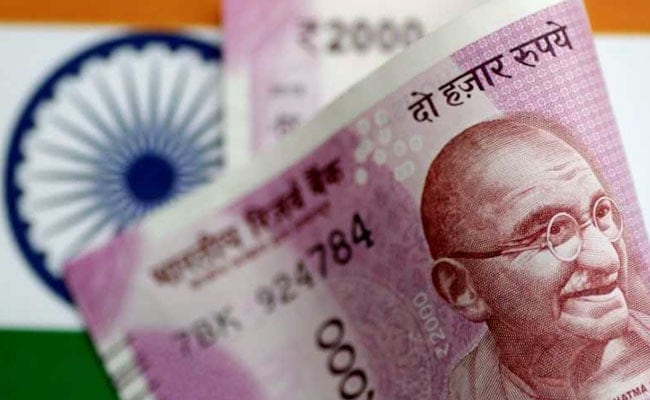
The government on Friday announced a fresh capital infusion of about $10 billion (Rs 70,000 crore) into debt-burdened state banks and credit guarantees to support shadow lenders in a bid to boost lending and revive the economy.
India's economy has sagged in the past year partly because many small and medium-sized businesses and consumers have found it tough to borrow from the banks, or from the shadow lenders, officially known as non-banking financial companies (NBFCs).
This is because some of the banks and NBFCs are laden with bad debt which has affected their ability to lend.
Economists, credit rating agencies and some of the lenders welcomed the moves, saying they are vital if India is to reform its banking sector and grow the economy at rates above 8 per cent targeted by Prime Minister Narendra Modi's government.
The economy grew at a rate of just 5.8 per cent in the January-March quarter, a five-year low.
"The credit guarantee provided by the government will further open up the liquidity line for fundamentally sound NBFCs," said George Alexander Muthoot, managing director of Muthoot Finance Ltd, one of the biggest non-banking lenders.
The injection of funds, which was disclosed in the annual budget statement delivered by new Finance Minister Nirmala Sitharaman, is the latest in a series over the past four years. More than Rs 3 lakh crore ($43.81 billion) of government money has gone into the banks in that period.
The state-owned banks, which control a majority of banking assets in India, have been weighed down by nearly $150 billion in stressed assets. The bad debts resulted from risky lending they pursued in the previous few years, particularly to infrastructure projects that then failed.
Additional Liquidity
The government also announced that it will for the next six months provide partial credit guarantees to state banks that buy highly rated pooled assets from financially sound NBFCs.
To make this easier for banks, the Reserve Bank of India (RBI) announced later on Friday it would provide additional liquidity to banks for purchase of assets or for lending to NBFCs. Authorities will also ease restrictions on foreign institutional investors that have invested in NBFCs' debt securities.
Furthermore, the government said that in future NBFCs will no longer have to set aside additional capital when selling their debt in public markets.
"NBFCs are playing an extremely important role in sustaining consumption demand as well as capital formation in (the) small and medium industrial segment," Ms Sitharaman said.
India has nearly 10,000 registered NBFCs lending to millions of households who might not be able to borrow directly from a commercial bank.
While they might provide loans more easily, they generally charge higher interest rates than the banks, often as high as 21-24 per cent a year. Ironically, the NBFCs have in the past borrowed much of their money from banks, as well as mutual funds and via debt sales.
However, after defaults by one giant NBFC, Infrastructure Leasing & Financial Services (IL&FS), last year the asset quality in the sector has come under greater scrutiny. As a result, the NBFCs borrowing costs have surged as many banks and mutual funds stopped lending to them.
Ms Sitharaman also announced that the RBI will get much more regulatory authority over the NBFCs in proposed legislation that has been drawn up.
Currently, NBFCs are loosely regulated by host of regulators including market regulator - the Securities and Exchange Board of India (Sebi), and the National Housing Board.
"Structurally, it is a positive move as it will help in improving supervision," said Karthik Srinivasan, the head of financial sector ratings at credit rating firm ICRA.

-
High US Salaries, No Green Card Certainty: The Financial Calculation Facing Indian H-1B Families

The suspension of PERM processing at eight technology employers does not cancel existing H-1B visas. What it does is force a question many Indian families have been avoiding: is the US salary worth tying your career and family plans to one employer?
-
Swiggy vs Eternal: Food Delivery's Two Rivals Are No Longer In The Same Race
Eternal is building a private AI assistant, dark.ai. Swiggy is still working out how to make Instamart pay, with an operating loss of Rs 895 crore in the July-September quarter while Blinkit stayed profitable.
-
Where You Live Shapes How You Get To Work | The Reason Why
Two-wheelers are the most popular way to get to work in India, accounting for nearly 43% of workplace commutes.
-
Unhedged Position: Can India See An Indonesia-Style Time Correction?
The Nifty is trading below levels it first clocked in 2024. Is there, then, as I have suggested in the headline, potential that the current time correction drags on painfully for the next three-five, even ten years?
-
Navigating Friction And Energy Realities: An Analysis Of Marco Rubio's October Visit To India
Occurring at a critical juncture marked by stalled trade negotiations and escalating geopolitical pressures over global energy supplies, the visit offers a profound window into modern US-India relations.
-
India Exports Capital. Why Not Export Trusteeship?
The big question, then, is whether India can build an institution that global borrowers, investors, banks, and lawyers can trust, even without an Indian connection.
-
France's Economy & Politics Are In Crisis | The Reason Why
Let's look at how the French economy and politics evolved under Nicolas Sarkozy, Franois Hollande and Emmanuel Macron.
-
You May Inherit The Business. You Must Earn Its Credibility.
Succession tests the founder's ability to share authority as much as it tests the next generation's readiness to assume it.
-
Signing Deals Is One Thing; Making Them Work Is Another | The Week In Whys
Sometimes, things don't turn out as planned. Indian companies have lost some bids to rivals, some projects won't produce until 2030.
-
FOMC Wall, PERM Suspension, Hospital Stocks | Talking Points This Week
A PERM suspension would directly affect green-card sponsorship rather than H-1B visas, so the near-term earnings impact could remain relatively limited. The key question is whether this marks a new phase in US scrutiny of Indian IT.









