Budget 2014: Industry Welcomes Boost to Renewable Energy
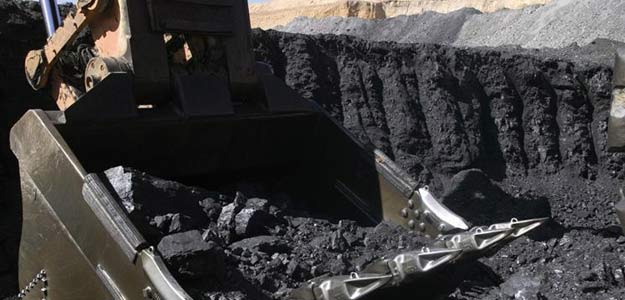
The power industry today welcomed the Budget's emphasis on renewable energy and coal-based project, saying it will give an impetus to the sector which is reeling under a crisis.
Finance Minister Arun Jaitley, in his maiden budget today, announced allocation of Rs 1,000 crore for the solar power sector.
The government has set aside Rs 500 crore for new and renewable energy, Rs 400 crore for launching a scheme for solar power-driven agricultural pump sets and water pumping stations for energising one lakh pumps, and Rs 100 crore for the development of one-MW solar parks on the banks of canals.
"The budget has attempted to address the short-term challenges for the power sector, and at the same time laid a roadmap for more comprehensive measures over the medium to long-term as well," KPMG India Partner and Head ? Energy and Natural Resources Manish Aggarwal said.
The government has also allocated Rs 100 crore for super critical ultra modern thermal power and rationalisation of coal linkages.
Mr Jaitely said measures will be initiated to provide adequate quantity of coal to power plants which are already commissioned or would be commissioned by March 2015 to unlock dead investments.
"From Rs 100 crore allocation for super critical ultra modern thermal power to the rationalisation of coal linkages (these measures) will facilitate the struggling power producers and put the stranded power plants on a rebound course," Schneider Electric India Country President and Managing Director Anil Chaudhry said.
The industry experts said the focus on the solar energy sector will give a deserving boost to solar companies to increase generation capacity which is currently a mere one per cent of the country's total energy production.
Further, the implementation of the Green Energy Corridor Project will be a great move to integrate channels for evacuation of solar power, a formidable challenge for generating companies at the moment, they said.
The existing duty structure incentivises imports rather than the domestic manufacture of solar photo-voltaic cells and modules, Mr Jaitley said in the budget speech.
The government has announced a concessional basic customs duty of 5 percent for the machinery required for setting up solar energy projects.
"The decision to emphasise the new and renewable energy by reducing the excise duty on certain solar power related products and reducing the customs duty on parts/ raw material used in the manufacture of wind-operated generators is a welcome step.
"The vision to unlock dead investments in power plants by rationalising the coal linkages and to develop solar park on banks of canal indicates the government is heading in the right direction," EY India Tax Partner-Infrastructure Practice Samir Kanabar said.
Mr Jaitley has also proposed extending the 10 year tax holiday to the undertakings which begin generation, distribution and transmission of power by March 31, 2017, instead of annual extensions.
"The government's decision to end the impasse on coal supplies to power plants and ensure availability of the fuel to all projects that are commissioned before March 2015, is a welcome move. Power reforms including Rs 200 crore fund allocation in addition to extension of 10-year tax holiday and encouragement to banks for giving long-term funds and loans to the infrastructure sector is bound to give a boost to the ailing sector," Hindustan Power projects Chairman Ratul Puri said.
The government has also decided to introduce Deen Dayal Upadhyaya Gram Jyoti Yojana for feeder separation to augment power supply to the rural areas and for strengthening sub-transmission and distribution systems. A sum of Rs 500 crore would be allocated for this.
"The allocation of Rs 500 crore for Deen Dayal Upadhyaya rural electrification programme clearly indicates government's inclination towards strengthening infrastructure development," Mr Puri added.

-
It's Time To Take The GST Council's Bet On Trust Global

Payment records can prove India's services exports, and clear, proportionate rules can bring foreign digital sellers into the tax net.
-
Opinion | India at 38: From Innovation Overperformer to Innovation Powerhouse
India now has 453 VC-backed deep science startups, 18 of them late-stage, after 117 percent growth since 2020. Laurus Labs, at USD 9.3 billion, is the most valuable deep science company in any middle-income economy outside China.
-
Navigating Energy Crossroads: S Jaishankar's Call For Diversified Supply Chains At G20 Ministerial Meeting
As geopolitical fault lines continue to test maritime trade routes and commodity flows, Jaishankar's message remains pertinent: true economic resilience requires open markets, protected transit lines, and a genuine commitment to multilateral cooperation rather than coercion.
-
Indians Are Travelling, But Not Every Journey Is A Holiday | The Week In Whys
Pilgrims, patients and working women are the real travellers, and the system hasn't quite caught up with them.
-
Getting To Work Costs Women More | The Reason Why
It is not just about women paying more than men. It is about women paying much more in cities than in villages.
-
AI Bias In Investing Cannot Be Eliminated, But It Can Be Governed
Framing is a particularly important example as identical financial information presented in terms of gains rather than losses can lead an LLM to reach a different assessment.
-
Joining The Dots | Dark Skies, Steady Diya: Why Hope Holds This Diwali
With war, a weak rupee and foreign outflows weighing on sentiment, policymakers at the NDTV World Summit and market veterans at NDTV Profit Ignite: Diwali Edition offered the same advice: stay invested and filter out the noise.
-
The Curious Case of Equitas Small Finance Bank And A CEO Who Quit For Stock
PN Vasudevan believes persistent investor concerns over a perceived conflict of interest had become a governance overhang on Equitas Small Finance Bank's stock, even as the lender improved profitability and asset quality.
-
Talking Points This Week: AI Cash Burn, A Tiger Comeback And An India That Still Finds Its Own Path
India is not immune to higher oil or tighter global liquidity, yet its earnings base is broader, its domestic policy levers are still available.










