BSE Sets Up New System for Reporting Suspicious Trades
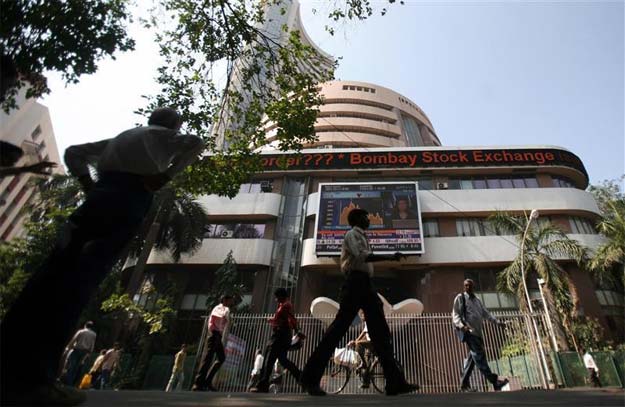
New Delhi: To check money laundering through stock markets, top stock exchange BSE has asked its members to report on a monthly basis details of the STRs (Suspicious Transaction Reports) submitted to the government's Financial Intelligence Unit (FIU).
Asking the members to ensure compliance at the earliest, the exchange said in a circular that the trading members are required to submit the data through a specific FIU-STR module of the online gateway BSE Electronic Filing System (BEFS).
The members have been asked to provide details of their registration with the FIU, as also the information about the principal officer and the designated directors for the PMLA (Prevention of Money Laundering Act) compliance.
Further, in case of change in the details submitted, members will need to update the relevant fields.
BSE has also asked members to report the cumulative number of STRs filed with the FIU as on March 31, 2015. Thereafter, the members would need to report the number of STRs filed with FIU on a monthly basis.
The regulators and the financial intelligence agencies have enhanced their vigil in the recent months on entities trying to misuse the stock market platform for possible laundering of black money and to evade taxes.
Nearly 950 entities have already been barred by Sebi for such attempts, while further action is underway against them.
Sebi norms also require all entities under its jurisdiction to submit STRs electronically to the FIU. However, some brokers and other entities were found to be lax.
FIU India is the government agency responsible for receiving, processing and analysing financial transactions and disseminating information relating to suspect transactions to various intelligence and enforcement agencies.
Last year, all market entities were asked to "get themselves registered with FIU India through the FINnet Gateway (FINgate) Portal", which acts as a comprehensive interface between the reporting entities and the FIU.
The brokers need to furnish Cash Transaction reports (CTRs) and Suspicious Transaction Reports (STRs) among others to the FIU through this gateway.
These reports help enforcement agencies check the manipulative practices, fraud and scams, among others. The FIU was set up by the government to coordinate and strengthen collection and sharing of financial intelligence through national, regional and global networks to combat money laundering and related crimes.
Earlier, all such reports used to be furnished physically, but the online gateway, which was first rolled out in 2012, has made these processes much simpler and faster.
The information required to be furnished to the FIU includes all cash transactions worth over Rs 10 lakh, all suspicious transactions whether or not made in cash and all series of cash transactions below Rs 10 lakh but connected to each other and having taken place within a month.
Besides, all transactions over Rs 10 lakh involving receipts by non-profit organisations and transactions where counterfeit currency or forged security or documents have been used, are also required to be reported to FIU.
Suspicious transactions are those that give rise to a reasonable ground for suspicion of involvement of proceeds of an offence, appear to be made in circumstances of unusual or unjustified complexity, appear to have no economic rationale or bonafide purpose and those giving rise to suspicion about financing of terrorism-related activities.

-
High US Salaries, No Green Card Certainty: The Financial Calculation Facing Indian H-1B Families

The suspension of PERM processing at eight technology employers does not cancel existing H-1B visas. What it does is force a question many Indian families have been avoiding: is the US salary worth tying your career and family plans to one employer?
-
Unhedged Position: Can India See An Indonesia-Style Time Correction?
The Nifty is trading below levels it first clocked in 2024. Is there, then, as I have suggested in the headline, potential that the current time correction drags on painfully for the next three-five, even ten years?
-
Navigating Friction And Energy Realities: An Analysis Of Marco Rubio's October Visit To India
Occurring at a critical juncture marked by stalled trade negotiations and escalating geopolitical pressures over global energy supplies, the visit offers a profound window into modern US-India relations.
-
India Exports Capital. Why Not Export Trusteeship?
The big question, then, is whether India can build an institution that global borrowers, investors, banks, and lawyers can trust, even without an Indian connection.
-
France's Economy & Politics Are In Crisis | The Reason Why
Let's look at how the French economy and politics evolved under Nicolas Sarkozy, Franois Hollande and Emmanuel Macron.
-
You May Inherit The Business. You Must Earn Its Credibility.
Succession tests the founder's ability to share authority as much as it tests the next generation's readiness to assume it.
-
Signing Deals Is One Thing; Making Them Work Is Another | The Week In Whys
Sometimes, things don't turn out as planned. Indian companies have lost some bids to rivals, some projects won't produce until 2030.
-
FOMC Wall, PERM Suspension, Hospital Stocks | Talking Points This Week
A PERM suspension would directly affect green-card sponsorship rather than H-1B visas, so the near-term earnings impact could remain relatively limited. The key question is whether this marks a new phase in US scrutiny of Indian IT.
-
Everything, Everywhere, All At Once: Dalal Street's Week To Forget | Joining The Dots
Visa curbs, a Starlink spat and cancer drug caps: what connects this week's shocks for Indian markets
-
India Is Going Abroad For Critical Minerals. But It May Take Years To Pay Off | The Reason Why
Although India's steps are in the right direction, they remain modest compared with India's growing dependence.









