Sensex Falls Over 200 Points As Markets Give Up Early Gains; Axis Bank Jumps
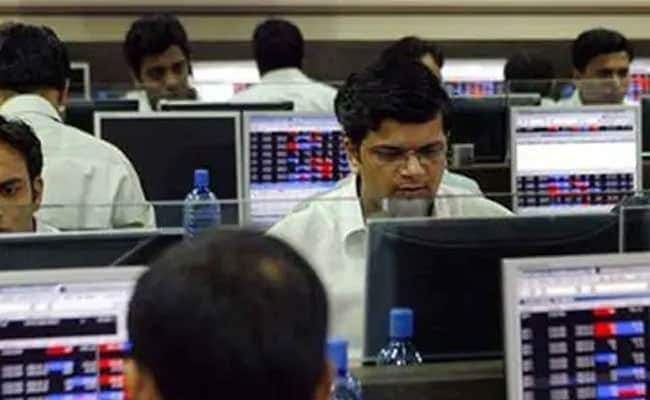
Domestic stock markets gave up opening gains on Wednesday, following a rally that lasted for five trading sessions in a row. The S&P BSE Sensex index fell as much as 0.58 per cent (220.59 points) from its previous close to hit 37,709.74 on the downside, soon after opening 248.81 points - or 0.66 per cent - higher at 38,179.14. The broader NSE Nifty 50 benchmark slid to as low as 11,102.35, having reversed early trend after opening stronger at 11,231.20 compared to its previous close of 11,162.25. Losses in automobile, financial and consumer goods stocks weighed on the markets, however gains in pharmaceutical, metal and energy shares kept the downside in check.
At 9:31 am, the Sensex traded 77.56 points - or 0.20 per cent - lower at 37,852.77, while the Nifty was down 16.45 points - or 0.15 per cent - at 11,145.80.
Axis Bank shares jumped 8.21 per cent to trade at Rs 482.85 apiece on the BSE at the strongest level recorded in morning deals, a day after the private sector lender reported a net profit of Rs 1,112.17 crore for the April-June period, and improvement in its asset quality.
Analysts awaited more large cap companies to report their financial results for the April-June period.
Bajaj Auto and Larsen & Toubro will report their earnings for the first quarter of current financial year later in the day.
Equities elsewhere in Asia mostly rose but investors were cautious amid rising COVID-19 cases around the globe. MSCI's broadest index of Asia Pacific shares outside Japan was last seen trading 0.30 per cent higher, but Japan's Nikkei 225 benchmark was down 0.38 per cent.
China's Shanghai Composite, Hong Kong's Hang Seng and South Korea's KOSPI indices were up 1.20 per cent, 0.08 per cent and 0.24 per cent respectively at the time.
The E-Mini S&P 500 futures were up 0.36 per cent in early Asian trade, indicating a positive start for US markets on Wednesday, a day after the S&P 500 and Dow Jones Industrial Average gauges ended 0.17 per cent and 0.60 per cent higher respectively but the technology stocks-heavy Nasdaq Composite index fell 0.81 per cent.
On Tuesday, world shares rallied to their highest since February after European Union leaders sealed a 750 billion-euro ($857 billion) recovery fund to revive regional economies ravaged by the coronavirus. The agreement drove down the risk premium on European assets and pushed gold to $1,840.01 an ounce, the highest in almost nine years.
Earlier that day, the Sensex and Nifty had registered four-month closing highs, propelled by strong buying in financial and energy shares.

-
Ten Things I Learnt This Samvat

Patience can be a trap. Cheap stocks can stay cheap. Leverage can wipe you out. What did Samvat 2082 teach us? Niraj Shah writes on 10 lessons from the year gone by.
-
Talking Points This Week: Tech Nerves, FII Buying, And A Faraway Banking Shock
The global markets are not shining this Diwali. The exception in the large markets is, India.
-
Midterm Rally Lasted A Day. The Hard Reality Of A Divided US May Last Two Years | Opinion
Between a contested AI boom, a debt ceiling that arrives in 2027 and a president with every incentive to act alone, the next two years may prove more volatile than the first day's rally suggests.
-
Blue Wave Will Derail the AI Trade but Won't Dismantle the AI Era | Unhedged Position
The Democrats' sweep of the US Congress will see politics collide with economic forces both over the long and short term.
-
It's Time To Take The GST Council's Bet On Trust Global
Payment records can prove India's services exports, and clear, proportionate rules can bring foreign digital sellers into the tax net.
-
Opinion | India at 38: From Innovation Overperformer to Innovation Powerhouse
India now has 453 VC-backed deep science startups, 18 of them late-stage, after 117 percent growth since 2020. Laurus Labs, at USD 9.3 billion, is the most valuable deep science company in any middle-income economy outside China.
-
Navigating Energy Crossroads: S Jaishankar's Call For Diversified Supply Chains At G20 Ministerial Meeting
As geopolitical fault lines continue to test maritime trade routes and commodity flows, Jaishankar's message remains pertinent: true economic resilience requires open markets, protected transit lines, and a genuine commitment to multilateral cooperation rather than coercion.
-
Indians Are Travelling, But Not Every Journey Is A Holiday | The Week In Whys
Pilgrims, patients and working women are the real travellers, and the system hasn't quite caught up with them.
-
Getting To Work Costs Women More | The Reason Why
It is not just about women paying more than men. It is about women paying much more in cities than in villages.









