BRICS Nations Pitch For Using Local Currencies In International Trade
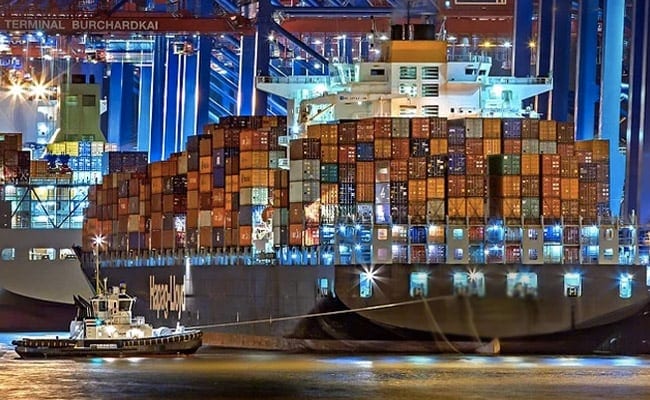
The BRICS nations on Friday underlined the need for using local currencies in international trade and financial transactions besides committing themselves to supporting rule-based open and transparent global trade.
A joint statement issued at the end of the meeting of the BRICS Ministers of Foreign Affairs and International Relations, also pressed for a robust Global Financial Safety Net with a quota-based and adequately resourced International Monetary Fund (IMF) at its centre.
It further said the process of IMF governance reform under the 16th General Review of Quotas, including a new quota formula as a guide, should be completed by December 15, 2023.
The joint statement titled 'The Cape of Good Hope', said ministers expressed their support for a free, open, transparent, inclusive, equitable, non-discriminatory and rules-based multilateral trading system with the World Trade Organization (WTO) at its core, with special and differential treatment (S&DT) for developing countries, including Least Developed Countries.
"They stressed their support to work towards positive and meaningful outcomes on the issues at the 13th Ministerial Conference (MC13). They committed to engage constructively to pursue the necessary WTO reform with a view to presenting concrete deliverables to MC13. They called for the restoration of a fully and well-functioning dispute settlement system accessible to all members by 2024, and the selection of new Appellate Body Members without further delay," it said.
They condemned unilateral protectionist measures under the pretext of environmental concerns such as unilateral and discriminatory carbon border adjustment mechanisms, taxes and other measures, it said.
The BRICS (Brazil-Russia-India-China-South Africa) brings together five of the largest developing countries of the world, representing 41 per cent of the global population, 24 per cent of the global GDP and 16 per cent of the global trade.
The ministers recognised the impact on the world economy from unilateral approaches in breach of international law and they also noted that the situation is complicated further by unilateral economic coercive measures, such as sanctions, boycotts, embargoes and blockades.
The two-day ministers' meeting emphasised the importance of financial inclusion so that citizens can reap the benefits of economic growth and prosperity and welcomed the many new technological instruments for financial inclusion, developed in BRICS countries, which can contribute to ensuring the citizens full participation in the formal economy.
It also congratulated Dilma Rousseff, former President of Brazil, for being elected as president of the New Development Bank (NDB) and exuded confidence that it will contribute to the strengthening of NDB in effectively achieving its mandate.
They encouraged NDB to follow the member-led and demand-driven principle, mobilise financing from diversified sources, enhance innovation and knowledge exchange, assist member countries in achieving the SDGs and further improve efficiency and effectiveness to fulfil its mandate, aiming to be a premier multilateral development institution, it said.
The ministers emphasised that ensuring energy security is a crucial foundation for economic development, social stability, national security, and the welfare of all nations worldwide.
They called for resilient global supply chains and predictable, stable energy demand to ensure universal access to affordable, reliable, sustainable, and modern energy sources.
"They also stressed the importance of enhancing energy security and market stability by strengthening value chains, promoting open, transparent, and competitive markets, and ensuring the protection of critical energy infrastructure. They strongly condemned all terrorist attacks against critical infrastructure, including critical energy facilities, and against other vulnerable targets," it said.
BRICS countries proposed to hold the next summit in South Africa in August this year.
(Except for the headline, this story has not been edited by NDTV staff and is published from a syndicated feed.)

-
Navigating Friction And Energy Realities: An Analysis Of Marco Rubio's October Visit To India

Occurring at a critical juncture marked by stalled trade negotiations and escalating geopolitical pressures over global energy supplies, the visit offers a profound window into modern US-India relations.
-
India Exports Capital. Why Not Export Trusteeship?
The big question, then, is whether India can build an institution that global borrowers, investors, banks, and lawyers can trust, even without an Indian connection.
-
France's Economy & Politics Are In Crisis | The Reason Why
Let's look at how the French economy and politics evolved under Nicolas Sarkozy, Franois Hollande and Emmanuel Macron.
-
You May Inherit The Business. You Must Earn Its Credibility.
Succession tests the founder's ability to share authority as much as it tests the next generation's readiness to assume it.
-
Signing Deals Is One Thing; Making Them Work Is Another | The Week In Whys
Sometimes, things don't turn out as planned. Indian companies have lost some bids to rivals, some projects won't produce until 2030.
-
FOMC Wall, PERM Suspension, Hospital Stocks | Talking Points This Week
A PERM suspension would directly affect green-card sponsorship rather than H-1B visas, so the near-term earnings impact could remain relatively limited. The key question is whether this marks a new phase in US scrutiny of Indian IT.
-
Everything, Everywhere, All At Once: Dalal Street's Week To Forget | Joining The Dots
Visa curbs, a Starlink spat and cancer drug caps: what connects this week's shocks for Indian markets
-
India Is Going Abroad For Critical Minerals. But It May Take Years To Pay Off | The Reason Why
Although India's steps are in the right direction, they remain modest compared with India's growing dependence.
-
When Everyone Has AI, What Gives You An Edge?
India's young workforce is entering an uncertain world of work where powerful AI tools are becoming widely accessible. The advantage will belong to those who combine deep expertise with digital fluency, and the distinctly human capabilities that technology cannot manufacture.
-
Wrong Labels, High Pesticide Residues Holding Back Agri Exports | The Reason Why
India needs stronger domestic food-safety and labelling standards, with best practices becoming part of everyday business for farmers, traders and food companies.










