BRICS Emerging Nations Close to Launching Bank: Report
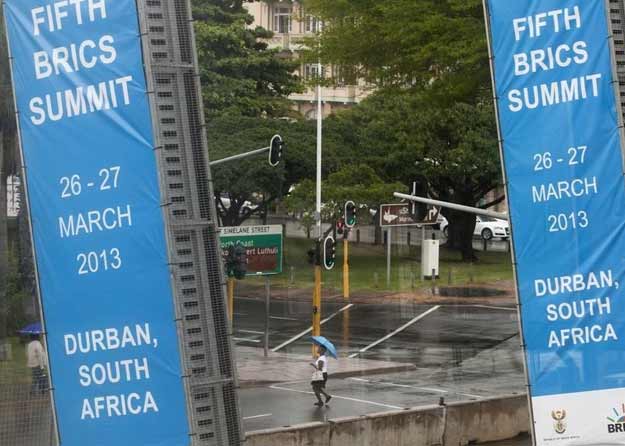
The five BRICS nations will likely agree to fund their $100 billion development effort equally, giving them the same rights in a new multilateral bank that could start lending in two years, a senior Brazilian government official told Reuters on Thursday.
Capitalisation of the bank was one of the main sticking points in the sometimes tortuous negotiations among the emerging powers to create a joint lender to finance infrastructure projects in developing nations.
The new bank would symbolise the growing influence of emerging economies in the global financial architecture long dominated by the United States and Europe through the International Monetary Fund and World Bank.
Negotiations to create the lender have dragged on for two years, with some members growing weary of China's desire to have a bigger stake in the bank by putting in more capital. But this hurdle is being overcome.
"The majority wants an equal sharing of the capital and there is no other specific proposal on the table," said the official, who is directly involved in the negotiations.
"This is not going to be a problem."
Leaders of Brazil, Russia, India, China and South Africa are expected to sign a treaty to launch the bank officially when they meet at a BRICS summit in the northern Brazilian city of Fortaleza on July 15.
The bank, which will have start-up capital of $50 billion, will have to be ratified by the countries' legislatures and could begin lending in two years, said the official, who requested anonymity because he was not authorised to speak publicly.
Of that start-up capital, the countries will put in a total of $10 billion in cash and $40 billion in guarantees, which will be used to raise capital on international markets.
The new development bank would help cover growing demand for project financing that has not been fully met by global multilaterals, which for years have been heavily criticised for meddling in the domestic policies of sovereign borrowers.
"The bank will look into the finances of borrowers, but never intervene in their economic affairs," said the official.
"Any country can join the bank with a $100,000 share. The idea is to provide them loans at a lower cost than what they would individually get in markets."
The BRICS will also decide whether the lender will be based in New Delhi, Shanghai, Johannesburg or Moscow. Brazil will not offer headquarters because of upcoming presidential elections that could delay negotiations, the official said.
Later, the group will have to choose an executive "with experience in the financial sector" to lead the bank in a five-year presidency that will rotate among the founding members.
In five years the bank's capital should double to $100 billion through capitalization from funding members, debt emissions or contributions from new members. The BRICS will hold a minimum of 55 per cent of the bank's shares.
Copyright @ Thomson Reuters 2014

-
Blue Wave Will Derail the AI Trade but Won't Dismantle the AI Era | Unhedged Position

The Democrats' sweep of the US Congress will see politics collide with economic forces both over the long and short term.
-
It's Time To Take The GST Council's Bet On Trust Global
Payment records can prove India's services exports, and clear, proportionate rules can bring foreign digital sellers into the tax net.
-
Opinion | India at 38: From Innovation Overperformer to Innovation Powerhouse
India now has 453 VC-backed deep science startups, 18 of them late-stage, after 117 percent growth since 2020. Laurus Labs, at USD 9.3 billion, is the most valuable deep science company in any middle-income economy outside China.
-
Navigating Energy Crossroads: S Jaishankar's Call For Diversified Supply Chains At G20 Ministerial Meeting
As geopolitical fault lines continue to test maritime trade routes and commodity flows, Jaishankar's message remains pertinent: true economic resilience requires open markets, protected transit lines, and a genuine commitment to multilateral cooperation rather than coercion.
-
Indians Are Travelling, But Not Every Journey Is A Holiday | The Week In Whys
Pilgrims, patients and working women are the real travellers, and the system hasn't quite caught up with them.
-
Getting To Work Costs Women More | The Reason Why
It is not just about women paying more than men. It is about women paying much more in cities than in villages.
-
AI Bias In Investing Cannot Be Eliminated, But It Can Be Governed
Framing is a particularly important example as identical financial information presented in terms of gains rather than losses can lead an LLM to reach a different assessment.
-
Joining The Dots | Dark Skies, Steady Diya: Why Hope Holds This Diwali
With war, a weak rupee and foreign outflows weighing on sentiment, policymakers at the NDTV World Summit and market veterans at NDTV Profit Ignite: Diwali Edition offered the same advice: stay invested and filter out the noise.
-
The Curious Case of Equitas Small Finance Bank And A CEO Who Quit For Stock
PN Vasudevan believes persistent investor concerns over a perceived conflict of interest had become a governance overhang on Equitas Small Finance Bank's stock, even as the lender improved profitability and asset quality.










