BP Says R-Series Gas Field In D6 Block To Start Output In 2020
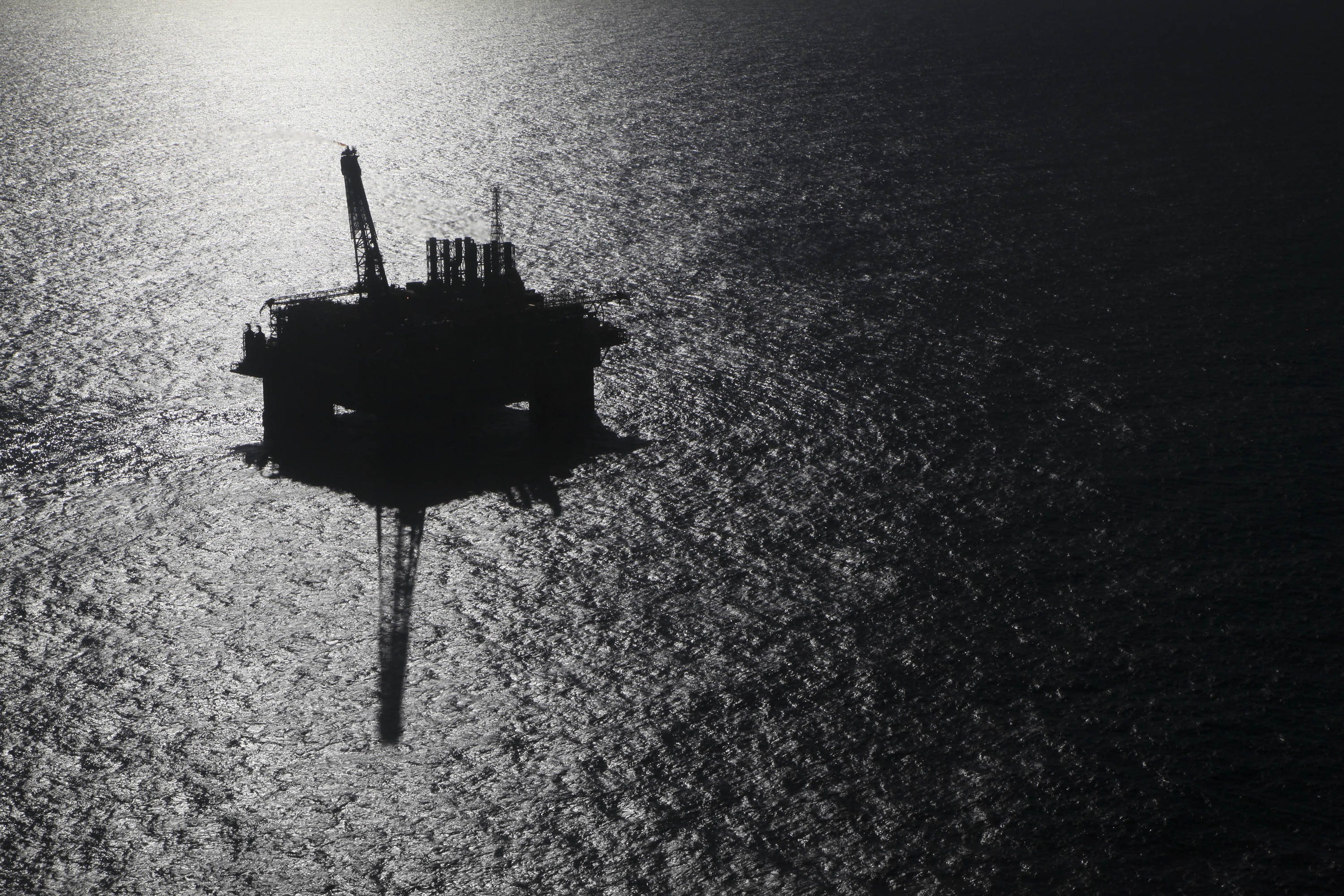
Reliance Industries Ltd. and BP Plc will start natural gas production from R-Series gas field in the flagging KG-D6 block in the Bay of Bengal by 2020, the U.K. firm said today.
Gas production from other newer fields will start by 2021, the BP said in its 2017 annual report.
While RIL-BP are implementing the project to bring the R-Series gas field to production, a government oversight panel headed by upstream regulator Director General - Hydrocarbons had last month approved their $4 billion investment plan in two other sets of gas discoveries.
BP in its annual report stated that the R-Series project is "currently under construction" and is "expected start up (between) 2018-2021".
Also, satellite fields in the Krishna Godavari basin block are under "design and appraisal phase" and expected to start production by 2021.
In June last year, the partners had announced an investment decision to progress development of the R-Series deepwater gas fields in the KG D6 block off the east coast of India, BP said. "The R-Series fields will be developed as a subsea tie back to existing infrastructure in the block. The project is expected to come onstream in 2020 and is the first of three planned projects in Block KG D6 to be developed in an integrated manner."
BP, which holds 33.33 per cent stake in the KG-D6 block, said in October last year, that field development plans for the Satellite Cluster and D55 developments were submitted for requisite approvals.
RIL is the operator of the block, holding the remaining 66.67 percent.
BP had in mid-June last year announced investing Rs 40,000 crore in the three sets of finds to reverse flagging production in the KG-D6 block. These finds were expected to bring a total 30-35 million cubic metres (1 billion cubic feet) a day of gas onstream, phased over 2020-22.
The Management Committee headed by the Directorate General of Hydrocarbons has already approved separate field investment plans for MJ (D55) as well as a set of six satellite fields and R-Series discovery.
The MJ gas find is located about 2,000 metres directly below the currently producing Dhirubhai-1 and 3 fields and are estimated to hold a minimum of 0.988 trillion cubic feet of contingent resource.
Besides MJ-1, four deep-sea satellite gas discoveries -- D-2, 6, 19 and 22 are planned to be developed together with D29 and D30 finds on the block.
The third set is the D-34 or R-Series find.
The government had in 2012 approved a $1.529 billion plan to produce 10.36 mmscmd of gas from four satellite fields of the KG-DWN-98/3 (KG-D6) block by 2016-17. The four fields are estimated to have 617 billion cubic feet of reserves and can produce gas for eight years.
However, the companies did not begin the investment citing uncertainty over gas pricing.
Now that the government has allowed a higher gas price of $6.78 per million British thermal unit for yet-to-be- developed gas finds in difficult areas such as deep sea, RIL and BP have decided to work on their development. This rate compares with $3.06 per mmBtu for currently producing fields.
RIL has so far made 19 gas discoveries in the KG-D6 block. Of these, D-1 and D-3 -- the largest among the lot -- were brought into production from April 2009, but output has fallen sharply from 54 mmscmd in March 2010. They, together with MA oil and gas field, the only field in production, currently produce 4.9 mmscmd.

-
Blue Wave Will Derail the AI Trade but Won't Dismantle the AI Era | Unhedged Position

The Democrats' sweep of the US Congress will see politics collide with economic forces both over the long and short term.
-
It's Time To Take The GST Council's Bet On Trust Global
Payment records can prove India's services exports, and clear, proportionate rules can bring foreign digital sellers into the tax net.
-
Opinion | India at 38: From Innovation Overperformer to Innovation Powerhouse
India now has 453 VC-backed deep science startups, 18 of them late-stage, after 117 percent growth since 2020. Laurus Labs, at USD 9.3 billion, is the most valuable deep science company in any middle-income economy outside China.
-
Navigating Energy Crossroads: S Jaishankar's Call For Diversified Supply Chains At G20 Ministerial Meeting
As geopolitical fault lines continue to test maritime trade routes and commodity flows, Jaishankar's message remains pertinent: true economic resilience requires open markets, protected transit lines, and a genuine commitment to multilateral cooperation rather than coercion.
-
Indians Are Travelling, But Not Every Journey Is A Holiday | The Week In Whys
Pilgrims, patients and working women are the real travellers, and the system hasn't quite caught up with them.
-
Getting To Work Costs Women More | The Reason Why
It is not just about women paying more than men. It is about women paying much more in cities than in villages.
-
AI Bias In Investing Cannot Be Eliminated, But It Can Be Governed
Framing is a particularly important example as identical financial information presented in terms of gains rather than losses can lead an LLM to reach a different assessment.
-
Joining The Dots | Dark Skies, Steady Diya: Why Hope Holds This Diwali
With war, a weak rupee and foreign outflows weighing on sentiment, policymakers at the NDTV World Summit and market veterans at NDTV Profit Ignite: Diwali Edition offered the same advice: stay invested and filter out the noise.
-
The Curious Case of Equitas Small Finance Bank And A CEO Who Quit For Stock
PN Vasudevan believes persistent investor concerns over a perceived conflict of interest had become a governance overhang on Equitas Small Finance Bank's stock, even as the lender improved profitability and asset quality.










