Boris Johnson’s In Trouble. But The U.K. Economy’s OK For Now.
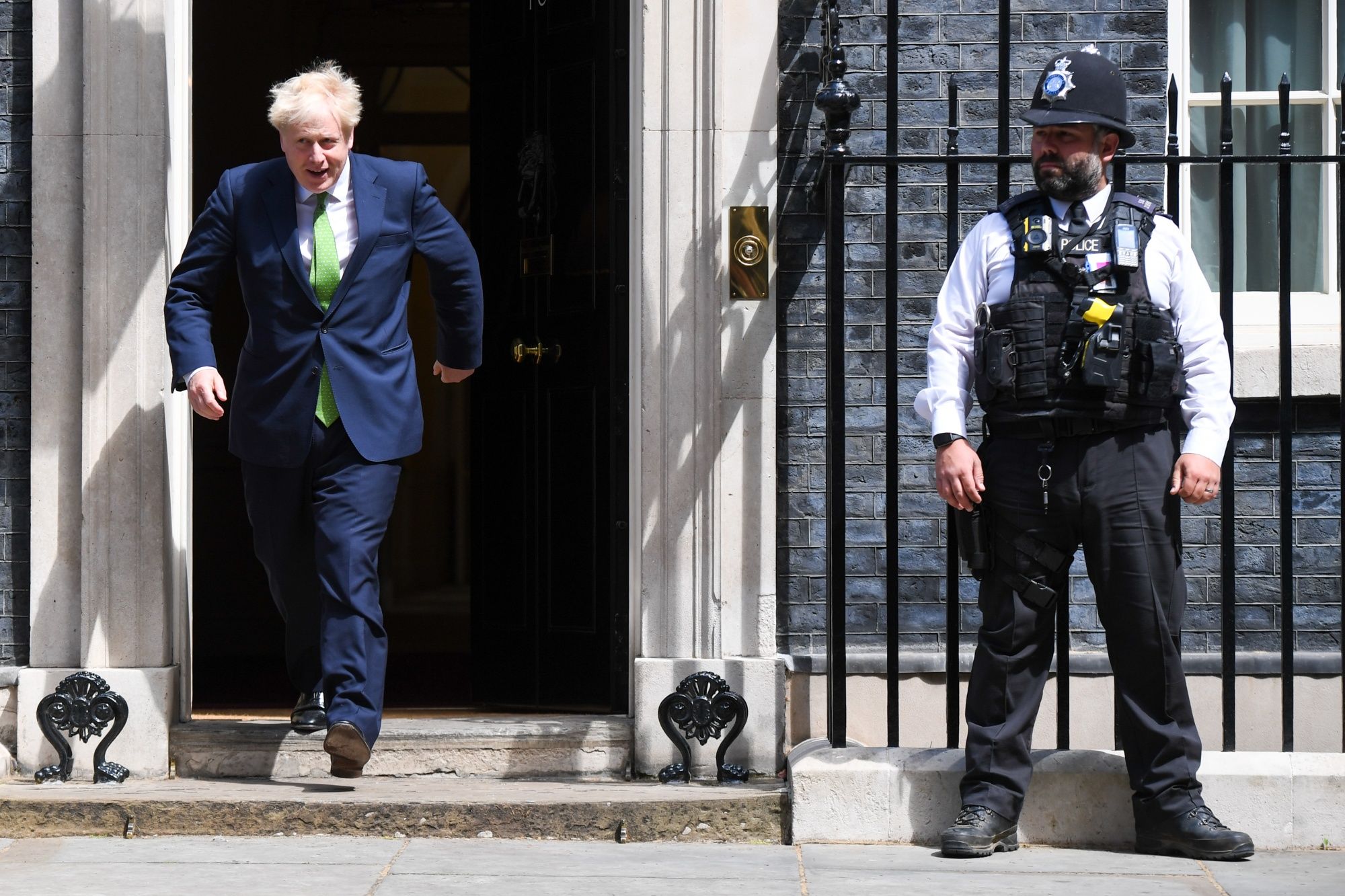
(Bloomberg Opinion) -- Britain certainly feels fragile at the moment with runaway inflation, war in Ukraine and all manner of local difficulties plaguing the UK body politic. Already beset by various scandals and electoral setbacks, Prime Minister Boris Johnson suffered even greater body blows on Tuesday with the resignation of both Rishi Sunak, the chancellor of the exchequer, and Sajid Javid, the health secretary, key members of the cabinet.
The economy is another thing altogether, despite the dispiriting news about inflation and energy. The UK isn't actually in that horrible a shape, what with £400 billion ($480 billion) of pandemic stimulus in circulation. If the world tips into an energy shock recession, then this rainy, small crowded island nation ought to hold up better than most. With full employment, a strong banking sector and robust household and corporate balance sheets — and the ability, despite what the last chancellor said, to add more government fiscal stimulus — any downturn can be mitigated. The UK's debt-to-gross-domestic-product ratio remains just below 100%, better than many other major economies, so there's room to borrow. (Deeply indebted Italy is at more than 150%)
Sunak had already reached up several times into the magic money tree since detailing the budget in October. His successor Nadhim Zahawi will almost certainly do so again in any emergency budget to try and steady the ship. Whisper it, but there is plenty of flexibility available if the political need arises. The UK government bond market can handle any extra supply within reason: 10-year yields rose by 4 basis points on the prospect of increased supply because Zahawi is widely expected to cut taxes, if politics gives him the chance.
The potential fiscal splurge is hard to model into economic estimates, so be careful when listening to some of the more apocalyptic forecasts. The OECD, which has been referenced frequently of late, has a particularly poor track record predicting UK growth. What matters is that the Bank of England has renewed confidence to continue its rate-hiking cycle to combat inflation. It is in a demonstrably better situation than the European Central Bank, which is still stuck on heavily negative interest rates.
Probably the best forward UK growth indicators — the purchasing manager surveys — are still above the growth line, unlike many economies in Europe. Additionally, the City of London, a major source of earnings and tax revenue, has held up much better than feared. Even the FTSE100 has performed better than other major indexes.
This may all seem like tinkering at the edges, but the underlying economy is robust enough to withstand a lot of systemic shocks. The banking sector has been at pains — under the steely eye of the Prudential Regulation Authority — not to leave itself exposed to potential non-performing loans. Let's say banks are cautious but dancing: They remain confident handing out loans to companies as well as home mortgages.
None of this means recession is off the table. Indeed, for many it feels like we are already in one. Economic growth has been flatlining in recent months and the cost-of-living crisis is very real for many. Inflation is almost certainly headed into double figures by the autumn, but ought to stabilize later this year before turning down swiftly next — unless Russia shuts off energy supply to Europe.
But there is a war chest, so to speak: UK household finances are healthy, in fact the best proportionally of all major economies with a near £200 billion of savings built up throughout the pandemic. That this stash has yet to be tapped into is evidently a sign of consumer trepidation, especially as house prices have been on an upward tear. Normally in such a benign scenario, retail spending would be adding firmly to GDP growth. This negativity is feeding on itself but, at some point, it will reverse and lend a healthy kick upward to any recovery.
The most compelling strength of the UK economy is employment. A cost-of-living squeeze really does become a wider crisis with sharply rising unemployment. The herculean efforts of Sunak's furlough employment scheme may seem long gone but it kept companies and employees afloat during lockdowns. Unemployment stands at just 3.8% with vacancies of 1.7 million. That is about as good as it gets.
Understandably now there is a hangover effect as pandemic stimulus is gradually withdrawn, but the residual supportive effects should provide a buffer for some time to come — certainly government tax revenue is holding up nicely. It's not peaches and cream by any stretch but all the main parts of the economy are in reasonable shape when you consider the whole world shut down and then dramatically restarted. Weakness in sterling has exacerbated the cost of importing commodities, which are largely priced in dollars, but the pound is far from alone suffering from the hideous strength of the mighty greenback.
So chin up. Mustn't grumble. We're no worse off than the others. That is, as long as you avert your gaze from Westminster.
More From This Writer and Others at Bloomberg Opinion:
-
Rishi Sunak's Helicopter Drop Makes the Bank of England's Life Easier: Marcus Ashworth
-
Have Britain's Tories Been in Power Too Long?: Martin Ivens
-
Portraits of Power-in-Waiting: Who's Next After Boris Johnson: Adrian Wooldridge
(Updates 3rd paragraph with UK 10-year government bond yield data.)
This column does not necessarily reflect the opinion of the editorial board or Bloomberg LP and its owners.
Marcus Ashworth is a Bloomberg Opinion columnist covering European markets. Previously, he was chief markets strategist for Haitong Securities in London.
More stories like this are available on bloomberg.com/opinion
©2022 Bloomberg L.P.

-
A New Samvat Wishlist: Inclusive Prosperity And Human Development

India has strengthened its economic foundations through infrastructure, digital access and enterprise. Its next growth chapter must deepen productivity, create better livelihoods and widen participation in prosperity.
-
Love, Sex Aur Dhokha: The Audacious Plot To Spy On Jensen Huang
A Taipei dinner, a Singapore chip buyer and a suspected Chinese asset: inside the alleged spy operation that got close to NVIDIA's Jensen Huang.
-
Ten Things I Learnt This Samvat
Patience can be a trap. Cheap stocks can stay cheap. Leverage can wipe you out. What did Samvat 2082 teach us? Niraj Shah writes on 10 lessons from the year gone by.
-
Talking Points This Week: Tech Nerves, FII Buying, And A Faraway Banking Shock
The global markets are not shining this Diwali. The exception in the large markets is, India.
-
Midterm Rally Lasted A Day. The Hard Reality Of A Divided US May Last Two Years | Opinion
Between a contested AI boom, a debt ceiling that arrives in 2027 and a president with every incentive to act alone, the next two years may prove more volatile than the first day's rally suggests.
-
Blue Wave Will Derail the AI Trade but Won't Dismantle the AI Era | Unhedged Position
The Democrats' sweep of the US Congress will see politics collide with economic forces both over the long and short term.
-
It's Time To Take The GST Council's Bet On Trust Global
Payment records can prove India's services exports, and clear, proportionate rules can bring foreign digital sellers into the tax net.
-
Opinion | India at 38: From Innovation Overperformer to Innovation Powerhouse
India now has 453 VC-backed deep science startups, 18 of them late-stage, after 117 percent growth since 2020. Laurus Labs, at USD 9.3 billion, is the most valuable deep science company in any middle-income economy outside China.
-
Navigating Energy Crossroads: S Jaishankar's Call For Diversified Supply Chains At G20 Ministerial Meeting
As geopolitical fault lines continue to test maritime trade routes and commodity flows, Jaishankar's message remains pertinent: true economic resilience requires open markets, protected transit lines, and a genuine commitment to multilateral cooperation rather than coercion.









