Blocked GST Credit: Some AC, TV Dealers Get Relief, Others Left To Cope Alone
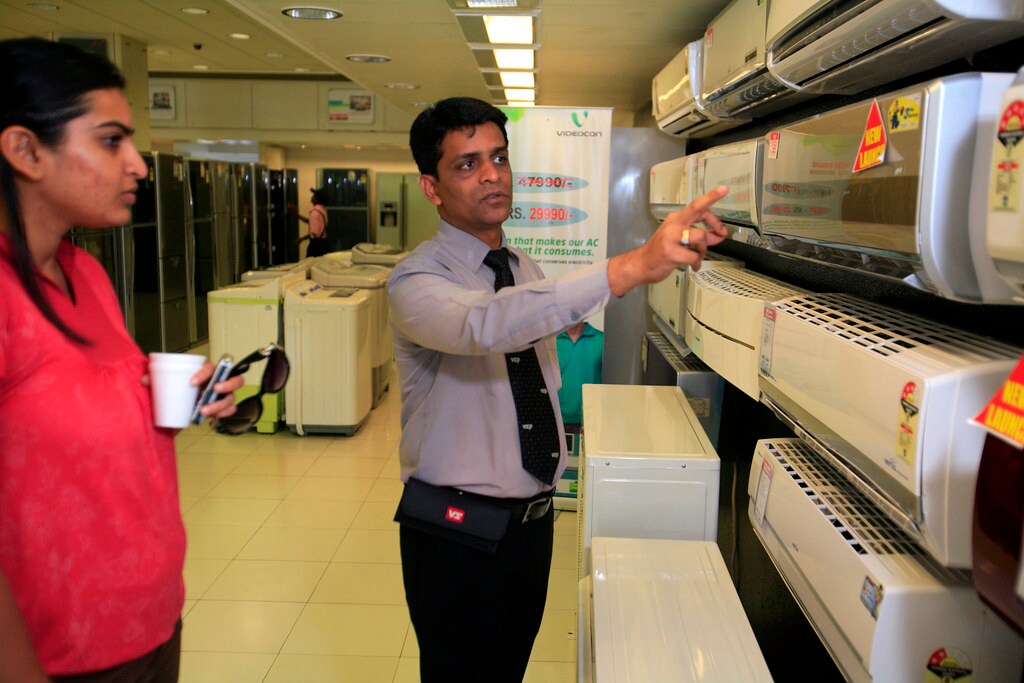
As GST 2.0 reforms kick in from Sept. 22, AC maker Blue Star Ltd. has stepped in to ease working capital stress for their dealers hit by blocked credits on pipeline inventory. Most others, without such relief, however, are left banking on strong festive season sales to cushion the blow.
"Our dealers, who had purchased stocks before the rationalisation at a GST of 28%, will now be able to bill them only at 18%, leaving them with excess input tax credit," said Blue Star managing director B Thiagarajan. "So, we are compensating them for the interest burden on their blocked working capital... and in about 3-4 months we should be able to adjust this."
While Blue Star has agreed to compensate dealers, Voltas has no such blanket policy and plans to absorb costs only on a case-by-case basis.
"We haven't committed dealers to cover for the excess GST they had paid for existing stocks...we may look at it at a case-to-case basis depending on inventory levels but expect the festive sales to largely mitigate the impact for them," Mukundan Menon, managing director, Voltas, told NDTV Profit.
AC dealers are sitting on high inventory after sluggish summer sales and are operating in a market riddled with uncertainty. Many have paused stocking due to the ongoing Shradh period, considered inauspicious for major purchases including appliances. The dealers are likely to resume stocking again post GST implementation to cater to the festive demand.
"Dealers will hold stock build up till 22nd, post which primary and secondary sales are expected to spike," said Kamal Nandi, business head and executive vice-president (appliances), Godrej Enterprises Group. "We have been careful about not overstocking ACs and only replenishing based on consumer offtake...Trade is expected to adjust the difference at their end over time, based on additional GST to be paid on their margins."
The GST Council has announced a sweeping rationalisation of tax slabs, bringing a set of consumer durables under a lower rate. The Council scrapped the 12% and 28% slabs, retaining only 5% and 18%. This brings ACs, televisions beyond 32 inches and dishwashers — which were taxed at the steepest 28% — to shift to 18%. For households, an AC could now cost about Rs 2,500-Rs 3,000 less depending on the model, while a large-screen TV could become up to Rs 4,000 cheaper, according to industry executives.
AC makers said that they will pass on the entire benefits of the cuts to consumers. This along with additional festive offers is expected to drive volumes and lift AC penetration, which is still at just 9-10% in India.
The television industry, too, is not in a position to cover for the blocked working capital — firstly because they don't enjoy such high margins to be able to compensate dealers and secondly, sales have remained subdued.
"Moreover, unlike ACs, the retailers selling TV are not sitting on high inventory as they didn't stock up much for the current lean period of Shradh, according to Avneet Singh Marwah, CEO, Super Plastronics Pvt., brand licensee for Kodak, Blaupunkt and Thomson. "Since retailers are avoiding billing during this inauspicious time, the impact is not likely to be much. As we plan to pass on the benefit of GST cuts entirely to consumers, we expect higher demand to offset the impact on existing stocks."
Marwah is expecting a 20-25% growth in sales this festive season. A 10% cut, translating to savings of Rs 4,000, is seen as catalyst to boost consumption, especially in the 55 inches and above segment.

-
Where You Live Shapes How You Get To Work | The Reason Why

Two-wheelers are the most popular way to get to work in India, accounting for nearly 43% of workplace commutes.
-
High US Salaries, No Green Card Certainty: The Financial Calculation Facing Indian H-1B Families
The suspension of PERM processing at eight technology employers does not cancel existing H-1B visas. What it does is force a question many Indian families have been avoiding: is the US salary worth tying your career and family plans to one employer?
-
Unhedged Position: Can India See An Indonesia-Style Time Correction?
The Nifty is trading below levels it first clocked in 2024. Is there, then, as I have suggested in the headline, potential that the current time correction drags on painfully for the next three-five, even ten years?
-
Navigating Friction And Energy Realities: An Analysis Of Marco Rubio's October Visit To India
Occurring at a critical juncture marked by stalled trade negotiations and escalating geopolitical pressures over global energy supplies, the visit offers a profound window into modern US-India relations.
-
India Exports Capital. Why Not Export Trusteeship?
The big question, then, is whether India can build an institution that global borrowers, investors, banks, and lawyers can trust, even without an Indian connection.
-
France's Economy & Politics Are In Crisis | The Reason Why
Let's look at how the French economy and politics evolved under Nicolas Sarkozy, Franois Hollande and Emmanuel Macron.
-
You May Inherit The Business. You Must Earn Its Credibility.
Succession tests the founder's ability to share authority as much as it tests the next generation's readiness to assume it.
-
Signing Deals Is One Thing; Making Them Work Is Another | The Week In Whys
Sometimes, things don't turn out as planned. Indian companies have lost some bids to rivals, some projects won't produce until 2030.
-
FOMC Wall, PERM Suspension, Hospital Stocks | Talking Points This Week
A PERM suspension would directly affect green-card sponsorship rather than H-1B visas, so the near-term earnings impact could remain relatively limited. The key question is whether this marks a new phase in US scrutiny of Indian IT.
-
Everything, Everywhere, All At Once: Dalal Street's Week To Forget | Joining The Dots
Visa curbs, a Starlink spat and cancer drug caps: what connects this week's shocks for Indian markets









