Black Money Window: Taxman's Advertising Budget Hiked 50 Times
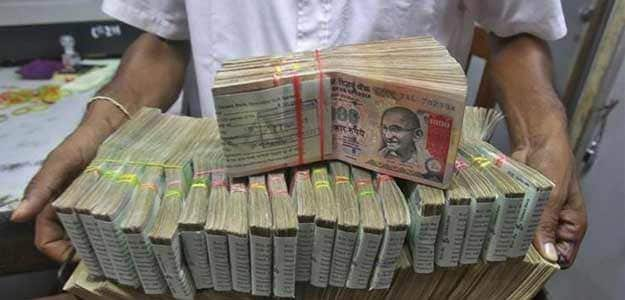
New Delhi: With the government pulling out all the stops to make the one-time black money compliance window a success, the Income Tax Department has now hiked financial powers of its supervisory officers for publicity of the scheme by up to 50 times.
Till now, the regional heads of the tax department could only spend Rs 1 lakh per annum under the 'advertising and publicity' head. But it has now been hiked keeping in mind the extensive media campaign for the ongoing four-month domestic black money widow, the Income Declaration Scheme (IDS), and the ambitious Dispute Resolution Scheme.
As per fresh directives, the regional Principal Chief Commissioner of I-T (PCCIT) can now spend up to Rs 50 lakh as compared to Rs 1 lakh while the comparative figures for CCIT and PCIT rank officials have been enhanced to Rs 30 lakh and Rs 20 lakh, respectively for ensuring publicity of the two schemes exclusively.
While IDS is operational between June-September for people who want to disclose their domestic stash, DRT is aimed at reducing litigation between the taxpayer and the taxman by December 31.
The Central Board of Direct Taxes (CBDT) has recently ordered the Income Tax department to step up publicity of the ongoing one-time black money compliance window by advertising it at posh markets, clubs and showrooms and ensure full privacy of those making disclosures for better collections.
It has also sought regulation of leaves of all tax department officials over the next three months in order to provide as much time as possible for the success of IDS.
CBDT has so far issued four sets of clarifications or Frequently Asked Questions (FAQs) to clear doubts and answer queries about IDS.
The government had yesterday extended the deadline for payment of tax and penalty under the black money disclosure scheme and allowed declarants to pay the amount in three instalments by September 30 next year, making an extension of one year.
(This story has not been edited by NDTV staff and is auto-generated from a syndicated feed.)

-
Talking Points This Week: Tech Nerves, FII Buying, And A Faraway Banking Shock

The global markets are not shining this Diwali. The exception in the large markets is, India.
-
Midterm Rally Lasted A Day. The Hard Reality Of A Divided US May Last Two Years | Opinion
Between a contested AI boom, a debt ceiling that arrives in 2027 and a president with every incentive to act alone, the next two years may prove more volatile than the first day's rally suggests.
-
Blue Wave Will Derail the AI Trade but Won't Dismantle the AI Era | Unhedged Position
The Democrats' sweep of the US Congress will see politics collide with economic forces both over the long and short term.
-
It's Time To Take The GST Council's Bet On Trust Global
Payment records can prove India's services exports, and clear, proportionate rules can bring foreign digital sellers into the tax net.
-
Opinion | India at 38: From Innovation Overperformer to Innovation Powerhouse
India now has 453 VC-backed deep science startups, 18 of them late-stage, after 117 percent growth since 2020. Laurus Labs, at USD 9.3 billion, is the most valuable deep science company in any middle-income economy outside China.
-
Navigating Energy Crossroads: S Jaishankar's Call For Diversified Supply Chains At G20 Ministerial Meeting
As geopolitical fault lines continue to test maritime trade routes and commodity flows, Jaishankar's message remains pertinent: true economic resilience requires open markets, protected transit lines, and a genuine commitment to multilateral cooperation rather than coercion.
-
Indians Are Travelling, But Not Every Journey Is A Holiday | The Week In Whys
Pilgrims, patients and working women are the real travellers, and the system hasn't quite caught up with them.
-
Getting To Work Costs Women More | The Reason Why
It is not just about women paying more than men. It is about women paying much more in cities than in villages.
-
AI Bias In Investing Cannot Be Eliminated, But It Can Be Governed
Framing is a particularly important example as identical financial information presented in terms of gains rather than losses can lead an LLM to reach a different assessment.









