Black Money: Switzerland, India, 45 Others Agree on Tax Info Exchange
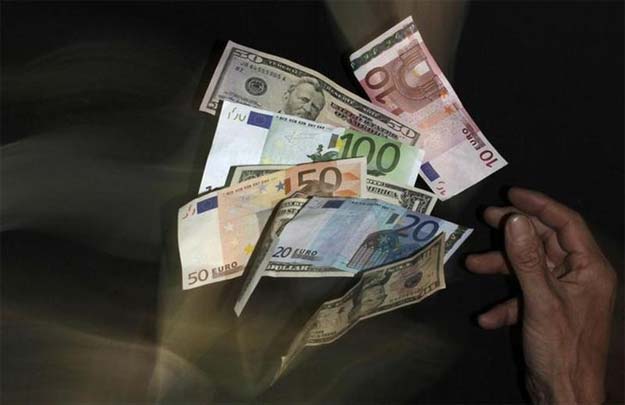
In another step towards shedding banking secrecy practices, 47 nations including Switzerland and India, have agreed upon automatic exchange of information on tax matters.
The endorsement of the 'Declaration on Automatic Exchange of Information in Tax Matters' by 47 countries under the aegis of the Organisation for Economic Co-operation and Development (OECD) on Tuesday will come as a boost for India, which is stepping up pressure on Switzerland to share details on alleged illicit funds stashed away by Indians there.
OECD, a global body that frames economic policies and conventions against tax frauds, said the latest declaration commits countries to implement a new single global standard on automatic exchange of information.
The standard agreed upon by the 47 nations will help clamp down on bank secrecy practices and ensure that they work towards full disclosure of information on tax evaders and financial criminals pertaining to any national jurisdiction.
"The declaration on automatic exchange of information in tax matters was endorsed during the OECD's annual Ministerial Council Meeting in Paris by all 34 member countries along with Argentina, Brazil, China, Colombia, Costa Rica, India, Indonesia, Latvia, Lithuania, Malaysia, Saudi Arabia, Singapore and South Africa," OECD said in a statement issued on Tuesday night.
Switzerland, long perceived as a safe haven for stashing away untaxed money, is an OECD member.
"The standard, which was developed at the OECD and endorsed by G20 finance ministers last February, obliges countries and jurisdictions to obtain all financial information from their financial institutions and exchange that information automatically with other jurisdictions on an annual basis," the statement said.
Such a protocol was required between the countries as tax crimes rob countries of their genuine revenues, OECD said.
"Tax fraud and tax evasion are not victim less crimes. They deprive governments of revenues needed to restore growth and jeopardise citizens trust in the fairness and integrity of the tax system," OECD Secretary General Angel Gurria said.
The commitment by so many countries to implement the new global standard and to do so quickly is another major step towards ensuring that tax cheats have nowhere left to hide, Mr Gurria said.
Switzerland had signed the mutual exchange of tax information protocol, which aims to end the long protected bank secrecy of suspect clients, late last year while India has been onboard this convention for few years now.
As part of cracking down on instances of tax evasion, India is making efforts to gather information from Switzerland on entities suspected parking illicit money in Swiss banks.
In this regard, Finance Minister P Chidambaram has written letters to his Swiss counterpart Eveline Widmer Schlumpf and has reiterated that India would continue to take a position at the Global Forum about Switzerland lacking legal and regulatory framework for an effective exchange of information.
Meanwhile, OECD is expected to issue a detailed commentary on the new standard, as well as technical solutions to implement the actual information exchanges, during a meeting of G20 finance ministers in September 2014.
The G-20 governments have mandated the OECD-hosted Global Forum on Transparency and Exchange of Information for Tax Purposes to monitor and review implementation of the standard.
More than 60 countries and jurisdictions have now committed to early adoption of the standard and additional Global Forum members are expected to join this group in the coming months, OECD said.

-
Why Amazon And Flipkart Are Struggling To Beat Meesho In India's Smaller Cities

With 274 million users and lowest-cost logistics, Meesho is defending its value commerce crown against giants like Amazon and Flipkart.
-
High US Salaries, No Green Card Certainty: The Financial Calculation Facing Indian H-1B Families
The suspension of PERM processing at eight technology employers does not cancel existing H-1B visas. What it does is force a question many Indian families have been avoiding: is the US salary worth tying your career and family plans to one employer?
-
Swiggy vs Eternal: Food Delivery's Two Rivals Are No Longer In The Same Race
Eternal is building a private AI assistant, dark.ai. Swiggy is still working out how to make Instamart pay, with an operating loss of Rs 895 crore in the July-September quarter while Blinkit stayed profitable.
-
Where You Live Shapes How You Get To Work | The Reason Why
Two-wheelers are the most popular way to get to work in India, accounting for nearly 43% of workplace commutes.
-
Unhedged Position: Can India See An Indonesia-Style Time Correction?
The Nifty is trading below levels it first clocked in 2024. Is there, then, as I have suggested in the headline, potential that the current time correction drags on painfully for the next three-five, even ten years?
-
Navigating Friction And Energy Realities: An Analysis Of Marco Rubio's October Visit To India
Occurring at a critical juncture marked by stalled trade negotiations and escalating geopolitical pressures over global energy supplies, the visit offers a profound window into modern US-India relations.
-
India Exports Capital. Why Not Export Trusteeship?
The big question, then, is whether India can build an institution that global borrowers, investors, banks, and lawyers can trust, even without an Indian connection.
-
France's Economy & Politics Are In Crisis | The Reason Why
Let's look at how the French economy and politics evolved under Nicolas Sarkozy, Franois Hollande and Emmanuel Macron.
-
You May Inherit The Business. You Must Earn Its Credibility.
Succession tests the founder's ability to share authority as much as it tests the next generation's readiness to assume it.
-
Signing Deals Is One Thing; Making Them Work Is Another | The Week In Whys
Sometimes, things don't turn out as planned. Indian companies have lost some bids to rivals, some projects won't produce until 2030.










