Black Money Stashed Abroad Seen at Rs 120 Lakh Crore: Assocham
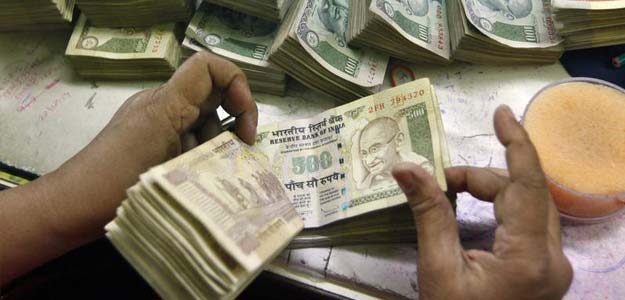
A study by industry body Assocham says nearly $2 trillion or Rs 120 lakh crore of Indian black money is stashed overseas. Assocham's black money estimate is more than the country's nominal GDP, which stood at Rs 114 lakh crore or $1.9 trillion in 2013-14.
So far, there is no official estimated of black money in India though the issue has attracted a lot of attention in the recent past. Assocham's estimate is higher than various earlier estimates, which have pegged the quantum of black money between $ 500 billion to $ 1.4 trillion.
A study commissioned by the UPA government in March 2011 to assess the quantum of black money stashed in India and abroad is yet to be completed. The study was expected to be completed within 18 months. (Read the full story here)
On his very first day in office, the new government headed by Prime Minister Narendra Modi constituted a Special Investigation Team or SIT to unearth and bring back black money stashed away abroad. Assocham said it will submit its proposals to the newly-constituted SIT.
Ved Jain, chairman of direct taxes council at Assocham, said the new government should come out with a six-month amnesty scheme to will facilitate transfer of black money after payment of 40 per cent tax.
In the United States, more than 14,700 tax payers took advantages of such a scheme, Assocham said. A similar move in Germany saw 20,000 taxpayers make a voluntary disclosure leading to 4 billion Euros in additional revenues for the German government, it noted.
The industry body also called for uniform stamp duty rates across the country to curb under reporting of property prices. Other experts also agree that high stamp duty is one of the big reasons for the sharp rise in black money in real estate transactions.
According to Maadhav Poddar of EY cascading effect of stamp duty has been a major reason for non-registration of deals and for alternate conveyance options leading to creation of black money.
"Introduction of uniform stamp duty rates and stamp duty credit will reduce costs for ultimate buyers and foster transparent deals," he said.
Circle rates, or the minimum rate for selling properties, should be notified every year to make them as good as the prevalent market rate, Assocham noted.
Many Indians working abroad use illegal and parallel transactions to send money home, Assocham noted. Besides, the recent restrictions on gold import have also led to increase in smuggling and black money, the industry body noted.
Assocham also called for transparency in political funding to remove the menace of black money.
(Conversion: 1 dollar = 60 rupees)
(With inputs from agencies)

-
Why Amazon And Flipkart Are Struggling To Beat Meesho In India's Smaller Cities

With 274 million users and lowest-cost logistics, Meesho is defending its value commerce crown against giants like Amazon and Flipkart.
-
High US Salaries, No Green Card Certainty: The Financial Calculation Facing Indian H-1B Families
The suspension of PERM processing at eight technology employers does not cancel existing H-1B visas. What it does is force a question many Indian families have been avoiding: is the US salary worth tying your career and family plans to one employer?
-
Swiggy vs Eternal: Food Delivery's Two Rivals Are No Longer In The Same Race
Eternal is building a private AI assistant, dark.ai. Swiggy is still working out how to make Instamart pay, with an operating loss of Rs 895 crore in the July-September quarter while Blinkit stayed profitable.
-
Where You Live Shapes How You Get To Work | The Reason Why
Two-wheelers are the most popular way to get to work in India, accounting for nearly 43% of workplace commutes.
-
Unhedged Position: Can India See An Indonesia-Style Time Correction?
The Nifty is trading below levels it first clocked in 2024. Is there, then, as I have suggested in the headline, potential that the current time correction drags on painfully for the next three-five, even ten years?
-
Navigating Friction And Energy Realities: An Analysis Of Marco Rubio's October Visit To India
Occurring at a critical juncture marked by stalled trade negotiations and escalating geopolitical pressures over global energy supplies, the visit offers a profound window into modern US-India relations.
-
India Exports Capital. Why Not Export Trusteeship?
The big question, then, is whether India can build an institution that global borrowers, investors, banks, and lawyers can trust, even without an Indian connection.
-
France's Economy & Politics Are In Crisis | The Reason Why
Let's look at how the French economy and politics evolved under Nicolas Sarkozy, Franois Hollande and Emmanuel Macron.
-
You May Inherit The Business. You Must Earn Its Credibility.
Succession tests the founder's ability to share authority as much as it tests the next generation's readiness to assume it.
-
Signing Deals Is One Thing; Making Them Work Is Another | The Week In Whys
Sometimes, things don't turn out as planned. Indian companies have lost some bids to rivals, some projects won't produce until 2030.










