BJP-ruled States Expected to Drive Labour Reforms
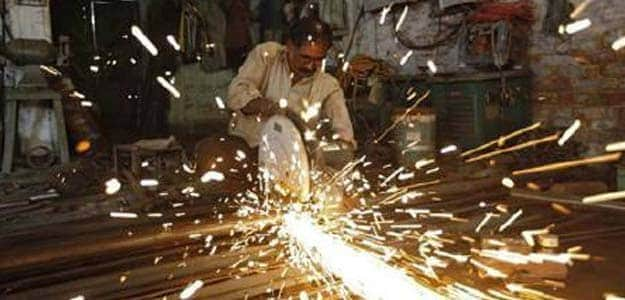
The Vasundhara Raje-led BJP government in Rajasthan recently took significant steps towards reforming labour laws by clearing the amendment to three central labour laws - Industrial Disputes Act, Contract Labour Act and the Factories Act. Archaic labour laws have often been cited as one of the deterrents to boosting labour-intensive manufacturing activity in the country.
Analysts described the Rajasthan government's move as a significant step towards boosting labour-intensive manufacturing sector in the country. Responsibility for labour policy is shared between the central government and the states.
Commenting on the Rajasthan government's labour reform initiatives, Saurabh Mukherjea, CEO of institutional equities at Ambit Capital, says other states could follow its lead soon, especially the BJP-ruled states.(See Video)
Dr. Subir Gokarn, former deputy governor of Reserve Bank of India, said, "This reform has been hanging fire for many years. Some 14 years ago, then finance minister in the NDA government Yashwant Sinha had proposed amendment to Industrial Disputes Act in his budget speech but that did not go anywhere as there was tremendous opposition." (Watch video)
Amendment of labour laws has been a contentious issue in the country. But if the government has to move people from agriculture to manufacturing then labour laws have to be amended to give industries more flexibility, says Dr. Gokarn
"The share of people of the people protected by relevant clauses of the Industrial Disputes Act and so on is relatively small. The whole of the organised sector workforce is estimated below 8-10 per cent and this (labour laws) applies to private sector. Rather than worry about people being impacted adversely the worry should be about the people left out of the opportunity," said Dr. Gokarn.
Mr Mukherjea of Ambit Capital said he expects the BJP ruled states to drive reforms in areas that are on the concurrent list of the constitution. "Wherever you have reform areas which are concurrent subjects - either centre or states can legislate in areas like land, labour, food, and power - we may see the BJP states will move reform through their legislative assembly. What the constitution says if on a concurrent subject a state assembly has signed off, then that bill has to come to the president for his assent," he said.
Mr Gokarn is optimistic that the Rajasthan government proposal will be cleared. "When a state government does (labour reforms), it requires assent of the president and that means effectively means the central government has to approve it. I presume that the Rajasthan government has got some feedback from the central government on this issue." The Narendra Modi government has promised to expand job opportunities to by promoting manufacturing industries.
If the BJP-ruled states are able to attract foreign direct investment by reforming the labour laws, then other states could follow suit, says Mr Mukherjea of Ambit Capital.
"My hunch is that BJP states will drive reforms. They will pass it through their legislative assembly and then the president will give his assent. Through this route, reforms could be percolated through Gujarat, Rajasthan and potentially MP and Chhattisgarh. If these states attract FDI, other states could follow through on this," he said.
The labour reforms would benefit the textile, sports goods and low-end manufacturing sectors, Mr Mukherjea said. "I have met many promoters who break up their companies into tiny units to circumvent labour laws. By breaking up the companies into sub-optimal units they lose out on economies of scale," he said.

-
High US Salaries, No Green Card Certainty: The Financial Calculation Facing Indian H-1B Families

The suspension of PERM processing at eight technology employers does not cancel existing H-1B visas. What it does is force a question many Indian families have been avoiding: is the US salary worth tying your career and family plans to one employer?
-
Swiggy vs Eternal: Food Delivery's Two Rivals Are No Longer In The Same Race
Eternal is building a private AI assistant, dark.ai. Swiggy is still working out how to make Instamart pay, with an operating loss of Rs 895 crore in the July-September quarter while Blinkit stayed profitable.
-
Where You Live Shapes How You Get To Work | The Reason Why
Two-wheelers are the most popular way to get to work in India, accounting for nearly 43% of workplace commutes.
-
Unhedged Position: Can India See An Indonesia-Style Time Correction?
The Nifty is trading below levels it first clocked in 2024. Is there, then, as I have suggested in the headline, potential that the current time correction drags on painfully for the next three-five, even ten years?
-
Navigating Friction And Energy Realities: An Analysis Of Marco Rubio's October Visit To India
Occurring at a critical juncture marked by stalled trade negotiations and escalating geopolitical pressures over global energy supplies, the visit offers a profound window into modern US-India relations.
-
India Exports Capital. Why Not Export Trusteeship?
The big question, then, is whether India can build an institution that global borrowers, investors, banks, and lawyers can trust, even without an Indian connection.
-
France's Economy & Politics Are In Crisis | The Reason Why
Let's look at how the French economy and politics evolved under Nicolas Sarkozy, Franois Hollande and Emmanuel Macron.
-
You May Inherit The Business. You Must Earn Its Credibility.
Succession tests the founder's ability to share authority as much as it tests the next generation's readiness to assume it.
-
Signing Deals Is One Thing; Making Them Work Is Another | The Week In Whys
Sometimes, things don't turn out as planned. Indian companies have lost some bids to rivals, some projects won't produce until 2030.
-
FOMC Wall, PERM Suspension, Hospital Stocks | Talking Points This Week
A PERM suspension would directly affect green-card sponsorship rather than H-1B visas, so the near-term earnings impact could remain relatively limited. The key question is whether this marks a new phase in US scrutiny of Indian IT.









