Bitcoiners Who Missed Rally Express Relief And Regret
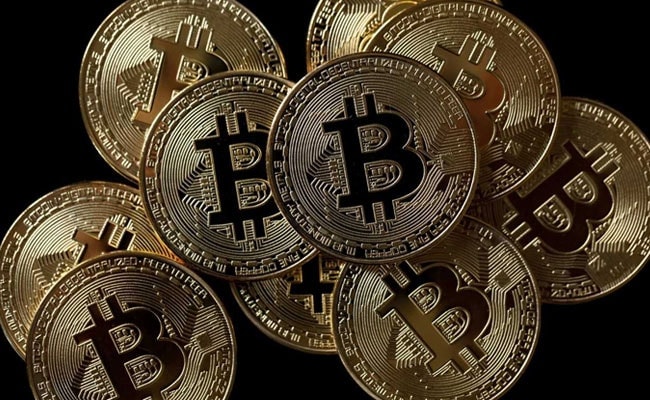
Arianna O'Dell, a 30-year-old entrepreneur and songwriter based in New York City, had a tumultuous four-year journey in cryptocurrency before selling her investments in February. During her rollercoaster ride, bitcoin prices swung from under $1,000 to nearly $20,000. O'Dell may not have made optimal decisions about when to buy or sell, and missed out on the recent rally - but says she doesn't regret that. Investing $2,705 worth of proceeds into her business was better than enduring the stress of daily fluctuations, even though the price has since doubled, she said. "Honestly I've had more luck in Vegas than I've had with cryptocurrencies," O'Dell said in an interview.
She is part of a relatively new class of retail investors who joined the crypto market years ago, helping propel bitcoin's price to a high of nearly $20,000. Not willing to stomach the subsequent volatility and having lost hope in a recovery, many cashed out, and are now missing the latest bonanza.
Bitcoin has gained around 160 per cent this year and was last trading at $19,239 on Wednesday, edging closer to it's all time high of around $19,666 hit in December 2017. Yet those amateur investors who have been a big part of the market, sharing advice on social media and investment forums, are not fuelling the surge, crypto experts told Reuters.
"This rally is largely driven by institutional buy-in," said Tim Ogilvie, CEO of Staked, which provides institutions with infrastructure services for crypto assets. He pointed to hedge fund managers like Paul Tudor Jones and Stanley Druckenmiller including bitcoin in their broad investment strategies.
Like O'Dell, however, several retail investors who had money on the line during prior bitcoin whipsaws expressed the same emotion about having divested: relief. Akram Tariq Khan, an entrepreneur in New Delhi, got into bitcoin in 2017 with assets totalling $160,000 at their peak. But the 25-year-old got spooked as the price dove by almost 50 per cent, and sold. In all, he has lost about $10,000 in capital.
"In retrospect, holding seems like the right decision, but when you've bought something at a much higher price and you see the price going down the drain there is a psychological impact," said Khan, co-founder of e-commerce company YourLibaas. "Bitcoin could have gone to $1,000 and never come back."
Zero Expected Return
Investing in cryptocurrencies is like playing roulette, some experts say, because no-one really understands what's happening. Unlike stocks or bonds, where business trends or central bank decisions can affect prices, crypto values remain an enigma. Analysts rarely pinpoint causes when prices suddenly crash, or stall for years. Even big fish are baffled.
Billionaire Masayoshi Son, CEO of Japan's Softbank, spoke for many in professional investing last week when he described how he had no regrets at missing out on the latest rally, having sold out in 2018 for a loss of around $50 million. "Today it's maybe more than the price that I sold, but I feel so much better because at least I don't have to put my mind in something I don't understand," he told a New York Times event.
Michael Edesess, an adjunct associate professor at Hong Kong University of Science and Technology, described bitcoin as "a not very rational investment". "To a mathematician and economist like myself, bitcoin offers a zero expected return – that is, the odds it will go up or down by the same amount, are equal," he said.
Some small investors did hold onto their bitcoin, adopting the "HODL" mantra, which stemmed from a 2013 post where a user misspelled his intent to keep "hodling" bitcoin instead of "holding" it. But others were just looking for a quick buck and bought near the top of the market.
"They'll come in after their idiot nephew who still lives in their sister's basement makes $100,000," said cryptocurrency consultant Colin Platt.
Talk of Crash Coming
It is impossible to know the exact breakdown between retail and professional investors because transactions are anonymous, and exchanges do not share detailed information about users.
Many crypto experts say, though, that institutional investors have played a bigger role than this year than in the past. They cite demand for riskier assets amid unprecedented stimulus programmes to counter COVID-19, and expectations bitcoin will win wider acceptance as a method of payment.
They also point to improvements in market structure having attracted bigger investors, as well as significantly fewer Google searches for the term "bitcoin," which typically increase alongside amateur involvement. However, some experts also say a new wave of retail participation may be ahead, since Main Street investors typically amp up participation at the height of a bubble.
For instance, Livi Morris, a London-based musician, saw her cryptocurrency portfolio lose 70-80 per cent soon after buying into the sector in January 2018. She held onto the assets until June this year, when values were a fraction of the prices she paid.
Morris expressed regret about selling too early, but has started buying crypto again in recent weeks after reading that bigger companies have entered the market. She's focused on smaller virtual coins, hoping this time will be different. "When I invested in 2017 there was a lot of talk of a crash coming," she said. "It feels like times have changed."

-
Navigating Energy Crossroads: S Jaishankar's Call For Diversified Supply Chains At G20 Ministerial Meeting

As geopolitical fault lines continue to test maritime trade routes and commodity flows, Jaishankar's message remains pertinent: true economic resilience requires open markets, protected transit lines, and a genuine commitment to multilateral cooperation rather than coercion.
-
Indians Are Travelling, But Not Every Journey Is A Holiday | The Week In Whys
Pilgrims, patients and working women are the real travellers, and the system hasn't quite caught up with them.
-
Getting To Work Costs Women More | The Reason Why
It is not just about women paying more than men. It is about women paying much more in cities than in villages.
-
AI Bias In Investing Cannot Be Eliminated, But It Can Be Governed
Framing is a particularly important example as identical financial information presented in terms of gains rather than losses can lead an LLM to reach a different assessment.
-
Joining The Dots | Dark Skies, Steady Diya: Why Hope Holds This Diwali
With war, a weak rupee and foreign outflows weighing on sentiment, policymakers at the NDTV World Summit and market veterans at NDTV Profit Ignite: Diwali Edition offered the same advice: stay invested and filter out the noise.
-
The Curious Case of Equitas Small Finance Bank And A CEO Who Quit For Stock
PN Vasudevan believes persistent investor concerns over a perceived conflict of interest had become a governance overhang on Equitas Small Finance Bank's stock, even as the lender improved profitability and asset quality.
-
Talking Points This Week: AI Cash Burn, A Tiger Comeback And An India That Still Finds Its Own Path
India is not immune to higher oil or tighter global liquidity, yet its earnings base is broader, its domestic policy levers are still available.
-
Foreign Investors Own Half Of HDFC Bank and ICICI Bank. An LTCG Cut Could Matter Most Here
Foreign portfolio investors have US$115 billion parked in HDFC Bank, ICICI Bank. If the government cuts long-term capital gains tax, Jefferies says returning foreign money could land here first.
-
'Never Seen This Level Of Negativity': Sandeep Tandon Says The Next Rally May Be Closer Than You Think
Veteran investor Sandeep Tandon says foreign selling is easing, large-caps are due a comeback and mid-caps are crowded, while he turns positive on gold, power and pharma this Diwali.
-
Indians Stay With Family, Not In Hotels | The Reason Why
India still lacks enough clean, reliable and affordable hotels for budget-conscious travellers.










